Disaster
Tornado Damage Home Repair Cost 2026 — What Insurance Won't Tell You
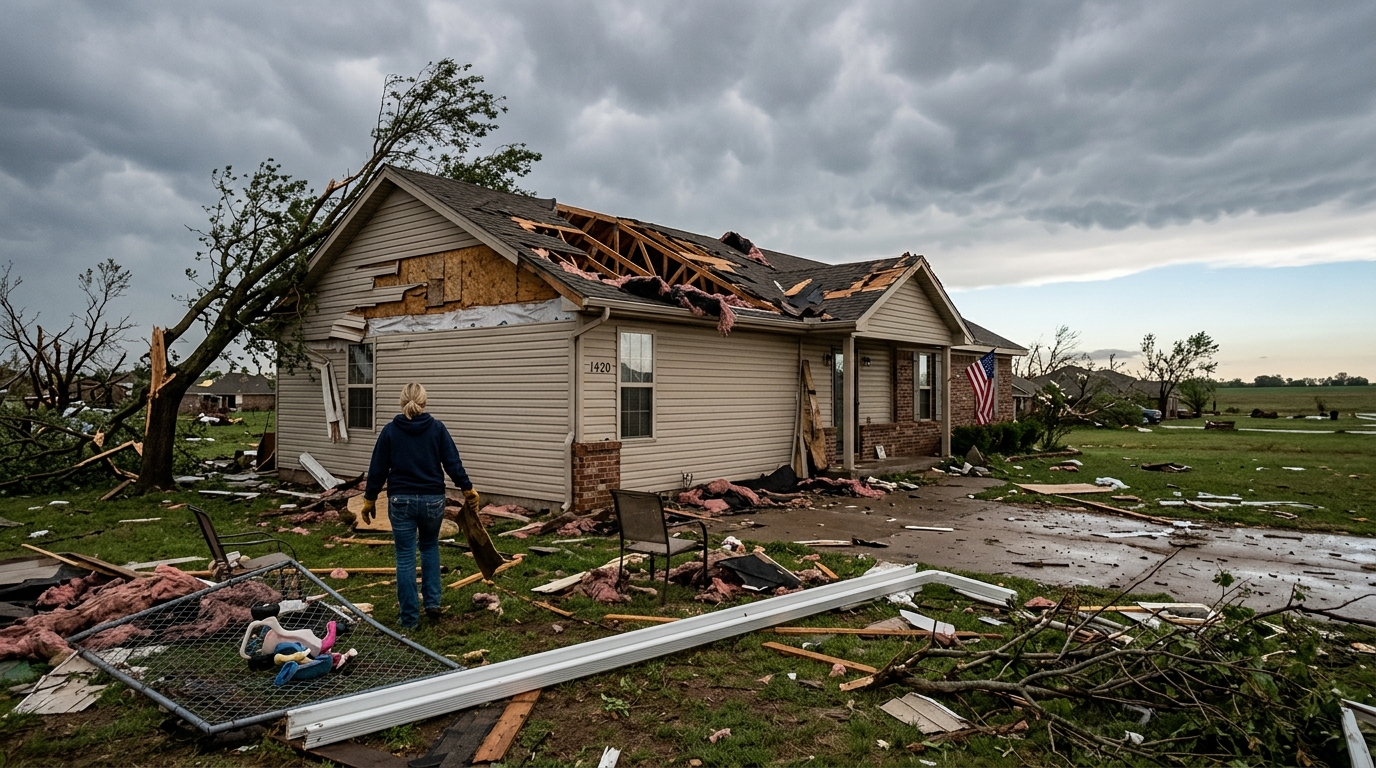
Tornadoes are the most expensive U.S. natural disaster per square foot — an EF-2 tornado can do $200K of damage to a $400K home and an EF-3 can total it. Insurance covers most tornado damage as a windstorm event, but what insurance won't tell you determines whether you net $250K of recovery or $180K out of the same loss. Here are the 4 silent gaps in tornado claims that catch homeowners by surprise — plus the tornado-alley state specifics for OK, KS, MO, AR, and AL.
2026 tornado damage repair cost (typical 2,000 sqft single-family home)
- EF-0 (65-85 mph, light damage): $5,000-$25,000. Minor roof damage, gutter loss, fence + landscape damage, broken windows. Usually repairable in 2-6 weeks.
- EF-1 (86-110 mph, moderate damage): $25,000-$85,000. Significant roof damage, partial siding loss, possible structural truss damage, garage door + window failure.
- EF-2 (111-135 mph, considerable damage): $85,000-$200,000+. Major roof loss, structural damage, possible partial wall collapse, total loss of windows + siding.
- EF-3 (136-165 mph, severe damage): $200,000-$400,000+. Often partial- to total loss. Frame intact but extensive structural damage. Rebuild typically required.
- EF-4+ (166+ mph, devastating): Almost always total loss. Full rebuild at $185-$340/sqft (see our disaster rebuild guide for the cost structure — tornado rebuilds run similarly).
Use our state-specific roofing + general renovation calculators for sized repair estimates. Most tornado claims involve a roof replacement as the largest single line item.
Tornado damage estimate — start with the roof, the #1 line item
Same arithmetic this guide uses — adjusted for your roof size, pitch, and quality tier.
Calculate my tornado-damaged roof →Insurance gap #1 — ALE (Additional Living Expenses) caps
If your home is uninhabitable post-tornado, your policy covers temporary housing, restaurant meal premiums, and storage — but with caps that catch homeowners off-guard.
- Typical ALE cap: 20-30% of dwelling coverage limit, OR 12-24 months, whichever comes first.
- The trap: tornado rebuilds in 2026 run 14-22 months due to contractor shortage post-event (every house in a tornado path needs work at the same time). If your ALE caps at 12 months, you're paying months 13-22 out-of-pocket.
- Out-of-pocket reality: average displaced family spends $4K-$8K/month on alternate housing in tornado-alley markets. 6 months of uncovered ALE = $24K-$48K you didn't budget for.
- The fix: at month 9 of your claim, request an ALE extension in writing. Most insurers will extend if you document active rebuild progress. Wait until month 23 and you're out of luck.
Insurance gap #2 — Code-upgrade exclusion (without Ordinance & Law coverage)
When your post-tornado home is partially destroyed, the rebuild must meet CURRENT code — not the code in effect when your home was originally built. Without Ordinance & Law coverage, you pay the difference out-of-pocket.
- Hurricane straps + roof-to-wall connectors: $1,200-$4,500 to retrofit on a partially-rebuilt home.
- Wind-rated impact windows: $2,000-$8,000 above standard window cost.
- Egress window upgrades for basements: $2,500-$5,000.
- Electrical code (AFCI/GFCI updates, panel upgrade if disturbed): $2,500-$8,000.
- Plumbing code (PEX, vacuum breakers, etc.): $1,500-$4,000.
Without Ordinance & Law coverage: 8% to 25% of the rebuild cost falls on you. WITH coverage (typically 10% of dwelling, costs $30-$60/year): insurance pays the code upgrade. ALWAYS add Ordinance & Law to your policy.
Insurance gap #3 — Contents depreciation on ACV policies
Personal property (furniture, electronics, clothing) is covered separately at typically 50-70% of dwelling coverage. But it's almost always settled at Actual Cash Value (depreciated) unless you've upgraded.
- A 7-year-old leather couch you paid $2,500 for: ACV payout maybe $800-$1,200.
- A 4-year-old laptop you paid $1,400 for: ACV payout maybe $400-$700.
- A 6-year-old refrigerator you paid $1,800 for: ACV payout maybe $700-$1,000.
- The total contents claim is usually $40K-$80K under-paid on a typical 2,000 sqft home with normal contents.
- The fix: ADD a "Replacement Cost on Contents" endorsement (typically $50-$120/year). Insurance pays the full replacement cost minus your deductible. Recover the depreciation portion by submitting receipts as you actually buy replacements.
Insurance gap #4 — Salvage rights on totaled property
When insurance "totals" a vehicle or a major piece of equipment, they take title and salvage. For tornado-damaged personal property, you have a CHOICE that homeowners rarely exercise.
- Default: insurance settles, you surrender the damaged item.
- Salvage retention: you keep the damaged item AND receive the settlement minus the salvage value. Useful for items you can repair yourself or sell parts of.
- Example: a damaged riding mower settled at $2,800 ACV. Salvage value $400. If you keep it: you get $2,400 + the mower. Sell mower for parts at $600 = net $3,000 vs. $2,800 surrendering it.
- Request salvage retention explicitly when settling each major item. Insurers won't volunteer it.
Tornado alley state specifics
- Oklahoma: highest tornado density in the U.S. State Storm Mitigation Program offers grants up to $5,000 for tornado-resistant upgrades (storm shelter, roof straps). OK Insurance Department maintains tornado-claim oversight at oid.ok.gov.
- Kansas: high tornado frequency. Kansas Insurance Department requires insurers to use specific tornado-damage timelines. Storm shelters required for new construction in some counties.
- Missouri: highest historical fatality rate from tornadoes. Building code for tornado-resistant construction stricter in St. Louis County + Joplin (post-2011 rebuild zone). Insurance claim review at insurance.mo.gov.
- Arkansas: significant tornado risk especially in central + southern regions. Strong storm shelter rebate programs.
- Alabama (Dixie Alley): deadly nighttime tornadoes common. Mandatory tornado safe rooms in many counties for new construction. Insurance claims review at Alabama Department of Insurance.
The 5 steps to maximize your tornado claim
- Document EVERYTHING in 24-48 hours: photos, video walk-through, NOAA tornado-damage rating from spc.noaa.gov, neighbor witness statements.
- File contents inventory IMMEDIATELY: room-by-room list with original purchase price + age + condition. Use the insurer-provided template.
- Hire a public adjuster for losses >$100K. Their fee (typically 10% of recovery) is usually paid back 3-5x in increased settlement. Many tornado-alley public adjusters work on contingency.
- Document every code upgrade the rebuild requires. File Ordinance & Law supplemental claim BEFORE accepting the final rebuild scope.
- Request ALE extension at month 9 of claim. Standard ALE often expires before tornado-alley rebuilds finish (14-22 months typical).
Trusted tornado damage guidance
- Does homeowners insurance cover roof replacement?
- How to file a roof insurance claim step by step
- Storm-chaser roofer scams — how to avoid them
- Texas hail damage guide (tornado-alley TX overlap)
- Mississippi storm damage guide (tornado-belt MS overlap)
- How long does storm-damage roof replacement take?
Bottom line
Tornado damage repair runs $15K (EF-0 minor) to $400K+ (EF-3 partial loss) — and insurance under-pays four ways that aren't volunteered: ALE caps before rebuild finishes, code-upgrade exclusion without Ordinance & Law coverage, ACV depreciation on contents, and unclaimed salvage rights. The 5-step playbook: document in 24-48 hours, file contents inventory immediately, hire a public adjuster for losses >$100K, file Ordinance & Law supplementals, request ALE extension at month 9. Before next tornado season: add Replacement Cost on Contents + Ordinance & Law to your policy (combined cost typically $80-$180/year — saves $40K-$80K on a serious claim). Run our state-specific roofing calculators for the largest single line item of any tornado claim.
Get 3 free contractor quotes for your storm-damaged roof
Vetted local roofers who handle insurance claims. No spam, no obligation, no sales calls — we just send the quotes.
Most homeowners receive 3 quotes within 48 hours. Free service — funded by contractor referral fees, not by you.