HVAC
HVAC Cost in California 2026 — Title 24, Heat-Pump Mandate, and the True Cost After TECH Rebates
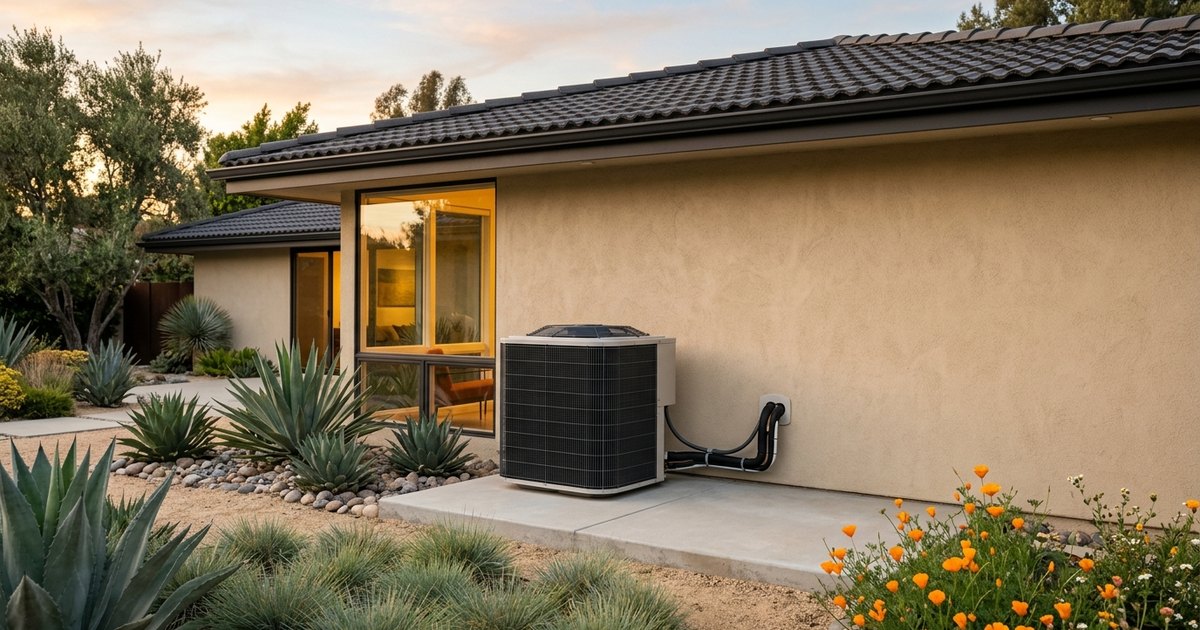
California HVAC is the most regulated install in the country. Title 24 energy code requires a compliance certificate (HERS verification) for any system replacement, the 2024 CARB rule pushed new construction toward all-electric heat pumps, and the 2026 update to Title 24 effectively makes gas-furnace replacement harder to permit in most jurisdictions. On top of that, electricity is among the most expensive in the US (PG&E peak hits $0.55/kWh), which changes the operating-cost calculus completely. Here is what $12K-$22K actually buys in 2026 California, and how the TECH Clean California rebate stack works.
The 2026 California HVAC baseline
- Central AC + gas furnace (replacement, where still permitted): $7,000-$14,000 installed for a 3-ton system. Most common in older homes built pre-2015, but increasingly subject to "fuel-switching" pushback from utilities under TECH guidelines.
- Heat pump (single-speed, 3-ton): $12,000-$17,500 installed. The IRA + TECH-favored path. 30% federal 25C credit capped at $2,000, plus TECH rebate of up to $3,000 per ton.
- Variable-speed inverter heat pump (3-ton): $15,500-$22,000. Strongly recommended in CA — variable-speed handles the 50°F daily swings (cool foggy mornings to 95°F+ afternoons in inland CA) without short-cycling and qualifies for the maximum TECH rebate tier.
- Mini-split ductless (per zone): $5,000-$9,200 per zone. Common in coastal CA homes with no central duct, ADUs, and pre-1960s housing stock.
- Heat-pump water heater (bundled): $3,800-$6,800 installed. Adds an additional $1,750 25C credit + TECH rebate up to $1,500. Bundle with HVAC install for labor savings.
For your home's specific scope, run our California HVAC cost calculator.
Title 24 — the compliance cost most contractors forget to itemize
Title 24, Part 6 requires HERS (Home Energy Rating System) verification on any HVAC replacement that includes ductwork. The verification adds $350-$650 to the install cost and 1-2 weeks to the schedule. Quotes that don't itemize HERS verification are either skipping it (illegal — your installer can lose their CSLB license) or burying it in labor. Always confirm before signing.
- Duct-leakage test: Required if any ductwork is touched. Pass threshold: 6% leakage at 25 Pa.
- Refrigerant-charge verification: Required for new condenser installs. ~$120-$180 by a 3rd-party HERS rater.
- Manual J load calc: Strongly recommended; not always required, but the only defense against oversizing.
- HERS final report: Filed with the local Building & Safety department. Without it, the permit doesn't close and the install isn't legally complete.
The 2026 heat-pump-first guidance
California Energy Commission's 2024 update to Title 24 added a "compliance margin" penalty for like-for-like gas-furnace replacements. In practice this means many CA homeowners are quoted both a gas-furnace replacement and a heat-pump alternative — and the heat-pump path increasingly comes in cheaper net of incentives.
- Bay Area and LA permits in 2026 typically require either heat-pump replacement OR a Title 24 compliance margin offset (insulation, windows, duct sealing) of equivalent kBtu/yr.
- Several CA jurisdictions (Berkeley, Oakland, San Mateo County) have adopted local reach codes that effectively ban new gas appliance installs in renovations of a certain scope. Check your city before specifying gas.
- Coastal CA homes with mild winters often don't even need a Manual J that justifies a furnace — a 2-ton heat pump handles 100% of the heating load.
The TECH Clean California rebate stack
TECH Clean California is the state's heat-pump incentive program, administered through participating contractors. It is NOT income-tested for the standard tier; the equity tier (for households <80% AMI) adds significant additional rebate.
- Standard tier — heat pump: Up to $3,000 per ton for cold-climate inverter heat pumps, capped at $7,500 per home.
- Equity tier (under 80% AMI): Up to $6,000 per ton, capped at $12,500 per home. Stacks with HEEHRA where applicable.
- Heat-pump water heater: Up to $1,500 standard / $2,800 equity tier.
- Federal 25C tax credit: Up to $2,000 heat pump + $1,750 heat-pump water heater + $600 panel upgrade = up to $4,350 stacked in one year. Applies after TECH rebate (TECH is deducted from gross install, then 25C is calculated on the post-rebate cost).
- Utility-specific rebates: PG&E, SCE, and SDG&E run additional $250-$800 rebates depending on equipment tier. SMUD (Sacramento) and LADWP (Los Angeles) run their own dedicated programs.
Net cost — typical 3-ton heat pump, San Jose homeowner, above 80% AMI
- Gross install: $16,500
- TECH rebate: −$7,500
- PG&E utility rebate: −$500
- Federal 25C credit (calculated on $8,500 post-rebate): −$2,000
- Net out of pocket: $6,500
Operating cost — the part where California is different
California electricity rates are 2-2.5× the national average. PG&E's tiered + time-of-use schedules can put summer peak at $0.55/kWh; SCE peaks above $0.45. This reduces the heat pump's operating-cost advantage compared to other states — but rarely eliminates it, because gas is also expensive in California ($2.20-$2.80/therm in 2026):
- Heat pump, coastal CA (mild climate, 2,000 sq ft): $580-$820/year all-electric.
- Heat pump, inland CA (hotter summers, more cooling): $920-$1,350/year.
- Gas furnace + central AC, coastal CA: $850-$1,200/year.
- Gas furnace + central AC, inland CA: $1,400-$1,950/year.
- Annual heat-pump operating advantage: $200-$500 in coastal CA, $400-$700 in inland CA.
Time-of-use math — the bigger CA-specific win
California utilities default new HVAC customers onto TOU (time-of-use) rate plans. The peak/off-peak ratio runs roughly 3:1 to 5:1. This makes pre-cooling the house in off-peak hours (cool the house to 70°F by 3 pm so the system rarely runs during 4-9 pm peak) the single biggest operating-cost lever a CA homeowner has. Smart thermostats with TOU integration (ecobee, Nest Pro, Google Pro) typically save another $180-$320/year on top of the heat pump's baseline efficiency advantage.
California regional cost variance
- Bay Area (San Francisco, Oakland, Berkeley, San Jose): 15-25% above the CA average. CSLB licensing premium, high labor, restrictive permitting.
- Los Angeles County: 5-15% above the CA average.
- San Diego County: Roughly at the CA average.
- Central Valley (Sacramento, Fresno, Bakersfield): 8-15% below the CA average. SMUD/PG&E rebates well-funded; competitive contractor market.
- Inland Empire (Riverside, San Bernardino): At or slightly below CA average.
- Coastal Central California (Monterey, San Luis Obispo): Mild climate but higher labor. Heat pumps almost always justified given low heating demand.
California HVAC FAQs
Do I have to switch to a heat pump? Not in 2026 — but Title 24 compliance is harder for gas replacements, and several Bay Area cities have local reach codes effectively requiring heat pumps for renovations of a certain scope. Check your city before specifying gas.
Will my electric bill spike with a heat pump on TOU? Initially yes, but pre-cooling in off-peak hours and the eliminated gas bill typically net out positive within 8-10 months. Smart thermostats with TOU integration are essentially required.
What about wildfire smoke? California-specific concern. Spec a system with MERV-13 filtration capacity (variable-speed handlers handle MERV-13 without airflow loss; single-stage often can't). Adds $150-$400 to install but pays for itself on the first heavy smoke event.
Does the TECH rebate get added before or after the federal credit? TECH is deducted from the gross install cost first. The federal 25C credit is then calculated on the post-rebate cost. Don't let your contractor calculate it backwards.
Get a state-adjusted estimate. Run our California HVAC cost calculator for your scope, compare against the heat pump vs furnace decision, or read the central AC vs heat pump ROI guide if you're only replacing your AC.
More cost guides for California
Planning multiple projects? Every other 2026 California cost guide carries the same state-specific labor and pricing detail.
- Cost GuideBasement Finishing Cost in California 2026
- Cost GuideBathroom Remodel Cost in California 2026
- Cost GuideDeck Construction Cost in California 2026
- Fence InstallationFence Installation Cost in California 2026 — WUI Fire Rules, Labor Premium & HOA Reality
- Cost GuideFlooring Installation Cost in California 2026
- Cost GuideHardscape Installation Cost in California 2026
- HiringHiring a Contractor: A Homeowner's Checklist
- Pool InstallationIn-Ground Pool Cost in California 2026 — Why CA Pools Cost 30-45% More
- PaintingInterior & Exterior Painting Cost in California 2026 — Why CA Painting Runs 25-40% More
- Cost GuideKitchen Remodel Cost in California 2026
- Cost GuideLandscaping Cost in California 2026
- Solar Buyer's GuideNEM 3.0 Explained for California Homeowners (2026)
- RoofingRoof Replacement Cost in California 2026 — Title 24, Cool Roofs, and the WUI Zone Surcharge
- Solar PanelsSolar Panel Cost in California 2026 — What 8 kW Systems Actually Run (Post NEM 3.0)
- Cost AnalysisWe Analyzed 47 LA Contractor Quotes in 2026 — Here's What We Found
- Window ReplacementWindow Replacement Cost in California 2026
Cost by state for this project
State-adjusted ranges with local labor and material multipliers.