Fence Installation
Fence Installation Cost in California 2026 — WUI Fire Rules, Labor Premium & HOA Reality
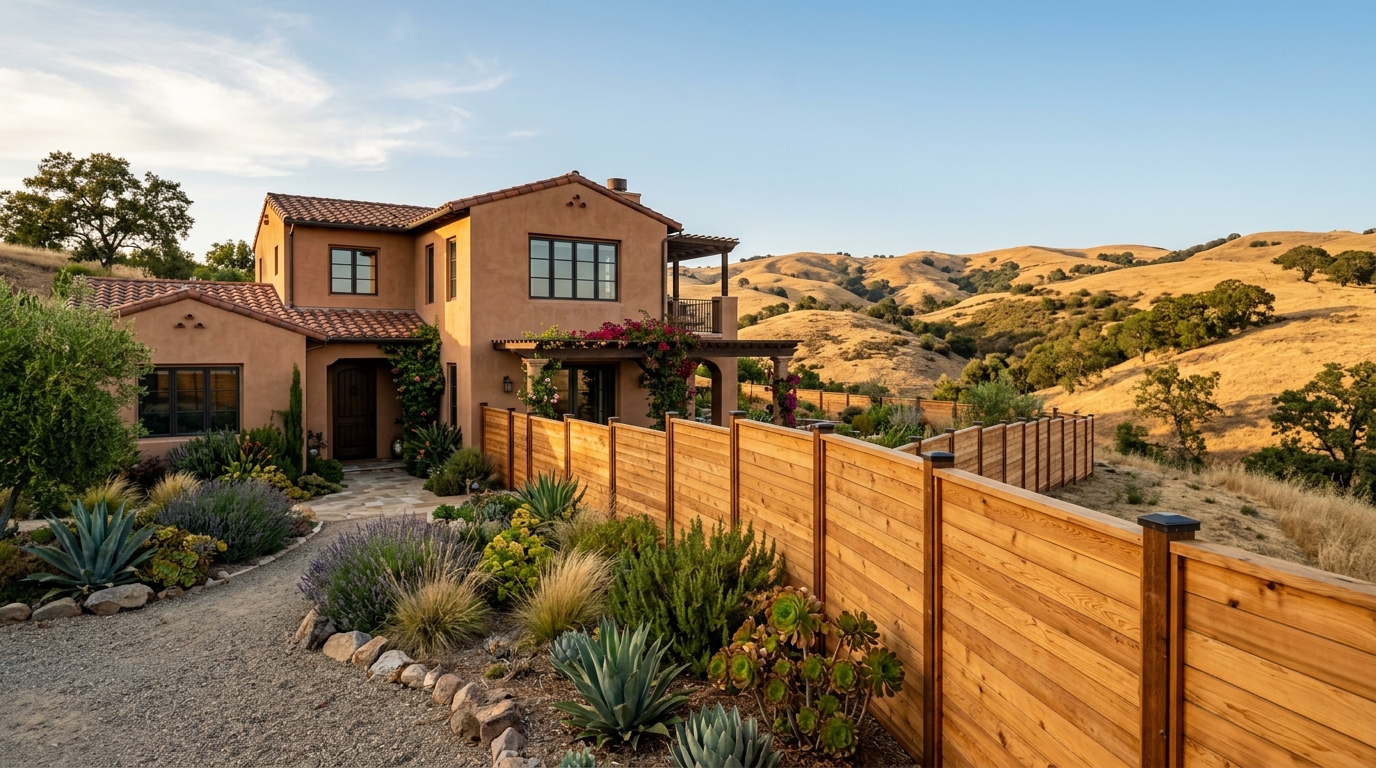
California fence installations run 35–55% above the national average in 2026. The premium isn't materials — it's labor (CA trades bill $85–$140/hr), WUI fire-zone restrictions that take wood off the menu in 1 in 3 California zip codes, and city-specific height/permit rules that vary from San Diego to the Bay Area. Here's what you'll actually pay for fence installation in California in 2026, by material and metro.
The 2026 California fence cost baseline (150 linear ft, 6-ft privacy fence)
- Pressure-treated wood (Douglas fir picket): $5,400–$8,200. Cheapest, but 12–15 year lifespan. Banned outright inside WUI fire zones.
- Cedar (Western red, the CA standard): $6,800–$10,500. The default privacy fence — 20–25 years. Still flagged in strict WUI areas.
- Vinyl privacy: $7,500–$11,800. Lifetime warranty common. WUI-acceptable in most counties.
- Aluminum / wrought-iron look: $8,200–$13,400. Coastal-resistant, see-through. The Bay Area/coastal favorite.
- Chain-link (4–6 ft, galvanized): $3,400–$5,800. Functional, WUI-safe, low aesthetic value.
- Engineered masonry / CMU block (6 ft): $14,800–$28,000. Requires structural engineering above 6 ft in seismic zones.
Why California is 35–55% above national
- Labor rates 60–90% above the national median. Licensed fence contractors in LA, SF Bay, and SD bill $85–$140/hr in 2026 vs $45–$65 in TX/AZ. A 150-ft fence install is 24–32 labor-hours — that gap alone adds $1,400–$2,800 to your total.
- WUI (Wildland-Urban Interface) zone restrictions. If you're in a Cal Fire-mapped WUI area (~1 in 3 CA zip codes — Sonoma, Marin, San Bernardino mountains, Santa Cruz mountains, foothills above Sacramento, etc.), wood fences within 5 ft of your structure must be replaced with non-combustible materials. Many counties extend this to the full property perimeter.
- Permit fees and plan check. Fences over 6 ft (above 7 ft in some jurisdictions) require a permit — $200–$650 in most CA cities, $500–$1,200 in SF/LA/SD. Coastal Commission jurisdiction adds 4–8 weeks for permits within 1,000 ft of the coast.
- Earthquake engineering for masonry. CMU block walls above 6 ft require stamped structural drawings ($600–$1,500) and inspection. Below 6 ft, much simpler.
- Concrete and material delivery. Fence-post concrete in CA runs $190–$280/yard delivered vs $140–$180 nationally.
Top California metros: cost variance
| Metro | Cedar 6-ft (150 lf) | Notes |
|---|---|---|
| San Francisco Bay Area | $8,800–$11,500 | Labor at the top of the CA range; permits $400–$900 |
| Los Angeles | $8,200–$10,800 | High labor, WUI restrictions in canyon/hillside lots |
| San Diego | $7,400–$9,800 | Coastal corrosion factor — galvanized hardware standard |
| Orange County | $8,000–$10,500 | HOA restrictions in 60%+ of subdivisions |
| Sacramento | $6,400–$8,800 | Lower labor; foothill suburbs hit WUI rules |
| Inland Empire (Riverside/SB) | $6,200–$8,400 | Lowest CA metro cost; SB mountain zones = WUI |
| Fresno / Central Valley | $5,800–$7,800 | Closest to national average in California |
WUI fire-zone reality — what's actually banned
California's WUI defensible-space rules (PRC 4291, Title 14 § 1299, county-specific overlays) restrict fence materials within 5 ft of any structure in CalFire-mapped zones — and many counties extend this further. The practical impact:
- Wood fences within 5 ft of the house must be replaced with non-combustible material (metal, masonry, vinyl in some jurisdictions).
- "Fence-as-fire-ladder": wood fences attached to wood eaves create a documented fire bridge. Insurance carriers (especially after the 2017–2025 wildfire seasons) are denying or non-renewing policies based on this.
- Vinyl is borderline. PVC has a higher melt point than wood ignition, but it's not technically non-combustible. Some strict counties (Sonoma, Napa) require pure metal or masonry within the 5-ft zone.
Check your specific WUI status: Cal Fire FHSZ map → type your address. If you're in a Very High zone, plan for metal or vinyl within 5 ft and check your county's specific ordinance.
HOA + city-specific gotchas
- Front-yard fences capped at 3–4 ft in most California cities. Side and rear typically capped at 6 ft.
- Heights above 6 ft trigger a building permit almost everywhere — $200–$650 typical.
- Coastal Commission jurisdiction: within 1,000 ft of the coast (or 1 mile in some areas), Coastal Development Permits add 4–8 weeks even for fences under 6 ft.
- HOA approval averages 3–6 weeks in CA subdivisions. Submit architectural review before signing a contractor agreement.
- Property-line surveys. Fence-line disputes are the #1 source of California neighbor lawsuits. A licensed-surveyor stake-out costs $400–$800 — cheaper than the alternative.
The wood-vs-vinyl ROI math in California
Despite vinyl's higher upfront cost ($7,500–$11,800 vs $6,800–$10,500 for cedar), vinyl wins the 20-year TCO race in California for three reasons: (1) CA labor for re-staining cedar every 3–4 years compounds at $400–$800/visit, (2) CA's dry climate accelerates cedar warping and splitting, dropping its effective lifespan from 25 to 15–18 years, and (3) WUI zones force cedar replacement on insurance renewal in increasingly more zip codes. See our full wood vs vinyl fence guide for the national-average comparison.
How to bid it out
- Get 3 bids, all from CSLB-licensed C-13 (fence) contractors. Verify license at cslb.ca.gov.
- Specify post depth ≥ 30" for 6-ft fences in CA's expansive clay soils. Below 30" = leaning fence within 5 years.
- Concrete-set posts are mandatory for CA wind zones. Skip contractors who quote "tamped soil" or "gravel-set" — those fail in 18 months in SD/IE/LA gusts.
- Galvanized hardware ≥ G185 coating for any coastal install (within 10 mi of ocean). Standard G90 corrodes in 3–4 years.
- Insist on written 10-year material + 2-year labor warranty. Reputable CA fence contractors all offer this.
Bottom line for California
Cedar privacy fence (150 linear feet, 6 ft tall): $6,800–$10,500 in 2026. Add ~30% if you're in a WUI zone and forced toward vinyl or metal. Permits, HOA review, and property-line survey add 4–8 weeks to your total timeline — start at least 2 months before you want the fence up. Run your state-adjusted estimate with our fence installation cost calculator, or check our California fence cost landing page for the metro-by-metro breakdown.
More cost guides for California
Planning multiple projects? Every other 2026 California cost guide carries the same state-specific labor and pricing detail.
- Cost GuideBasement Finishing Cost in California 2026
- Cost GuideBathroom Remodel Cost in California 2026
- Cost GuideDeck Construction Cost in California 2026
- Cost GuideFlooring Installation Cost in California 2026
- Cost GuideHardscape Installation Cost in California 2026
- HiringHiring a Contractor: A Homeowner's Checklist
- HVACHVAC Cost in California 2026 — Title 24, Heat-Pump Mandate, and the True Cost After TECH Rebates
- Pool InstallationIn-Ground Pool Cost in California 2026 — Why CA Pools Cost 30-45% More
- PaintingInterior & Exterior Painting Cost in California 2026 — Why CA Painting Runs 25-40% More
- Cost GuideKitchen Remodel Cost in California 2026
- Cost GuideLandscaping Cost in California 2026
- Solar Buyer's GuideNEM 3.0 Explained for California Homeowners (2026)
- RoofingRoof Replacement Cost in California 2026 — Title 24, Cool Roofs, and the WUI Zone Surcharge
- Solar PanelsSolar Panel Cost in California 2026 — What 8 kW Systems Actually Run (Post NEM 3.0)
- Cost AnalysisWe Analyzed 47 LA Contractor Quotes in 2026 — Here's What We Found
- Window ReplacementWindow Replacement Cost in California 2026
Cost by state for this project
State-adjusted ranges with local labor and material multipliers.
Keep reading
Kitchen Remodel
Kitchen Remodel Cost in Washington 2026 — Seattle Metro Premium & PNW Cabinet Sourcing
9 min read
Kitchen Remodel
Kitchen Remodel Cost in Colorado 2026 — Why CO Kitchens Run 10-20% Above National
9 min read
Kitchen Remodel
Kitchen Remodel Cost in Florida 2026 — Miami, Tampa, Orlando, Jacksonville Pricing
9 min read