Insulation
Insulation Cost in Minnesota 2026 — Climate Zone 6/7 R-Value Targets + Xcel Energy Rebates
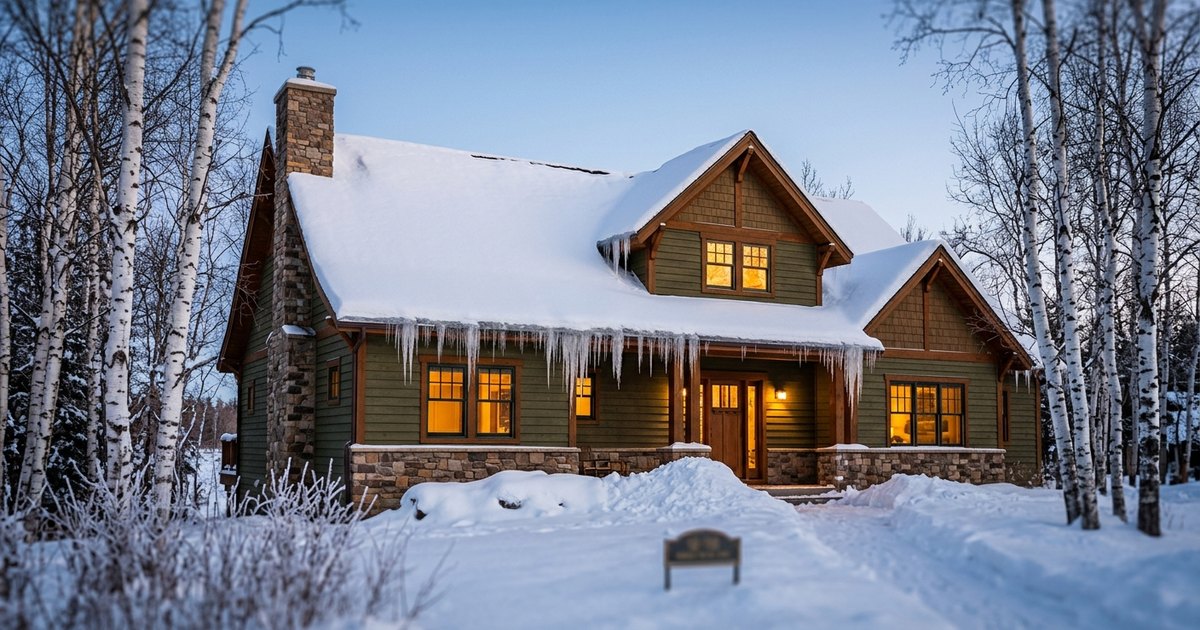
Minnesota homes pay the steepest weather penalty in the country — 8,000-9,500 heating-degree-days a year, polar vortex events down to −30°F, and gas-furnace bills that routinely cross $2,500-$3,500/winter for a leaky envelope. Insulation upgrades in MN pay back faster than any other US state precisely because the operating-cost gap between R-13 and R-60 is so wide. Here is what $1,500-$6,000 actually buys in 2026 Minnesota, and how the Xcel + CenterPoint rebate stack works.
The 2026 Minnesota insulation baseline
- Attic insulation (1,200 sq ft, blown-in cellulose to R-60): $1,500-$2,400 installed. Single highest-ROI MN project.
- Wall insulation retrofit (dense-pack cellulose, 2,000 sq ft house): $2,200-$5,800 installed via 2-inch drilled holes. Brings 1970s-1990s framed walls from R-11 to ~R-15-18 effective.
- Basement walls (closed-cell spray foam, 2-inch on 1,200 sq ft): $1,800-$3,800 installed. Critical in MN because basement-wall heat loss in cold ground is enormous.
- Rim joist / band joist (closed-cell spray foam): $450-$900. Tiny job, outsized ROI — rim-joist air leakage is the #1 source of MN basement cold drafts.
- Crawl space encapsulation: $3,500-$8,500 for full encapsulation including vapor barrier, conditioned-space air-sealing. Justified in MN for older homes with vented crawls.
- Whole-house weatherization bundle (Xcel-administered): $4,500-$11,500 gross before rebates. Includes attic + air-sealing + rim joist + duct sealing.
For your home's specific scope, run our Minnesota insulation cost calculator.
Climate zone 6/7 — why MN R-values run higher
Most of Minnesota sits in DOE climate zone 6 (R-49 to R-60 attic target). The Iron Range and far-northern counties (Cook, Lake, St. Louis) cross into zone 7 (R-60 minimum). Compared to a typical mid-Atlantic home at R-38, the MN code-recommended R-60 takes about 16 inches of cellulose depth vs 10 inches further south.
- Twin Cities metro: Climate zone 6. R-60 attic, R-13-15 walls, R-10 basement walls.
- Duluth and Iron Range: Climate zone 7. R-60 to R-75 attic recommended; R-15-21 walls.
- Southern MN (Rochester, Mankato): Climate zone 6 boundary. R-49 to R-60 attic acceptable; R-13 walls.
The Xcel Energy + CenterPoint rebate stack
- Xcel Energy Home Energy Squad: $50 home energy audit (subsidized from typical $300). Identifies the highest-ROI envelope work. Required gateway to most Xcel weatherization rebates.
- Xcel Insulation rebate: Up to 50% of attic + wall insulation cost, capped at $400 attic + $200 wall.
- Xcel Air-Sealing rebate: Up to $400 for measurable air-tightness improvement (ACH50 reduction).
- CenterPoint Energy gas rebate: Up to $850 attic insulation rebate for natural-gas customers. Stacks with Xcel electricity-side rebates.
- Federal 25C tax credit: 30% of material cost (labor not eligible for insulation), capped at $1,200/year envelope category. Stacks with everything above.
- HEEHRA insulation rebate: Up to $1,600 for households under 150% AMI, point-of-sale. MN enrolled in HEEHRA in late 2025; flowing in 2026.
- MN Power and Otter Tail Power: Run separate rebate programs for utility customers outside Xcel territory.
Net cost — typical 1,400 sq ft attic, Twin Cities homeowner, Xcel + CenterPoint customer
- Gross install (cellulose to R-60, air-sealing): $1,950
- CenterPoint gas rebate: −$850
- Xcel insulation rebate: −$400
- Xcel air-sealing bonus: −$200
- Federal 25C credit (~$650 material): −$195
- Net out of pocket: $305
- Annual gas savings: $290-$420
- Payback: 9-13 months
What R-values you probably already have
- Pre-1960 MN home, original insulation: Attic R-7 to R-13. Walls often empty or stuffed with newsprint/horsehair.
- 1960s-1970s MN home: Attic R-13 to R-19. Walls R-11 fiberglass batt.
- 1980s-1990s MN home: Attic R-19 to R-30. Walls R-13.
- 2000s+ MN home, MN energy code: Attic R-38 to R-49. Walls R-13-19.
- 2010s+ MN home, IECC 2012+: Attic R-49 to R-60. Walls R-19-21.
The polar vortex math
Why MN insulation upgrades pay back faster than anywhere else: heating-degree-days. A house in Minneapolis loses heat for 8,200 HDD/year. The same house in Atlanta loses heat for 2,800 HDD/year. Every R-value point you add to a MN attic delivers ~3× the operating-cost savings of the same upgrade in Atlanta.
- R-19 to R-49 attic upgrade, 1,400 sq ft, Twin Cities natural gas at $1.05/therm: $290-$420/year savings.
- Same upgrade, Atlanta home: $90-$140/year savings.
- Same upgrade with electric heat (no gas): Add 35-45% more — heat-pump operation efficiency makes the marginal-R math even more favorable.
MN-specific gotchas
- Ice dams. Under-insulated MN attics with poor ventilation cause ice dams every winter. The cost of an ice-dam removal job ($350-$1,400 per event) plus eventual leak repair ($2K-$15K) dwarfs the insulation upgrade cost. Insulation + ventilation balance is the only permanent fix.
- Vapor barrier rules. MN building code requires a Class I or II vapor retarder on the warm side of insulation in climate zone 6+. Spray-foam walls need either a smart vapor retarder OR membrane — not standard 6-mil poly.
- Vermiculite insulation. Many pre-1990 MN homes have vermiculite attic insulation (silvery-gray, pebbly texture). Roughly 70% of vermiculite from the Libby, MT mine is asbestos-contaminated. Don't disturb. Remediation runs $4-$10/sq ft via licensed abatement.
- Knob-and-tube wiring. Pre-1950 MN homes with knob-and-tube wiring CANNOT have insulation blown over them — code violation and insurance issue. Rewire first.
- Roof venting balance. Adding R-60 of attic insulation without verifying soffit-to-ridge ventilation creates moisture problems in the deep cold. Always include ventilation assessment in scope.
Minnesota insulation FAQs
What R-value is required by Minnesota energy code? The 2020 MN Residential Energy Code (Chapter 1322) requires R-49 attic minimum (zone 6) or R-60 (zone 7), R-20+5 ci walls for new construction. Retrofits aren't bound by new-construction code, but the same targets are recommended for ROI.
Should I do walls or attic first? Always attic first. Heat rises — attic insulation captures 60-70% of envelope heat loss in a typical MN home. Wall insulation captures 20-25%. Same dollar invested in attic upgrade saves more in MN gas bills.
What about blower-door testing? Critical in MN. The Xcel Home Energy Squad audit includes one. Air-sealing rebates require pre- and post-test verification (typical ACH50 improvement target: 20-35%).
Can I DIY blown-in cellulose in a MN attic? Yes — Home Depot rents the blower free with material purchase. Plan a full Saturday for 1,400 sq ft. Wear PPE: goggles, dust mask, long sleeves. DIY material-only cost: ~$0.50/sq ft vs $1.10-$1.55 installed.
Get a state-adjusted estimate. Run our Minnesota insulation cost calculator for your scope, compare materials in the spray-foam vs blown-in vs batt guide, or read the dedicated attic insulation cost guide.
More cost guides for Minnesota
Planning multiple projects? Every other 2026 Minnesota cost guide carries the same state-specific labor and pricing detail.
- Cost GuideBasement Finishing Cost in Minnesota 2026
- Cost GuideBathroom Remodel Cost in Minnesota 2026
- Cost GuideDeck Construction Cost in Minnesota 2026
- Fence InstallationFence Installation Cost in Minnesota 2026 — Frost-Depth (60in), Labor & Material Guide by Metro
- Cost GuideFlooring Installation Cost in Minnesota 2026
- FurnaceFurnace Cost in Minnesota 2026 — Cold-Climate Heat Pump Math at −20°F and Why Dual-Fuel Wins
- Cost GuideHardscape Installation Cost in Minnesota 2026
- Cost GuideIn-Ground Pool Installation Cost in Minnesota 2026
- Cost GuideKitchen Remodel Cost in Minnesota 2026
- Cost GuideLandscaping Cost in Minnesota 2026
- Cost GuidePainting Cost in Minnesota 2026
- Cost GuideRoof Replacement Cost in Minnesota 2026
- Cost GuideSolar Panels Cost in Minnesota 2026
- Window ReplacementWindow Replacement Cost in Minnesota 2026
Cost by state for this project
State-adjusted ranges with local labor and material multipliers.