Insulation
Attic Insulation Cost Guide 2026 — by R-Value, Material & State + Full Incentive Stack
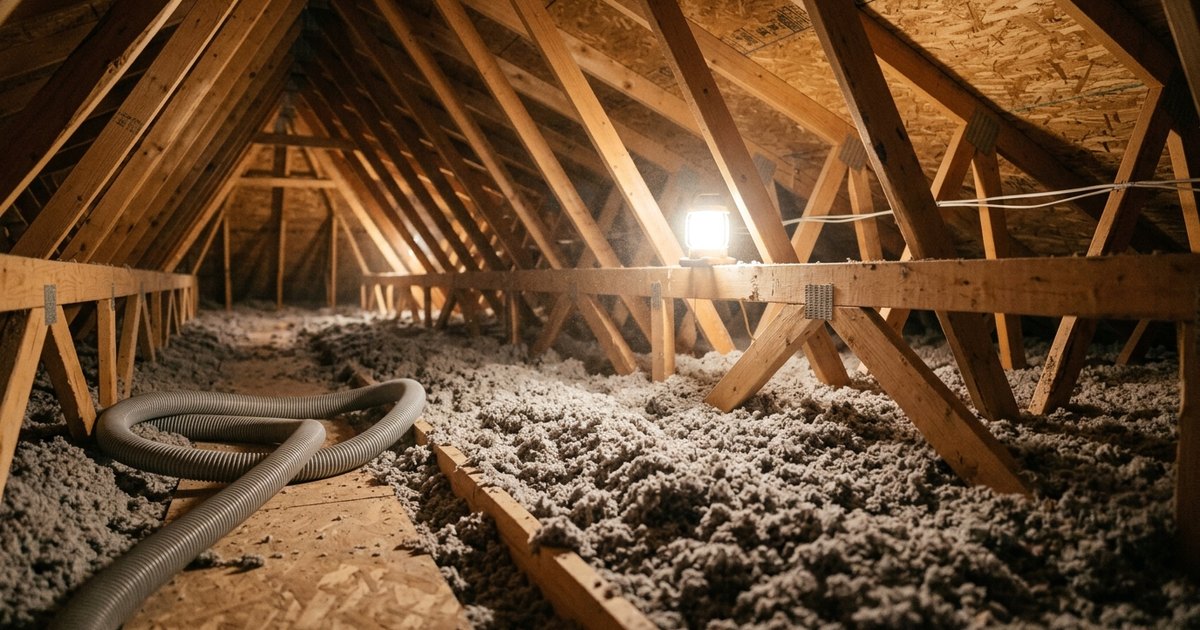
Attic insulation is the single highest-ROI energy retrofit a homeowner can do. The average US home loses 25-35% of conditioned air through an under-insulated attic — and unlike windows, basement walls, or duct sealing, you can usually upgrade the attic for under $2,000 net of state/utility incentives. Here is the 2026 cost breakdown by R-value, square footage, material, and state, including the current HEEHRA + utility incentive stack (federal 25C expired Dec 31, 2025).
2026 attic insulation cost — typical jobs
| Job size | Blown-in cellulose (R-49) | Blown-in fiberglass (R-49) | Spray foam at deck (R-30) | Fiberglass batts (R-38, 2 layers) |
|---|---|---|---|---|
| 800 sq ft attic (small) | $1,050-$1,400 | $850-$1,250 | $3,000-$4,400 | $950-$1,350 |
| 1,200 sq ft attic (avg) | $1,500-$1,950 | $1,200-$1,750 | $4,400-$6,400 | $1,350-$1,900 |
| 1,800 sq ft attic (large) | $2,150-$2,900 | $1,750-$2,550 | $6,500-$9,400 | $1,950-$2,750 |
| 2,400 sq ft attic (very large) | $2,750-$3,800 | $2,200-$3,200 | $8,500-$12,500 | $2,550-$3,600 |
Prices include material, labor, blower or sprayer equipment, and waste cleanup. Add $200-$400 for air-sealing the attic plane before insulation (top plates, can lights, plumbing penetrations) — almost always worth the spend because un-sealed attics lose 15-25% of R-value to convective bypass.
R-value target by climate zone (DOE 2026 recommendation)
| DOE climate zone | States (examples) | Recommended attic R-value | Cellulose thickness |
|---|---|---|---|
| 1-2 (hot) | FL, southern TX, HI | R-30 to R-49 | 8-13 inches |
| 3 (mixed-warm) | GA, AL, AZ, southern CA, NC | R-30 to R-49 | 8-13 inches |
| 4 (mixed) | TN, VA, KY, MO, KS | R-49 to R-60 | 13-16 inches |
| 5 (cool) | NY, PA, IL, OH, IN, MI | R-49 to R-60 | 13-16 inches |
| 6 (cold) | MA, CT, VT, WI, MN | R-60 | 16 inches |
| 7-8 (very cold) | ME, NH, ND, MT, AK | R-60 to R-75 | 16-20 inches |
What R-value do you already have? (quick estimate)
- Bare joists visible, no insulation: R-0 to R-5.
- 3-4 inches of insulation, joists visible above: R-9 to R-13 (typical of 1960s-1980s construction).
- 6-7 inches, just covering joists: R-19 to R-25 (1990s code-minimum).
- 10-12 inches, joists buried: R-30 to R-38 (2000s code).
- 14+ inches, deep blanket: R-44 to R-49 (current best practice).
The 2026 incentive stack
- Federal 25C credit: expired for property placed in service after Dec 31, 2025 — budget on gross cost minus utility/HEEHRA rebates only.
- HEEHRA insulation rebate: Up to $1,600 for households under 150% AMI, point-of-sale (your contractor applies it as an invoice discount). Live in MA, NY, ME, VT, NH, RI, CT, CA, NJ as of February 2026.
- Utility-level rebates: Mass Save offers up to 75% off attic insulation up to $4,000. NYSERDA Comfort Home rebate covers $1,500-$3,200. ConEd and National Grid run $0.40-$0.65/sq ft attic-specific rebates.
- Blower-door bonus rebates: Many programs add $100-$400 if you achieve a measurable air-sealing improvement (ACH50 drop of 15%+) verified by a post-work blower-door test. Spend the $200 on the test — it usually unlocks the bonus.
Net cost — typical 1,200 sq ft attic, cellulose, MA homeowner
- Gross install: $1,850
- Mass Save: −$1,200
- Federal 25C credit: expired 12/31/2025 — $0
- Blower-door bonus: −$200
- Net out of pocket: $255
- Annual energy savings: $190-$280
- Payback: ~1.2 years
Common attic insulation mistakes
- Insulating before air-sealing. Adding R-49 of cellulose over a leaky attic plane delivers ~70% of the R-value (the warm air bypasses the insulation through wiring, plumbing, and top-plate gaps). Always air-seal first; insulate second.
- Blocking soffit vents with insulation. Most attics need continuous ventilation under the roof deck. Use baffles to keep insulation from clogging the soffit airflow path. If the contractor doesn't mention baffles, ask before they start.
- Mixing insulation types incorrectly. Adding fiberglass batts ON TOP of existing blown-in fiberglass compresses the bottom layer and reduces R-value. Adding cellulose on top of fiberglass works fine.
- Forgetting the attic hatch. An uninsulated attic hatch is equivalent to a 9-square-foot hole in your attic insulation. Add a hatch cover or pre-built insulated box for $40-$120 — it pays back in a winter.
- Spray foam at the joist level on a vented attic. Wrong product for the cavity. Closed-cell foam belongs at the roof deck (if you're cathedralizing) or rim joist, not on top of attic floor joists. See the insulation type comparison guide.
Attic insulation FAQs
Can I DIY it? Yes for blown-in cellulose or fiberglass. Home Depot rents the blower free with material purchase. Plan 4-6 hours for 1,200 sq ft, plus 2-3 hours of prep (laying baffles, sealing top plates). DIY material-only cost: $0.45-$0.70/sq ft.
How long does it take a contractor? Crew of 2: 3-5 hours for a typical attic. Spray-foam jobs add a curing day before you can use the space normally.
Will it work without replacing my HVAC? Yes — insulation upgrades are non-conditional. The HVAC sizing is now slightly oversized post-retrofit, which means shorter cycles but more comfortable house. If your HVAC is at end-of-life, upgrading both at once lets you right-size to ~0.5-1 ton smaller.
Is rebate cash taxable? Utility rebates are generally non-taxable for residential energy improvements. (Historical note: the federal 25C credit was non-refundable — and in any case it expired Dec 31, 2025, so there is nothing federal left to claim for 2026 installs.)
Get a state-adjusted estimate. Attic insulation install cost varies by ~38% between cheap and expensive states. Run our insulation cost calculator for your state, compare materials in the spray-foam vs blown-in vs batt guide, or read the heat pump vs furnace comparison — insulating before HVAC sizing usually drops the right-sized system by half a ton.
Related HavenCostGuide resources
- Our pricing methodology — how we source install and rebate data for insulation projects across all 50 states.
- Pre-bid scope checklist — the 40 items to spell out to your insulation contractor BEFORE they quote, so bids come back apples-to-apples.
- Renovation ROI calculator — plug insulation net cost + annual energy savings to see payback in years.
- Quote fairness calculator — check whether an insulation bid is above, at, or below market for your state.
Keep reading
Kitchen Remodel
Kitchen Remodel Cost in Washington 2026 — Seattle Metro Premium & PNW Cabinet Sourcing
9 min read
Kitchen Remodel
Kitchen Remodel Cost in Colorado 2026 — Why CO Kitchens Run 10-20% Above National
9 min read
Kitchen Remodel
Kitchen Remodel Cost in Florida 2026 — Miami, Tampa, Orlando, Jacksonville Pricing
9 min read