Insulation
Spray Foam vs Blown-In vs Batt Insulation — 2026 Cost, R-Value & Payback Comparison
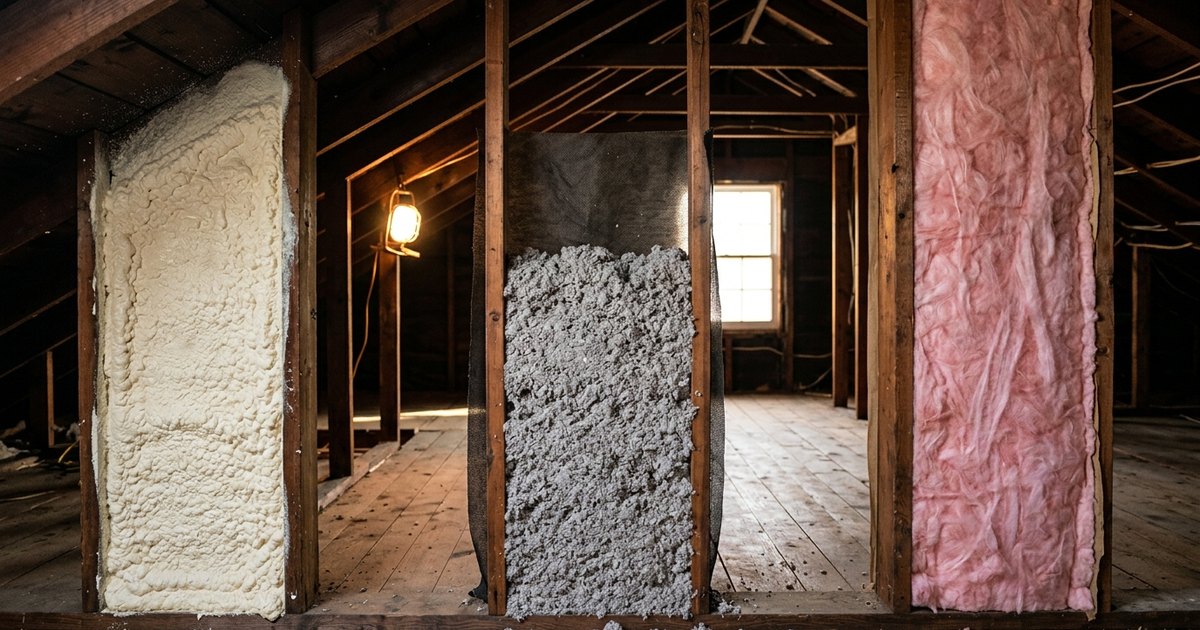
Spray foam, blown-in cellulose, or fiberglass batts? It is the most consequential insulation decision a homeowner makes — wrong pick and you over-spend by 2-3× OR under-insulate and lose the energy gains. The right answer depends on the cavity (attic floor, wall stud bay, rim joist), the climate zone, and whether you can claim the federal 25C credit. Here is the honest 2026 comparison.
2026 installed-cost-per-square-foot comparison
| Material | Installed cost / sq ft | R-value per inch | Vapor barrier | Air-seals? |
|---|---|---|---|---|
| Closed-cell spray foam | $1.65-$3.20 | R-6.5 to R-7 | Yes (built in) | Yes (excellent) |
| Open-cell spray foam | $0.95-$1.85 | R-3.5 to R-3.7 | No | Yes (good) |
| Blown-in cellulose (dense-pack) | $0.85-$1.55 | R-3.6 to R-3.8 | No | Partial |
| Blown-in fiberglass | $0.65-$1.25 | R-2.2 to R-2.7 | No | No |
| Fiberglass batts (R-15 / R-21) | $0.55-$1.10 | R-3.0 to R-3.7 | No (kraft-faced has limited) | No |
| Mineral wool batts | $0.95-$1.60 | R-3.7 to R-4.2 | No | No (good fire/sound) |
The 1,000 sq ft attic — what does it actually cost?
For a typical 1,000 sq ft attic floor, raising the R-value from R-13 (1990s code-minimum) to R-49 (current DOE recommendation for zones 5-7):
- Blown-in cellulose: Add 10 inches → R-38 boost → ~$1,300-$1,700 installed.
- Blown-in fiberglass: Add 14 inches → R-35 boost → ~$1,000-$1,500 installed.
- Closed-cell spray foam at the roof deck (cathedralizing): 4 inches → R-26 → ~$3,800-$5,800. Plus you can use the attic as conditioned space afterward.
- Fiberglass batts (rolled across joists): Two layers of R-19 → R-38 → ~$1,150-$1,650. Cheap but settles 4-6% per decade.
Which material for which cavity
| Cavity | Best choice | Why |
|---|---|---|
| Attic floor (vented attic) | Blown-in cellulose | Best R per dollar. Settles less than fiberglass. Works over irregular framing. |
| Roof deck (cathedralized) | Closed-cell spray foam | Only option that air-seals AND adds R-value AND handles cathedralized roofs. Required for unvented attic assemblies. |
| Existing closed wall cavity (retrofit) | Dense-pack blown-in cellulose | Installed via 2-inch drill holes; fills around wiring without removing drywall. |
| New-construction wall stud bay | Fiberglass batts OR mineral wool batts | Cheapest per R, easy access during framing stage. Mineral wool wins on fire + sound at +50% cost. |
| Rim joist / band joist | Closed-cell spray foam | Single biggest air-leak source in most homes. Foam air-seals + insulates simultaneously. Worth the $400-$700 spend. |
| Basement walls (interior) | Closed-cell spray foam OR rigid foam board | Below-grade walls need vapor-resistant insulation. Cellulose/fiberglass will trap moisture and grow mold. |
| Crawl space | Closed-cell spray foam (on walls, not floor above) | Encapsulating the crawl space with foam beats insulating the floor above by ~30% on operating cost. |
The 25C insulation credit math
The federal 25C credit covers 30% of insulation material costs, capped at $1,200/year for the "envelope" category (insulation + air sealing + windows + doors combined). Material-only — labor doesn't count for insulation under 25C.
- Cellulose attic at $1,500 installed (~$600 material): $180 credit. Stack with windows or weatherstripping the same year to use more of the $1,200 cap.
- Spray foam at $4,500 installed (~$1,800 material): $540 credit. Closer to cap-maxing the credit in a single project.
- HEEHRA insulation rebate: Up to $1,600 for income-qualified households, point-of-sale. Stacks with 25C in the same tax year.
- Mass Save / NYSERDA / Efficiency Vermont: Additional $0.30-$1.50/sq ft rebate for insulation upgrades that pass blower-door verification. Stacks with both above.
10-year energy payback
Annual energy savings from raising attic insulation from R-13 to R-49 in zone 5-6 (Mid-Atlantic, Mountain West, Upper Midwest): $180-$320/year. Payback periods after federal 25C credit:
- Blown-in cellulose ($1,500 net $1,320): 4-7 years.
- Spray foam at the deck ($4,500 net $3,960): 12-22 years on energy alone — only justifies on a cathedralized roof or unvented attic assembly where blown-in isn't an option.
- Fiberglass batts ($1,150 net $1,030): 3-6 years. Cheapest payback but settles, so the R-value drops 4-6% per decade.
The honest spray-foam warning
Spray foam is over-prescribed by contractors because the margin is 2-3× higher than blown-in. Closed-cell foam is the right material for the rim joist, basement walls, crawl space, and cathedralized roof deck — but it is the wrong material for a normal vented attic floor. If a contractor pitches you spray foam on top of attic floor joists, get a second opinion. The right material there is blown-in cellulose at one-third the cost.
Also: any spray-foam contractor must verify the mix ratio with on-site testing. Off-ratio foam off-gasses formaldehyde and similar compounds for months, can require complete removal at $4-$9/sq ft, and is the #1 source of class-action insulation litigation in 2024-2025. Ask for the temperature/humidity log of the day they sprayed before signing the final payment.
Insulation type FAQs
Is spray foam worth it? Yes, in the right cavity (rim joist, basement, crawl space, cathedralized roof deck). No, on a normal attic floor — that's where it's most often over-sold.
Does blown-in cellulose attract mice? Cellulose is treated with borate, which is mildly repellent to insects and rodents. No documented evidence cellulose attracts mice more than fiberglass. Anecdotal complaints are usually about preexisting rodent issues, not the material itself.
How long does each material last? Spray foam: 60-80 years (essentially permanent). Cellulose: 30+ years with negligible settling. Fiberglass batts: 25-30 years before settling drops R-value below useful. Blown-in fiberglass: 20-25 years.
Can I DIY blown-in cellulose? Yes. Home Depot and Lowes rent the blower machines for ~$100/day free with material purchase. DIY material-only cost runs ~$0.45-$0.65/sq ft vs $0.85-$1.55 installed. Plan a full Saturday for 1,200 sq ft of attic.
Get a state-adjusted estimate. Insulation labor varies by ~38% between cheap and expensive states. Run our insulation cost calculator for your state, read the dedicated attic insulation cost guide if attic is your priority, or compare against the heat pump vs furnace decision — insulating first usually drops the right-sized heat pump by half a ton.