HVAC
Window Heat Pumps: Are They Actually Worth the Upfront Cost? (2026)
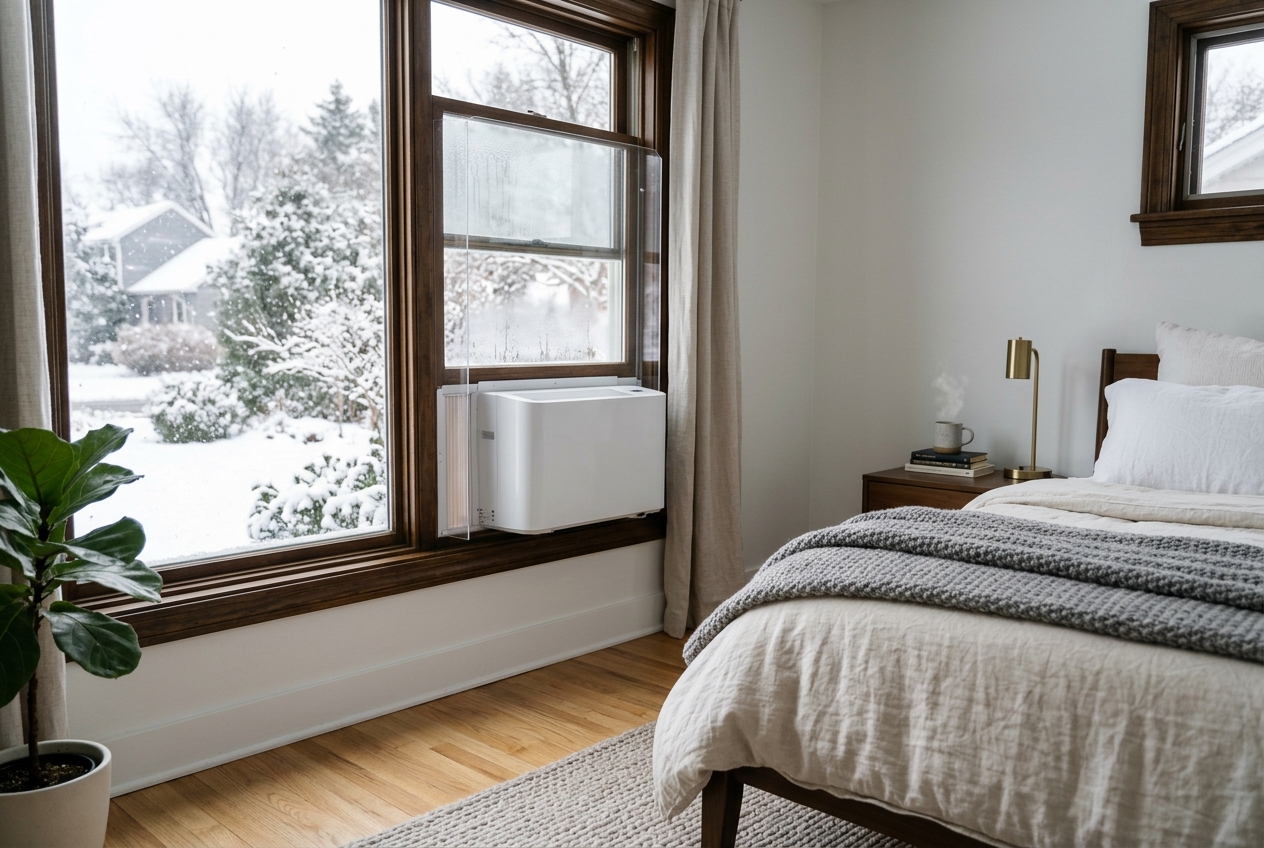
Window heat pumps promise heating and cooling from a unit that plugs into a regular outlet, with no ductwork, no outdoor condenser, and usually no contractor. That pitch is real, but the label covers three very different products, from a $350 window AC that heats on mild days to a $3,800 cold-climate unit that keeps heating at -13°F. Whether one is worth the money depends almost entirely on which type you buy and what it replaces.
Short answer: an inverter window heat pump is one of the best-value upgrades in home comfort if it replaces a window AC plus a space heater. The extra cost often pays back in one or two heating seasons. A cold-climate window heat pump only pays back on energy alone in cold climates with heavy use. Its strongest case is when a mini-split isn't allowed or practical (renters, condos, landmark buildings).
The three types sold as "window heat pumps"
| Type | Example models | Typical 2026 price | Heats down to | Best for |
|---|---|---|---|---|
| Basic heat/cool window AC | Midea 8,000 BTU heat/cool inverter | $300-$400 | ~40°F outdoors | Spring/fall heating in mild climates |
| Inverter window heat pump | GE Profile 8,000 BTU (AWGP08WWF) | $390-$530 | ~5°F outdoors (capacity drops as it gets colder) | Primary room heat in mild-to-moderate winters |
| Cold-climate window heat pump | Midea Packaged Window Heat Pump, Gradient All-Weather 120V | ~$3,000-$3,800 (mostly through housing and utility programs) | -13°F (Gradient) to -22°F (Midea) | Real winter heating where a mini-split isn't an option |
Prices move constantly between list and sale price; check current retailer listings. Cold-climate units are still sold mainly through housing authorities, building programs and regional distributors rather than off the shelf. All three types run on a standard 120V outlet.
Watch the heating BTU rating. If a "heat/cool" window unit's heating output is roughly half its cooling output, it's probably using an electric resistance strip, not a heat pump. That heats like a space heater and costs the same to run. A true heat pump lists heating capacity close to its cooling capacity.
What it costs installed (one room)
| Option (one room, heating + cooling) | Equipment | Install | Total upfront |
|---|---|---|---|
| Window AC + electric space heater | $250-$450 + $50-$150 | DIY | $300-$600 |
| Inverter window heat pump | $390-$530 | DIY, or $100-$300 handyman + $50-$150 support bracket | $400-$950 |
| Cold-climate window heat pump | ~$3,000-$3,800 | $0-$700 (saddle units need a careful fit and exterior clearance) | $3,000-$4,500 |
| Single-zone ductless mini-split | Included | Licensed installer, usually a dedicated circuit and permit | $3,500-$5,500 |
| Whole-home central heat pump | Included | Contractor, electrical, permit | $9,250-$17,350 |
Mini-split and central figures come from our mini-split cost guide and central AC vs heat pump comparison. Run the HVAC cost calculator for state-adjusted whole-home numbers.
Does it pay back? A worked example
Here's the comparison that matters for most buyers: a heat pump vs a window AC plus an electric space heater. Cooling efficiency is similar, so the savings come almost entirely from heating. A heat pump delivers 2-3 units of heat per unit of electricity; a space heater delivers one.
| One room, one heating season | Moderate winter (~6M BTU of heat) | Cold winter (~10M BTU of heat) |
|---|---|---|
| Space heater (COP 1.0) | ~1,760 kWh, about $316 | ~2,930 kWh, about $528 |
| Inverter window heat pump (seasonal COP ~2.5) | ~700 kWh, about $127 | Not suited; capacity falls off well before 5°F |
| Cold-climate window heat pump (seasonal COP ~2.2) | ~800 kWh, about $144 | ~1,330 kWh, about $240 |
| Yearly heating savings vs space heater | ~$170-$190 | ~$290 |
Assumptions: electricity at $0.18/kWh (about the 2026 U.S. residential average; your rate may be much higher or lower), one well-sealed room of about 300-450 sq ft. Higher electricity rates make savings larger, and lower rates make them smaller. These are illustrative estimates, not a guarantee for your home.
Your payback
Plug in your power price and current heat
Heating now, per season: $317
Inverter window heat pump
~$250 more than a window AC
- Running cost
- $127
- Yearly savings
- $190
About 1.3 heating seasons
Single-zone mini-split
$3,500-$5,500, pro-installed
- Running cost
- $99
- Yearly savings
- $218
About 18.8 heating seasons
The window heat pump pays back faster here, with no installer, permit or wall hole.
Estimates for one well-sealed 300-450 sq ft room. Assumes 90% efficient gas/propane, 85% oil, window heat pump seasonal efficiency of 2.5x and mini-split 3.2x. Payback counts the extra cost over a ~$400 window AC. No federal credit applies in 2026.
- Inverter window heat pump vs window AC + space heater: it costs roughly $100-$400 more upfront and saves ~$170-$190 a season in a moderate climate. Payback: about 1-2 heating seasons. This is the clear win.
- Cold-climate window heat pump vs window AC + space heater: it costs roughly $2,400-$4,200 more and saves ~$290 a season in a cold climate. Payback on energy alone: about 8-15 years, roughly the unit's expected life. It's worth it for comfort, safety (no space heaters) or a building that bans outdoor units, not for the energy savings alone.
- Cold-climate window heat pump vs a single-zone mini-split: similar total cost. The mini-split is quieter, more efficient and leaves the window clear. The window unit needs no installer, permit or wall penetration, and moves with you. Renters and condo owners often can't install a mini-split at all.
Rebates and credits in 2026
No federal tax credit applies. The 25C Energy Efficient Home Improvement Credit expired for equipment placed in service after Dec 31, 2025, so a window heat pump bought in 2026 gets nothing federally. Some utilities offer small ENERGY STAR rebates on efficient window units, typically $25-$100. A few housing authorities and utility pilots fund cold-climate window units, usually for multifamily buildings and income-qualified residents rather than individual buyers. State HEEHRA heat-pump rebates are generally aimed at contractor-installed systems, so check whether your state's program covers a window unit before counting on it. See current energy rebates by state.
The honest limits
- Window fit: most models need a double-hung (sash) window. Casement, slider and very wide or narrow windows often won't work, and saddle-style units also need exterior clearance below the sill.
- One room, not a house: one unit realistically conditions a single room or a small open area. Several units add up fast; past 3-4 rooms, a multi-zone mini-split or central heat pump usually makes more sense.
- Cold snaps: even cold-climate units lose capacity on the coldest nights. In very cold climates, keep a backup heat source.
- Noise and light: the compressor sits in the window. Inverter and saddle designs are much quieter than older window ACs but not as quiet as a mini-split's indoor head.
- Building rules: HOAs, co-ops and landlords may restrict window units (or require brackets). Check before buying.
- Winter removal: heat pump units are meant to stay in year-round, so seal around them properly to avoid drafts.
Verdict: who should buy one?
- Buy an inverter window heat pump if you'd otherwise buy a window AC anyway and heat the room with a space heater or expensive electric baseboard, and your winters rarely stay below the teens.
- Consider a cold-climate window heat pump if you rent or own a condo, have cold winters and can't install a mini-split, or want to replace an unsafe space heater with real heat.
- Skip it and get a mini-split if you own your home, want the quietest and most efficient room heating and cooling, and can do a permitted install.
- Skip it and price a central heat pump if you need to heat and cool most of the house. Several window units cost more to run and look after than one ducted or multi-zone system.
FAQ
Can a window heat pump heat a whole house? No. One unit typically handles one room. For whole-home heating, see the heat pump vs furnace comparison.
Do window heat pumps need a special outlet? The models above run on a standard 120V outlet. A dedicated 15A or 20A circuit is still a good idea, since many bedroom circuits are shared.
How long do they last? Expect roughly 8-12 years for mainstream window units, similar to a quality window AC. Cold-climate models are too new for long-term data.
Is a "heat/cool" window AC the same thing? Not always. Many cheaper heat/cool units only heat above about 40°F, or use an electric resistance strip. Check that the spec sheet says "heat pump" and that the low-temperature rating fits your climate.
Comparing against a full system? Run our HVAC cost calculator for state-adjusted central AC, heat pump, mini-split and dual-fuel pricing.
Keep reading
Kitchen Remodel
Kitchen Remodel Cost in Washington 2026 — Seattle Metro Premium & PNW Cabinet Sourcing
9 min read
Kitchen Remodel
Kitchen Remodel Cost in Colorado 2026 — Why CO Kitchens Run 10-20% Above National
9 min read
Kitchen Remodel
Kitchen Remodel Cost in Florida 2026 — Miami, Tampa, Orlando, Jacksonville Pricing
9 min read