HVAC
Mini-Split AC Cost Guide 2026 — Installation, Brands & Real Pricing
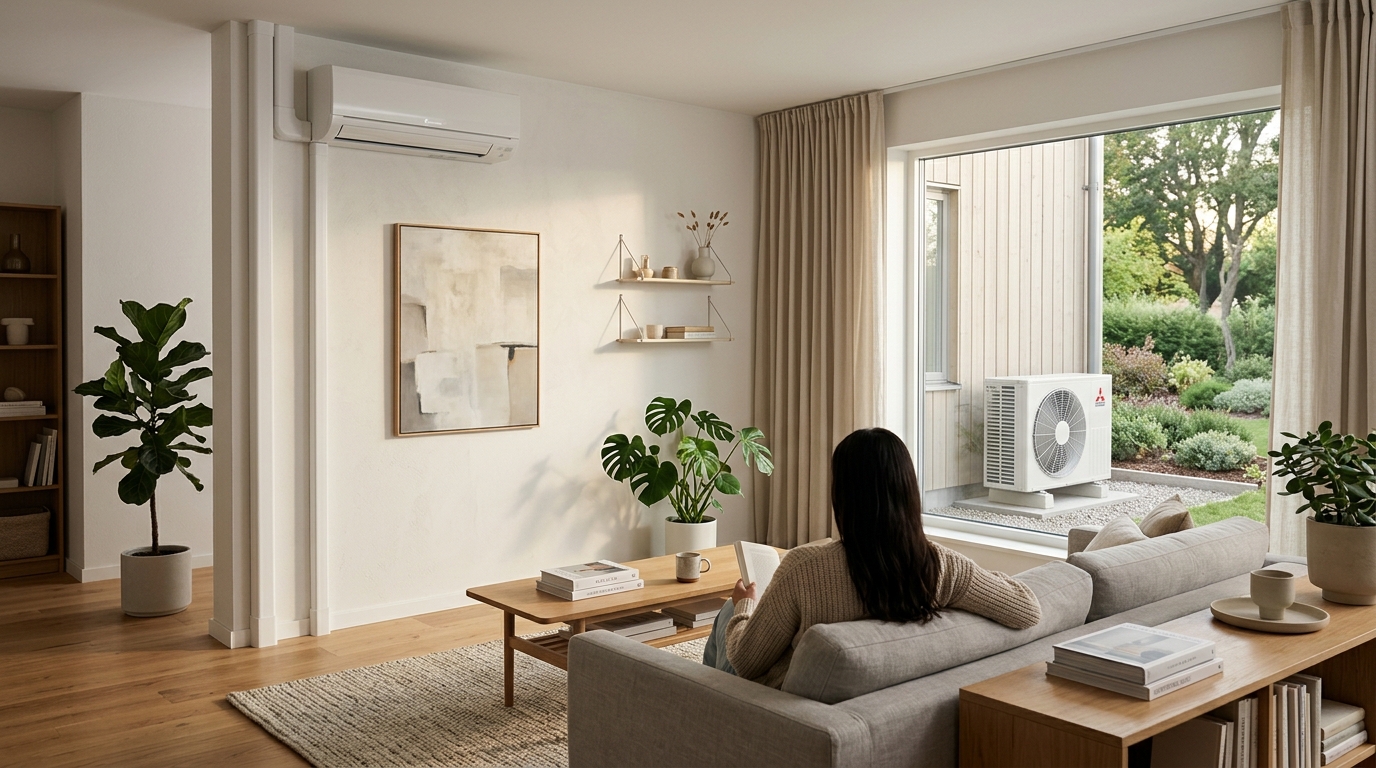
Ductless mini-split AC is the fastest-growing residential cooling category in the U.S. — it cools a single room or a whole house without ductwork, runs ~25% more efficient than a central AC, and doubles as a heat pump in winter. The catch: total installed cost ranges from $3,500 for a single-zone bedroom retrofit to $19,000+ for a 5-zone whole-house system, and three line items account for most of the spread.
Mini-split AC cost at a glance (2026)
| System type | Equipment | Install labor | Total installed (national avg.) |
|---|---|---|---|
| Single-zone (1 head, 9-12K BTU) | $1,200-$2,400 | $1,500-$2,800 | $3,500-$5,500 |
| Dual-zone (2 heads, 18-24K BTU) | $2,400-$4,200 | $2,500-$4,200 | $5,500-$9,500 |
| Tri-zone (3 heads, 27-36K BTU) | $3,800-$6,500 | $3,800-$6,200 | $8,000-$13,500 |
| 4-5-zone whole-house (42-60K BTU) | $6,200-$10,500 | $5,500-$9,500 | $12,000-$19,500 |
Ranges represent national averages for mid-tier (Mitsubishi M-Series, Daikin Aurora, LG LMU) inverter systems. Adjust ±15-30% for state cost of living — see our state cost-index by state.
What drives mini-split cost variance
Three line items account for ~80% of the price spread between a cheap bid and an expensive one:
- Brand + inverter quality — Mitsubishi Hyper-Heat and Daikin Aurora cost 35-50% more than a Senville or Pioneer DIY unit, but their inverters maintain rated capacity down to -5°F vs. -13°F (where budget brands derate to 60% capacity).
- Line-set length + concealment — Standard 25 ft line set is included in most bids; runs over 50 ft add $200-$600. Concealing the line set inside walls (vs. exterior line-set cover) adds $400-$1,200 in carpentry labor.
- Electrical panel capacity — A new 240V dedicated circuit costs $400-$900. Older homes with a full 100A panel often need a service upgrade ($1,800-$3,500 extra) to add the breaker.
Brand-by-brand 2026 pricing (single-zone 12K BTU, equipment only)
| Brand | Equipment cost | SEER2 | Notes |
|---|---|---|---|
| Mitsubishi M-Series Hyper-Heat | $2,100-$2,600 | 22-26 | Cold-climate gold standard. 12-year warranty. |
| Daikin Aurora | $1,900-$2,400 | 21-25 | Quieter than Mitsubishi. 12-year warranty if installer-registered. |
| LG Art Cool / Red | $1,600-$2,100 | 20-23 | Strong mid-tier; weaker cold-climate performance. |
| Fujitsu Halcyon | $1,800-$2,300 | 21-24 | Best 5-year support; mid-volume installer network. |
| Senville / Pioneer (DIY brands) | $900-$1,400 | 17-21 | DIY pre-charged line sets. Warranty void without licensed installer. |
Hidden cost-adders most homeowners miss
- Permit fees — $125-$450 in most municipalities; mandatory in California, New York, Massachusetts, and Washington. Skipping the permit is the #1 reason mini-split work gets flagged during home sale.
- Condensate pump — Required when the indoor head can't drain by gravity. Adds $180-$400 installed.
- Wall-mount disconnect — Code-required in most states. $80-$150 in materials, included in 90% of bids but missing from cheap quotes.
- Surge protector — Mitsubishi and Daikin warranties require a UL-listed surge protector. Adds $120-$280.
- Crane / lift rental — Outdoor condensers over the second story or roof-mounted units require a lift truck ($350-$800/day).
Should you go single-zone or multi-zone?
Multi-zone systems share one outdoor condenser across multiple indoor heads — convenient but with two trade-offs most homeowners don't hear at the sales pitch:
- Efficiency penalty. A dual-zone runs ~10% less efficient than two single-zone systems at the same total tonnage, because one zone runs at part-load while the other is off — the inverter can't modulate as efficiently with mismatched demand.
- Single point of failure. If the outdoor condenser fails, all zones go offline. Two single-zone systems give you redundancy at slightly lower upfront cost.
The math: if you only need cooling in 2 rooms, two single-zone systems usually total ~$1,000-$1,800 less than a dual-zone — and operate cheaper long-term. Multi-zone wins when you need 4+ heads or the architecture only supports one line-set penetration.
Federal + state incentives in 2026
Mini-splits qualify for the federal 25C Energy Efficient Home Improvement Credit — 30% of cost up to $2,000/year when the system has SEER2 ≥ 16, EER2 ≥ 12, and HSPF2 ≥ 10. Most mid-tier and higher inverter mini-splits qualify. State and utility rebates often stack:
- Mass Save (Massachusetts): up to $10,000 for whole-home heat-pump conversion.
- NYSERDA (New York): $1,000-$3,500 per ton for ENERGY STAR cold-climate units.
- California TECH Clean: up to $3,000 per system.
- Most utilities offer $300-$1,200 per zone in addition to state programs.
Check our state utility rebate lookup for current programs in your area.
Mini-split FAQs
How long does a mini-split AC last? Mid-tier (Mitsubishi, Daikin, LG, Fujitsu) systems last 18-22 years with annual cleaning. Budget DIY brands typically fail at 8-12 years, often outside the original warranty window.
Can I install a mini-split myself? The Senville / Pioneer pre-charged line-set kits market themselves as DIY-friendly, but skipping the licensed installer voids the manufacturer warranty AND any state rebate. The labor savings ($1,500-$2,800) usually disappear into warranty replacements after year 6.
Mini-split vs. central AC for a whole-house cooling project? If you already have ductwork in good condition, central AC is ~20-30% cheaper installed. If you'd need new ductwork ($8K-$18K), mini-splits become cheaper AND more efficient.
Are mini-splits worth it in cold climates? Cold-climate (Hyper-Heat) inverter mini-splits maintain 100% rated capacity to -5°F and 76% capacity to -13°F. They've replaced gas furnaces in thousands of New England retrofits since 2022. See our mini-split zoning ROI guide.
Get a state-adjusted estimate. Run our HVAC cost calculator for a ballpark in your state — accounts for labor rates, permit costs, and which mini-split brands have the strongest installer network nearby.