Smart Home
Smart HVAC Vent / Mini-Split Zoning ROI — 2026 Cost & Payback Guide
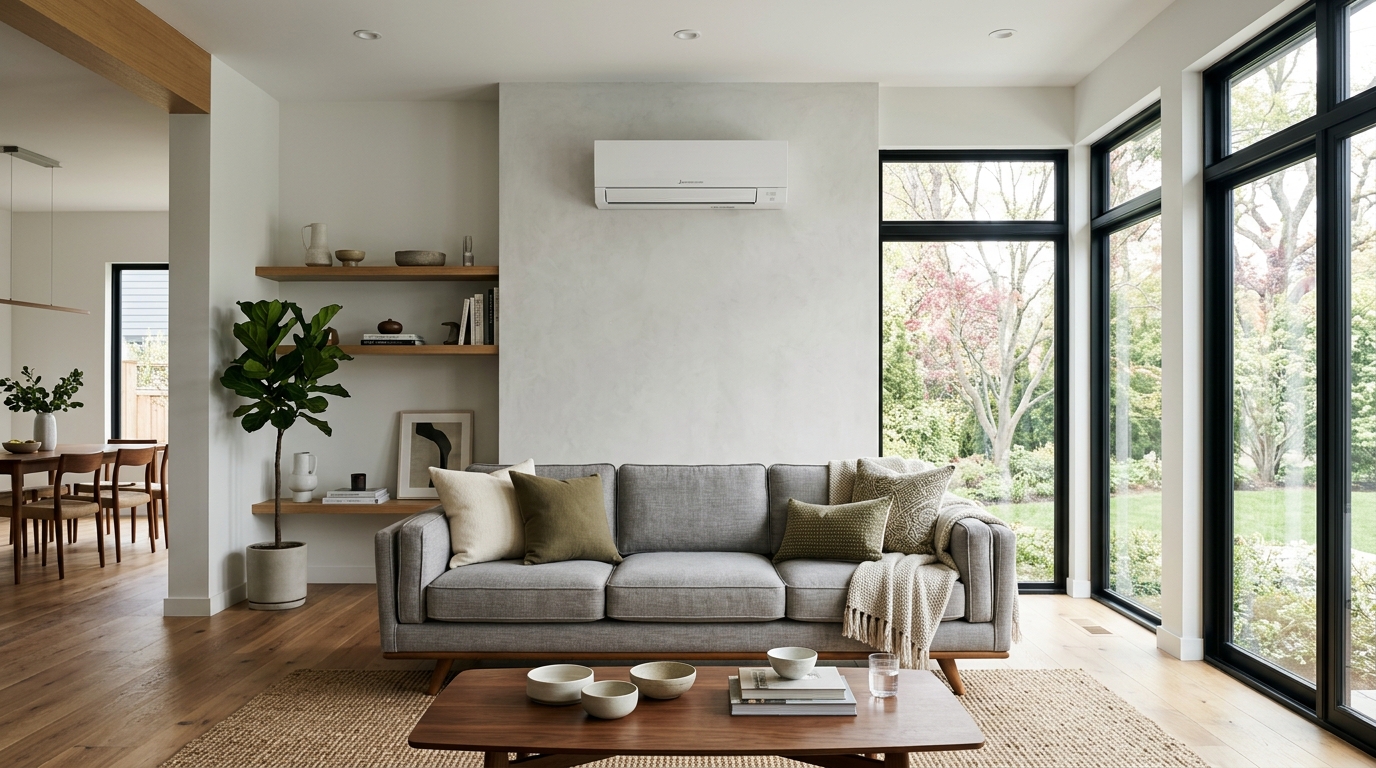
Zoning your HVAC system — making one part of the house cooler/warmer than another, on demand — is the single highest-ROI upgrade for homeowners stuck with a "the upstairs is always 8 degrees hotter than the downstairs" problem. There are two routes in 2026, and the right pick depends on your house, not the marketing:
- Smart-vent zoning ($600-$2,400 retrofit): Flair, Keen, Ecovent — replace existing vents with motorized vents controlled by room-sensor thermostats. Works with your existing furnace + AC.
- Mini-split zoning ($3,500-$14,000 install): Mitsubishi, Daikin, LG — install dedicated ductless heads in problem rooms. Independent compressors.
Smart-vent zoning (Flair / Keen / Ecovent) — cost + ROI
| Component | Per unit | Typical 8-vent home |
|---|---|---|
| Smart vent (replaces existing register) | $80-$120 | $640-$960 |
| Room sensor (temp + occupancy, per room) | $45-$70 | $180-$280 (4 rooms) |
| Smart thermostat (gateway) | $180-$280 | $180-$280 |
| DIY install (no electrician) | $0 | $0 |
| Total installed | $1,000-$1,520 |
Energy savings (annual): 10-18% on heating + cooling, primarily by closing vents in unused rooms.
For an $1,800/yr HVAC bill → $180-$325/year saved → 3-8 year payback.
Smart-vent gotchas
- Furnace static-pressure risk: closing too many vents at once raises static pressure and can damage some single-stage furnaces. Flair + Keen prevent this in software (won't close more than 60% of total airflow), but DIY-installing without using a smart thermostat that talks to the vents is dangerous.
- Won't fix structural problems: if your upstairs is always hot because the ductwork to the upstairs is undersized (very common in 1970s split-levels), smart vents can't push more air through small ducts. You need a duct upgrade or a mini-split.
- Battery replacement: most smart vents use 4× AA batteries that need replacing every 12-18 months. Multiply by 8 vents = annoying.
Mini-split zoning — cost + ROI
| Configuration | Installed cost |
|---|---|
| Single-zone (1 head, 1 outdoor unit) — bedroom or bonus room only | $3,500-$5,800 |
| Dual-zone (2 heads, 1 outdoor unit) | $5,500-$8,500 |
| Triple-zone (3 heads, 1 outdoor unit) | $7,500-$11,500 |
| Quad-zone (4 heads, 1-2 outdoor units) | $9,500-$14,500 |
| Whole-house replacement (5+ heads, multi-outdoor) | $14,000-$28,000 |
Energy savings (annual): 25-50% vs. running the central HVAC for the whole house when only 1-2 rooms need conditioning. Bigger win if the central system is older + inefficient.
For an $1,800/yr HVAC bill → $450-$900/year saved → 5-12 year payback on a 2-3 zone setup.
The decision — which is right for your house?
Pick smart-vent zoning if:
- Your existing central HVAC works fine, you just want comfort differences between rooms
- Your ductwork is properly sized for the home (the "always-hot upstairs" is from vent imbalance, not undersized ducts)
- Budget is under $2K
- You're a renter or short-term owner (smart vents come with you)
- You have a multi-stage or variable-speed furnace (handles vent-closing static pressure well)
Pick mini-split zoning if:
- Your central HVAC is past 12 years old and you'll need to replace soon anyway (the mini-splits replace central AC entirely in some configs)
- Your ductwork is undersized or the home is an addition with no ducts running to it
- You want independent room temperature with no compromises (mini-splits genuinely deliver this)
- You're staying 5+ years AND want the resale value (high-end real estate increasingly expects multi-zone mini-split)
Rebates + tax credits (2026)
- Federal 25C tax credit: 30% of the cost of a high-efficiency mini-split, capped at $2,000/yr. Smart vents don't qualify.
- Utility rebates: mini-splits frequently get $300-$1,500 utility rebates (cold-climate heat pumps in MA + NY: up to $10,000 via Mass Save / NY-Sun). Smart vents get $0 from utilities.
- HEEHRA / Inflation Reduction Act (low-to-mid income): up to $8,000 toward heat pump install for income-qualified households in many states.
Common gotchas
"I installed smart vents and the system runs constantly"
Smart vents work by closing vents in unwanted rooms, which raises pressure and triggers the thermostat satisfaction sooner OR triggers protective shutdowns. Fix: leave 2-3 "always open" pressure-relief vents to keep static pressure healthy.
"My mini-split bid came in at $18K for 3 zones"
Likely includes ductwork removal + electrical service upgrade. Get a second bid with a multi-zone Mitsubishi MXZ outdoor unit (vs. separate outdoors for each indoor head) — usually saves $2-5K.
"Smart vents shut off my Nest thermostat's algorithm"
Nest expects steady airflow patterns. Flair specifically integrates with Nest via Works-with-Nest (now legacy) or Ecobee. If you have Nest + smart vents and they fight, switch the thermostat to manual scheduling instead of Auto-Schedule.
Bottom line
Smart-vent zoning at $1K-$1.5K is the right pick for 70% of homeowners with comfort gripes — 3-8 year payback, no construction. Mini-split zoning at $5K-$14K is the right pick when the central system is old AND ductwork is the actual problem — bigger savings and bigger ROI but longer payback and disruptive install.
Related: best smart thermostats for 2026 ROI, smart shades cost calculator, state + utility rebate lookup tool →.