Solar Buyer's Guide
Solar Buyback in Texas (2026): ERCOT, Retail Plans & the Self-Consumption Math
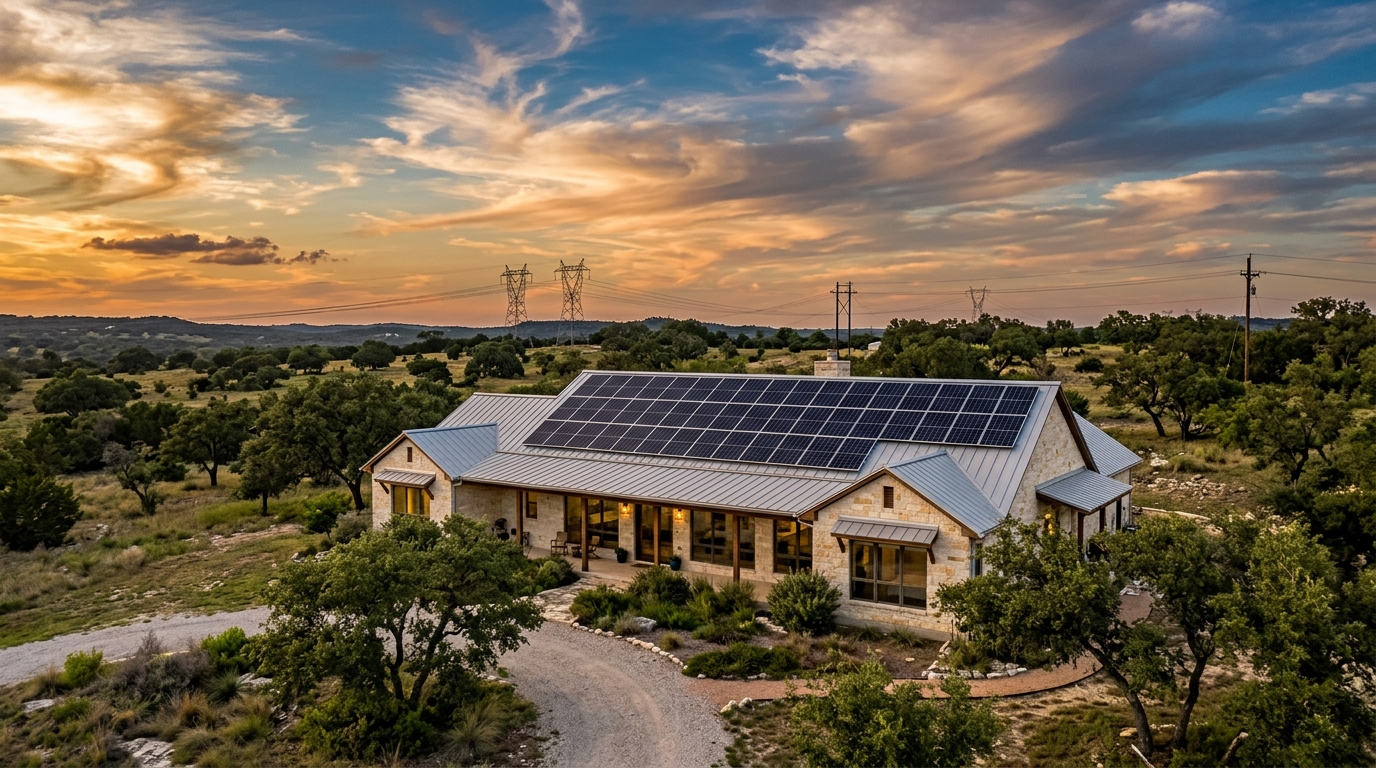
If you're a Texas homeowner thinking about solar in 2026, you're going to hear the phrase "no net metering in Texas" a lot. That's technically true — but it's also misleading. Texas doesn't have a statewide net-metering mandate, but a handful of deregulated retail electric providers offer their own buyback plans. The economics of your install hinge less on which panels you buy and more on which retail plan you sign up for AND whether you pair a battery.
Why Texas is different: ERCOT + retail deregulation
Texas is the only state running its own independent grid (ERCOT — Electric Reliability Council of Texas). 85% of Texans live in deregulated zones where they pick their retail electric provider (REP) — Oncor / CenterPoint / AEP own the wires, but you choose who bills you. The remaining 15% (Austin Energy, CPS San Antonio, co-ops, El Paso area) sit in regulated zones with utility-set buyback rates.
Because there's no PUCT-mandated retail-rate net metering, each REP sets its own buyback offer. The 2026 landscape:
| Retail provider | Plan name | Export credit (2026) | Catch |
|---|---|---|---|
| Octopus Energy | Octopus Sun & Flex | ~12¢/kWh (1:1 on a flat rate) | Energy charge is ~14¢ — small spread |
| Rhythm Energy | Rhythm PowerShift 36 | ~10–12¢/kWh | Variable; rate locked for 36 months only |
| Green Mountain Energy | Renewable Rewards | ~9¢/kWh | Energy charge is ~14¢ — wider spread (worse) |
| TXU Energy | Renewable Buyback | ~8–10¢/kWh | Caps export credit at 500 kWh/month for many plans |
| Reliant | Simple Solar Sell Back | ~9–10¢/kWh | $9.95/mo "solar buyback" fee on most plans |
The headline number is the export-credit rate. The thing nobody tells you is that most of these plans pair a "decent" buyback rate with an above-market energy charge for the kWh you import from the grid. Octopus is currently the cleanest spread; TXU / Reliant penalize you with monthly fees.
Side-by-side math on an 8 kW DFW install
Assume: 13,500 kWh annual production. Home uses 11,000 kWh. Exports 4,500 kWh. Install cost $24,000 before 30% federal ITC = $16,800 net.
| Cash flow | Octopus Sun & Flex | TXU Renewable Buyback |
|---|---|---|
| Self-consumed solar (11,000 × ~14¢ avoided) | $1,540/yr | $1,540/yr |
| Exported solar (4,500 kWh × export rate) | $540/yr (@ 12¢) | $360/yr (@ 8¢, capped at 6,000 kWh/yr) |
| Solar-specific monthly fee | $0 | – $120/yr ($9.95 × 12) |
| Annual bill savings | $2,080 | $1,780 |
| Simple payback (net install) | ~8.1 years | ~9.4 years |
With panel degradation (0.5–0.7%/yr) and 3%/yr utility rate inflation, realistic Texas payback in 2026 is 9–13 years for solar-only installs — substantially worse than the "5-year payback" pitches some installers still use from the 2015-2019 era.
The battery argument is different in Texas
Unlike California (where batteries shift solar to peak hours to dodge a 75% export cut), the Texas battery case is about ERCOT volatility:
- Summer afternoons — ERCOT wholesale prices can hit $5/kWh during scarcity events. A battery + smart export plan (Tier 1: Tesla Electric, Bandera Electric) lets you sell back at wholesale-linked rates during these events. One 2-hour ERCOT peak can earn $100-200 in a single afternoon.
- Winter resilience — February 2021 (Winter Storm Uri) cost the average Texan ~$1,200 in spoiled food + days of cold. A 13.5 kWh battery covers critical loads for 24-36 hours on a fully-charged unit.
- Solar-curtailment — many DFW / Houston solar systems get curtailed during the 11am-3pm window in spring/fall because ERCOT pays NEGATIVE wholesale rates. A battery soaks up the curtailed production for evening discharge.
Add a Tesla Powerwall 3 (~$14K installed in Texas) and the math gets reasonable:
| Cash flow | Octopus + Powerwall 3 |
|---|---|
| Self-consumed + battery-shifted solar | $2,400/yr |
| Exported solar at off-peak | $120/yr |
| ERCOT peak-event arbitrage (Tesla Electric) | ~$300/yr |
| Annual bill savings | $2,820 |
| Install cost: solar + battery, post-ITC | ~$26,600 |
| Simple payback | ~9.4 years |
What about Austin Energy, CPS San Antonio, El Paso Electric?
These regulated munis/co-ops have their own programs:
- Austin Energy — "Value of Solar" tariff (~9.6¢/kWh as of 2026, reset annually). Doesn't net-meter; you sell ALL solar at VoS, then buy ALL home use at standard tier rate. Worse than 1:1 net metering in most cases.
- CPS Energy (San Antonio) — Net billing at ~7¢/kWh export credit (avoided cost). Imports billed at ~11¢/kWh. ~4¢ spread is rough.
- El Paso Electric — 1:1 retail rate net metering still active (one of the few Texas utilities offering it). If you're in EPE territory, your solar economics look more like California's pre-NEM-3.0 era.
The 5-point Texas solar checklist for 2026
- Confirm your zone (deregulated vs. muni) at the PUCT site. Your zone determines whether you can shop REPs.
- If deregulated — switch to Octopus Energy BEFORE install, not after. Some plans require enrollment within 60 days of system PTO (permission to operate).
- Size the system to your USAGE, not roof maximum. Texas-exported kWh earn 8–12¢ while self-consumed kWh save 14¢. Oversizing is mildly penalized.
- Strongly consider a battery — both for ERCOT peak-event upside and Winter Storm Uri resilience. The 30% federal ITC applies to standalone batteries paired with solar.
- Plan for the install timeline: ERCOT interconnection adds 6-12 weeks AFTER inspection in DFW / Houston. Don't sign a contract that imposes financing-rate-reset penalties if PTO drags.
Run your numbers
- Solar panel cost calculator — Texas-adjusted install estimate.
- Texas home equity loan calculator — pre-filled with TX median home value for the "own the system" financing math.
- What nobody tells you before solar — the broader 9-issue checklist applies in Texas, too.
- NEM 3.0 explained for California — sister cluster for CA readers.
- Roof cost calculator — Texas hail belt means roof age + condition is a non-negotiable gate before solar.
- 2026 Solar Payback by State — all 50 ranked — see where Texas lands on the national payback ladder. Texas’s 100% buyback (on investor-owned utilities) keeps it competitive with top-tier states despite a sub-15¢ electric rate.
More cost guides for Texas
Planning multiple projects? Every other 2026 Texas cost guide carries the same state-specific labor and pricing detail.
- Cost GuideBasement Finishing Cost in Texas 2026
- Cost GuideBathroom Remodel Cost in Texas 2026
- Cost GuideDeck Construction Cost in Texas 2026
- Fence InstallationFence Installation Cost in Texas 2026 — Cedar Country, Hill Country Premiums & Coastal Wind Ratings
- Cost GuideFlooring Installation Cost in Texas 2026
- DisasterHail Damage Roof Replacement Cost in Texas 2026 — Insurance Claims, Adjuster Tactics, and Class-4 Math
- Cost GuideHardscape Installation Cost in Texas 2026
- HVACHVAC Cost in Texas 2026 — Summer-Load Math, ERCOT Time-of-Use, and Heat-Pump Payback
- Cost GuideIn-Ground Pool Installation Cost in Texas 2026
- PaintingInterior & Exterior Painting Cost in Texas 2026 — Heat, Humidity & Why TX Painting Is a Bargain
- Cost GuideKitchen Remodel Cost in Texas 2026
- Cost GuideLandscaping Cost in Texas 2026
- RoofingRoof Replacement Cost in Texas 2026 — Hail Country, Insurance Claims, and Houston Humidity
- Solar PanelsSolar Panel Cost in Texas 2026 — ERCOT, Buyback Rates, and the Battery Premium
- Window ReplacementWindow Replacement Cost in Texas 2026
Cost by state for this project
State-adjusted ranges with local labor and material multipliers.