Disaster
Hurricane Season 2026 Home Preparation Checklist — Florida, Texas, Louisiana
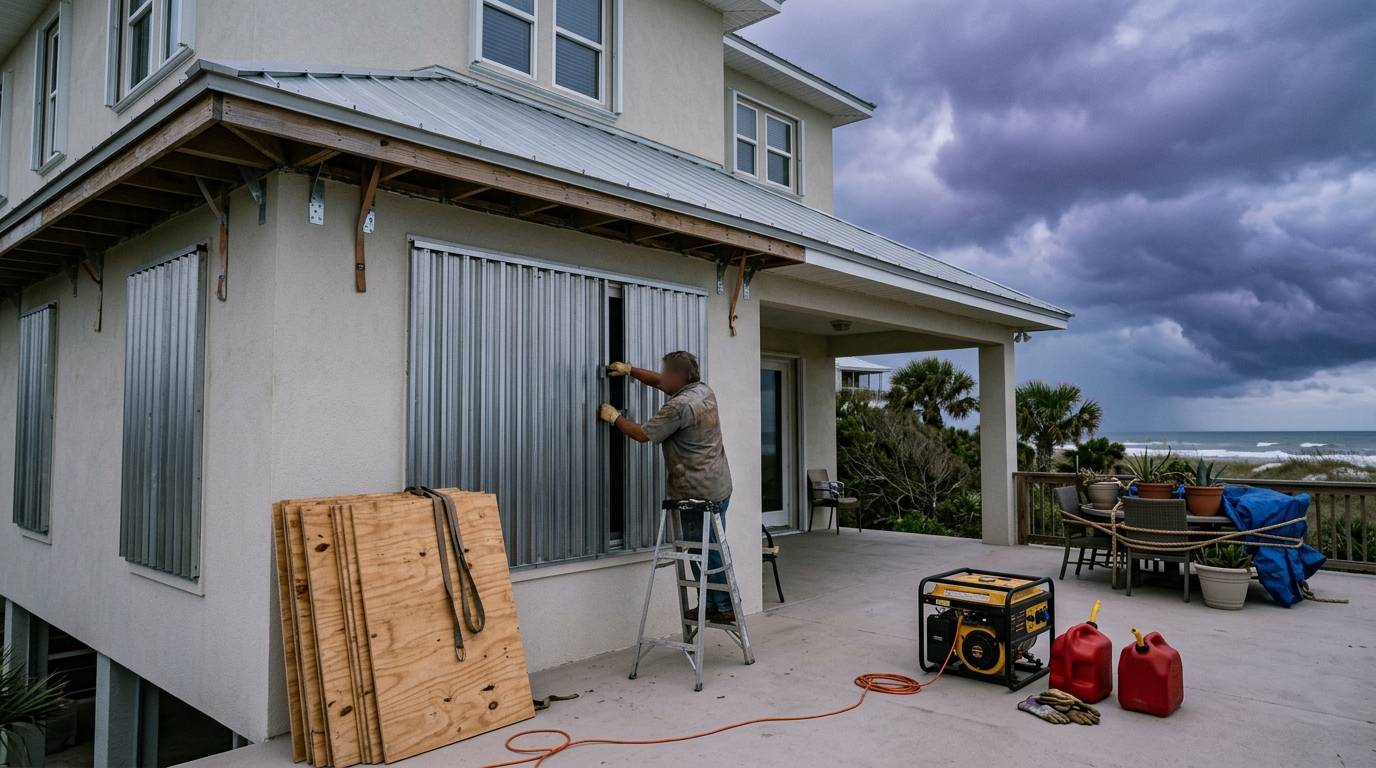
Hurricane season 2026 (June 1 – November 30) is forecast above-average by NOAA — 14-21 named storms expected, 7-10 hurricanes, 3-5 major (Category 3+). If you live in coastal Florida, Texas, or Louisiana, the difference between "$80K in damage" and "$4K in damage" comes down to $4K-$15K of strategic pre-season prep done before the first July storm forms. Here's the 21-item 2026 prep checklist — what actually matters, what doesn't, and the FL / TX / LA specifics that change which upgrades pay back fastest.
The single highest-leverage upgrade: roof condition
Wind-driven roof failure causes 60-75% of hurricane structural losses. Everything else (broken windows, fence damage, fallen trees) is a fraction of that. Start your prep with the roof.
- Get a free roof inspection NOW (April-May). Contractors are slack pre-season. Document with photos; keep for insurance.
- Replace any roof >15 years old in FL/LA, >18 years in TX. Insurance companies are non-renewing aging-roof policies aggressively in 2026. Replace before non-renewal hits.
- Upgrade to Class-4 / wind-rated shingles if replacing — 25-45% insurance discount in FL/LA, 10-30% in TX. Payback 4-8 years. See our state-specific cost guides: FL, TX, LA.
- Hurricane straps: If your home is pre-2002 in FL or pre-2006 in LA, you likely don't have proper roof-to-wall hurricane straps. Add them during your next roof replacement (cost $400-$1,200 — wind-mitigation discount of $200-$700/year pays it back in 1-3 years).
Replace your aging roof BEFORE hurricane season — price it now
Same arithmetic this guide uses — adjusted for your roof size, pitch, and quality tier.
Calculate my coastal roof replacement →Window + opening protection (the second-highest leverage)
Once a window breaks in a hurricane, internal pressure spikes and the roof lifts off. Protecting openings is the difference between "wet floor" and "total loss."
- Impact-rated windows (Miami-Dade certified): $1,200-$3,200 per window installed. Most expensive option — but qualifies for the biggest insurance discount and requires no pre-storm action.
- Accordion or roll-down shutters: $35-$75/sqft of opening. Permanent installation — close in 60 seconds before a storm. Discount 15-30%.
- Bahama shutters: $50-$120/sqft. Aesthetic + functional. Best for smaller windows.
- Plywood (5/8" minimum, pre-cut + labeled): $30-$80 per window. Cheapest; requires installation 24-48 hours before each storm. DOES qualify for a minor insurance discount in FL if pre-installed mounting bolts are present.
- Garage door upgrade: If your garage door isn't impact-rated, it's the weakest point in your envelope. Cat 2+ winds collapse standard doors, depressurizing the home. Upgrade for $1,500-$4,500 — single biggest single-component upgrade ROI in FL.
The 21-item pre-season checklist (do this April-May)
Roof + envelope
- Schedule a roof inspection. Photo-document. Repair any soft spots, missing shingles, damaged flashing.
- Clean gutters + downspouts. Verify positive drainage 5'+ from foundation.
- Inspect soffits + fascia for damage / detachment. Re-secure any loose sections.
- Test all attic vents — replace damaged or missing vent screens.
- Trim trees within 30' of structure. Remove dead branches. Bag yard waste for pickup BEFORE storm watch.
Openings
- Test all shutter systems. Lubricate tracks. Replace damaged panels.
- Verify plywood is sized + labeled per opening. Drill mounting holes NOW (not during storm watch).
- Replace any window seals showing UV damage / shrinkage.
- Inspect garage door for impact-rating. Reinforce or upgrade if not rated.
- Verify all exterior doors close tight. Re-weatherstrip if needed.
Mechanical + utilities
- Inspect AC unit + condenser. Have a coil cover + tie-downs ready (don't install until storm warning).
- Service generator. Test under load. Stock fresh fuel (rotate every 6 months) + fuel stabilizer.
- Verify surge protectors on all expensive electronics. Whole-home surge protector recommended ($300-$800 installed).
- Photograph electrical panel + serial number. Save in cloud.
- Locate + test main water shut-off. Tag it visibly.
Insurance + documentation
- Pull your homeowners + flood declarations pages. Verify dwelling coverage equals current rebuild cost ($/sqft × sqft).
- If wind/hail deductible is >$5K, consider buying it down ($150-$400/year saves $4K+ if claim hits).
- Photo + video walk-through of every room. Open every closet, drawer, cabinet. Date-stamp. Store in cloud.
- Inventory contents (insurer-provided templates). High-value items photographed with serial numbers + receipts.
- Verify flood insurance is in force. NFIP has a 30-day waiting period — buy BEFORE June 1, not when a storm forms.
- Create a "go-bag" with passport copies, insurance policies, deed, medications, emergency cash. Photo all IDs.
Florida specifics
- Wind mitigation inspection: $75-$150. Mandatory for max FL insurance discounts. Verifies roof shape, attachment, straps, opening protection. Submit form to insurer for 10-45% premium reduction.
- Citizens vs. private carriers: Citizens Property Insurance is the state-backed "last resort" — premiums rising 8-15%/year. Shop private carriers before renewal; new entrants in 2026 are offering 20-30% discounts for FORTIFIED-certified or Class-4 + impact-glass homes.
- Assignment of Benefits (AOB): FL law was reformed in 2022 making AOB contracts much harder to enforce. Refuse all AOB pitches post-storm.
- Hurricane deductible: Almost always 2-5% of dwelling coverage in FL. $400K home with 2% deductible = $8K out-of-pocket before insurance pays.
- FL building code zones: HVHZ (High Velocity Hurricane Zone — Miami-Dade + Broward) requires Miami-Dade certified windows + impact-rated garage doors as minimum spec.
Texas specifics
- Coastal counties (Aransas, Calhoun, Galveston, Harris, etc.): Windstorm coverage is via the Texas Windstorm Insurance Association (TWIA) — separate from homeowners. Verify TWIA certificate of completion (WPI-8) is current.
- Inland TX: Hurricane risk lower but tornado + hail risk dominate. See our TX hail damage guide.
- Building code variations: TWIA-zone construction requires impact-rated openings and 130-mph wind-rated shingles. Inland TX has no statewide hurricane code — county-by-county.
- Houston-specific flood: Most of greater Houston is in a flood zone post-Harvey. NFIP coverage rates are climbing 18%/year max increase. Excess flood is essential for >$500K homes.
Louisiana specifics
- Louisiana Citizens Property Insurance Corporation (LCPI): state-backed insurer of last resort, rates climbing 30%+ in 2025-2026. Shop private aggressively before renewal — Louisiana Insure Louisiana Incentive Program ("Take-Out" market) is adding new carriers.
- FORTIFIED Roof™ certification: Like Mississippi, LA participates in the IBHS FORTIFIED program. $5,000 LA state grant available for FORTIFIED roof upgrades (verify at ldi.la.gov).
- Storm Damage Repair Permits: most LA parishes waive permit fees + offer expedited issuance for storm-damage repairs. Check with parish building dept.
- Levee / flood zone considerations: New Orleans + South Louisiana sit inside levee systems. Levee failure flooding has DIFFERENT coverage rules than rain/surge flooding — verify your NFIP policy excludes nothing.
- NOLA-specific: roof age cap: Many insurers won't write or renew roofs >15 years old in Orleans, Jefferson, St. Tammany parishes. Replace before non-renewal.
What NOT to spend money on (the popular-but-low-ROI upgrades)
- Hurricane film for windows. Marketed as a "cheap shutter alternative" — NOT impact-rated. Will not survive Cat 2+ winds. Skip.
- Pre-buying generators >15kW for a 2,000 sqft home. 7-10kW is plenty for fridge, fans, lights, charging. 15kW+ doubles fuel burn for marginal benefit.
- "Hurricane-proof" branded paints / coatings. No documented benefit in IBHS lab tests. Skip.
- Standby battery systems WITHOUT solar in FL/TX/LA. 8-12 hour utility outages don't justify $18K-$35K battery installs. Get a $4K generator instead.
If a hurricane is named (5-7 day window)
- Re-check insurance documents. Verify policies are paid + current.
- Install shutters / plywood NOW (do not wait for the warning).
- Top off fuel — vehicles, generators, propane. Refill prescription meds.
- Move outdoor furniture, grills, planters inside or anchor heavily.
- Photo + video walk-through inside + outside. Cloud-upload immediately.
- Turn fridge to coldest setting. Fill empty containers with water + freeze.
- Stock 1 gallon water per person per day × 7 days. Non-perishable food × 7 days.
- Charge all electronics + battery banks.
- Identify evacuation route + destination if mandatory evac is called.
Trusted hurricane prep guidance
- Florida roof replacement cost guide
- Texas roof replacement cost guide
- Louisiana roof replacement cost guide
- Storm damage roof replacement (Mississippi)
- Flood damage repair (Hawaii model — applies to FL surge too)
- Contractor financing scams to avoid 2026
Bottom line
Spend the $4K-$15K of strategic pre-season prep BEFORE the first July storm forms — roof replacement if >15 years old, opening protection (impact glass or shutters), garage door upgrade, hurricane straps, generator service, and insurance verification with adequate wind/hail + flood coverage. The single highest-ROI item across FL/TX/LA: upgrade your garage door to impact-rated ($1,500-$4,500). It prevents the depressurization event that lifts roofs off. Document everything in the cloud now — not when a storm is named. Use our state-specific calculators (FL, TX, LA) to price out any roof work you defer until after this season.
Get 3 free contractor quotes for your storm-damaged roof
Vetted local roofers who handle insurance claims. No spam, no obligation, no sales calls — we just send the quotes.
Most homeowners receive 3 quotes within 48 hours. Free service — funded by contractor referral fees, not by you.
Cost by state for this project
State-adjusted ranges with local labor and material multipliers.
Keep reading
Kitchen Remodel
Kitchen Remodel Cost in Washington 2026 — Seattle Metro Premium & PNW Cabinet Sourcing
9 min read
Kitchen Remodel
Kitchen Remodel Cost in Colorado 2026 — Why CO Kitchens Run 10-20% Above National
9 min read
Kitchen Remodel
Kitchen Remodel Cost in Florida 2026 — Miami, Tampa, Orlando, Jacksonville Pricing
9 min read