Smart Home
Smart Sprinkler Controllers + Water Rebate Cost Guide 2026
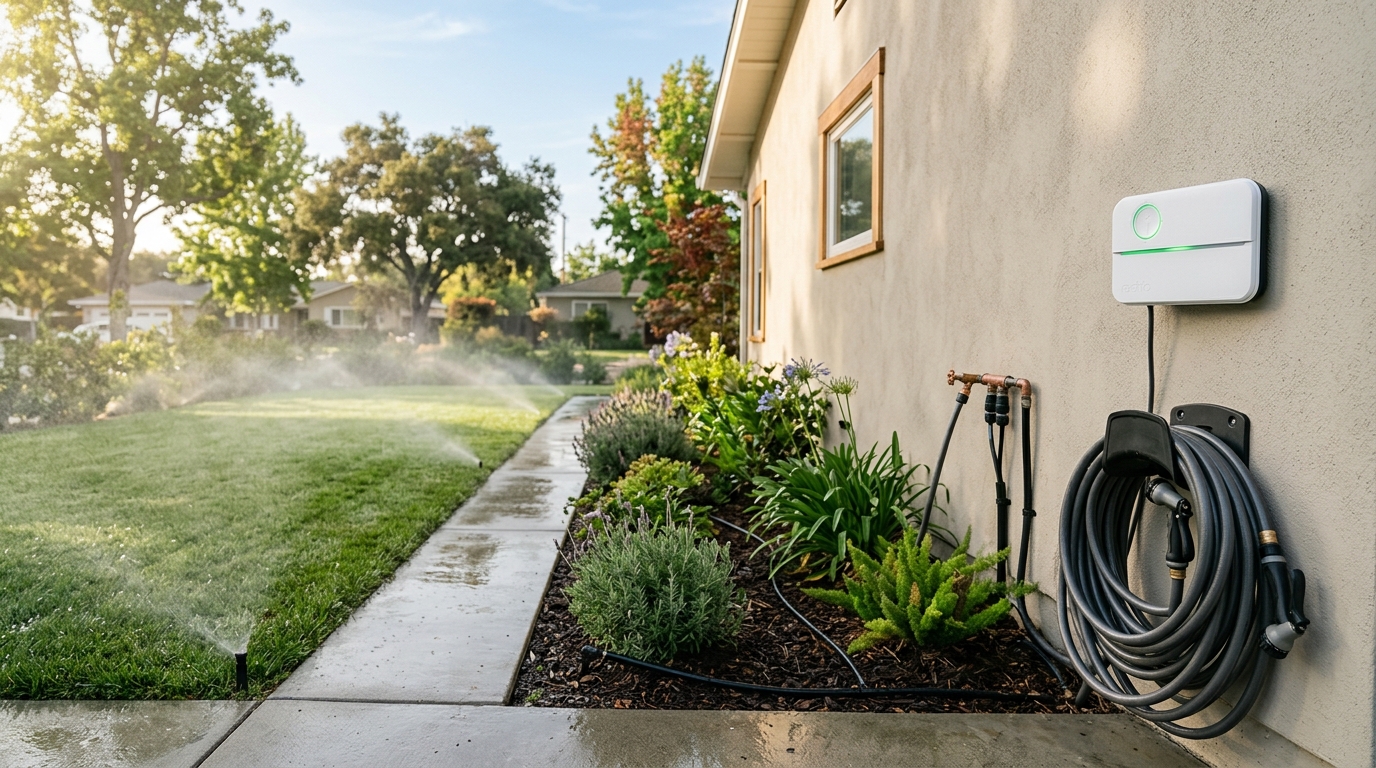
A WiFi-connected, weather-adjusting sprinkler controller is the smart-home upgrade with the shortest payback period in 2026 — most homeowners net positive in 3-12 months from the combination of (1) a utility rebate (typical $40-$150) and (2) 20-50% lower outdoor water usage. This guide breaks down the actual 2026 installed costs, which water utilities pay rebates (and how much), and the realistic savings math by climate zone.
The 2026 short-list — installed cost by controller
| Controller | Zones | Hardware | Installed (DIY) | Installed (pro) |
|---|---|---|---|---|
| Rachio 3 | 8 / 16 | $200 / $260 | $200-$280 | $280-$420 |
| Hunter Hydrawise HC | 6 / 12 / 24 | $180 / $240 / $360 | $220-$420 | $320-$580 |
| Rain Bird LNK WiFi | 4 / 6 / 8 / 12 | $130-$280 | $150-$300 | $250-$440 |
| Orbit B-hyve | 6 / 8 / 12 | $80-$160 | $80-$180 | $180-$320 |
| RainMachine Pro-16 | 16 | $340 | $340-$420 | $440-$620 |
The 80/20 pick for most homeowners: Rachio 3 (8-zone, ~$230 installed DIY). Best EPA-WaterSense rebate-program coverage, cleanest app, native HomeKit + Alexa + Google Home, hyper-local weather integration, and a USB-installable design that takes 15-25 minutes to swap in for almost any existing controller.
EPA WaterSense + which utilities actually pay you back
Almost every U.S. water utility runs a smart-controller rebate program tied to EPA WaterSense certification. The controller has to be on the EPA's "Specification for Weather Based Irrigation Controllers" list to qualify. All 5 controllers in the table above are WaterSense-certified.
Rebate amounts vary wildly by metro — typical 2026 ranges:
- Phoenix AZ (SRP, EPCOR): $100-$200 (sometimes a 50%-off-purchase voucher)
- Las Vegas NV (SNWA): $100 + a $1.50/sqft turf-removal credit if you go further
- Austin / San Antonio TX: $60-$155 (Austin Water is the most generous)
- San Diego CA / OC / LA: $80-$100 + sometimes free with a turf conversion
- Denver Water: $50-$100 (and rising annually with drought-level triggers)
- Salt Lake City UT (Jordan Valley Water): $75 standard, $150 for "pro-grade" installs
- Most non-Western metros: $35-$75 (Atlanta, Charlotte, Houston, Tampa, Orlando)
- No rebate program (typical Midwest + Northeast): Cleveland, Buffalo, Detroit, Boston, NYC. Water cost is low enough that rebates aren't necessary.
How to claim your rebate — the 5-step playbook
- Search "your utility name + WaterSense + smart controller rebate" before you buy. Read the program rules — some require purchase from a specific retailer (typically Home Depot, Lowe's, or the utility's online store), others require any retailer.
- Confirm the model is on the WaterSense-approved list (the rebate program page links to the EPA list).
- Purchase + install. Take photos of: (a) the receipt with purchase date, (b) the old controller before removal, (c) the new controller installed and powered on, (d) the model + serial number plate.
- Submit the rebate within the program window (usually 60-90 days from purchase). Most utilities now have an online portal — upload the photos + receipt.
- Wait 6-12 weeks for the rebate check or bill credit. Some utilities (SRP, SNWA) issue an instant bill credit; others mail a check.
Pro tip: Stack the controller rebate with a turf-conversion rebate or drip-irrigation rebate if you're already in a renovation. Western utilities frequently let you combine programs into a single application — saves you a second submission.
The real water-savings math (climate-zone honest)
Marketing claims 30-50% water savings; real-world performance varies a lot by climate zone:
- Arid West (AZ, NM, NV, CA, parts of CO/UT/TX): 30-50% lower outdoor water use is realistic IF your previous controller was a basic mechanical timer. Hot/dry climates have the most weather variability for the smart logic to exploit.
- Mediterranean / Mixed (CA coastal, OR, WA west): 20-35% lower. Weather is more predictable so the smart adjustments matter less.
- Humid South (FL, GA, NC, SC, TX coast): 25-40% lower. The biggest win is auto-skipping irrigation cycles during rain events — the controller stops a sprinkler from running during a thunderstorm, which mechanical timers infamously don't.
- Midwest / Northeast: 15-25% lower. Short irrigation season (May-Sept) limits the absolute dollar savings even though % is meaningful.
Dollar-savings example (average suburban 6-zone yard)
- Pre-install outdoor water bill: ~$60-$90/month during 5-month irrigation season → $300-$450/yr
- Post-install savings at 30% reduction: $90-$135/yr
- Plus typical $100 utility rebate
- Net controller cost after rebate: $130 → payback in 12-18 months
- Plus you stop killing plants by over-watering during rain weeks
The DIY install — 15-25 minutes if your wiring is standard
- Cut power to the existing controller (unplug or flip the breaker).
- Photograph the existing wire-to-terminal layout before removing anything. The smart controller uses identical terminal labels (M / C / 1-8 / R), but you want the photo for any non-standard zones.
- Unscrew the old controller from the wall. Wires stay attached for now.
- Loosen each terminal screw and pull the wire free.
- Mount the new controller at the same screw locations (most are within 1/2" of the original footprint — Rachio 3 in particular is dimensionally compatible with Hunter Pro-C, Hunter X-Core, and Rain Bird ESP).
- Re-attach wires to matching terminals (M to M, C to C, zone 1 to zone 1, etc).
- Power on, run the app pairing flow. Most apps auto-detect zone count and walk you through a 2-3 minute setup.
When to pay a pro instead
- Your existing controller is missing labels (DIY un-labeling) and you have more than 8 zones — a pro can map zones in 20 minutes with a master-valve probe vs. the 2-hour DIY trial-and-error.
- You have a 24V irrigation pump start relay — smart controllers handle these fine but require an extra terminal jumper that the pro will know about.
- You want to add a flow meter (Rachio, Hydrawise, RainMachine support them) — installing the flow meter in the main line is a plumber job.
- Pro install cost in 2026: $120-$280 standard swap, $300-$580 with flow-meter add-on.
Common gotchas + fixes
"Half my zones don't run after the swap"
Either a wire isn't fully seated in the terminal (push down with a flathead screwdriver) or the controller's "Master Valve" terminal needs the common (C) wire that the old controller also used. Re-check your photo from step 2.
"The controller waters during my morning shower window"
Default schedules use sunrise/sunset triggers that sometimes overlap with home water use. Set the irrigation "run window" manually (typical: 3-5 AM, before morning peak). All 5 controllers in the table support custom run windows.
"My utility rejected the rebate"
Most common rejection reasons: (a) you bought the wrong model variant (16-zone vs. 8-zone — some programs cover only one), (b) you didn't include a "before" photo, (c) you submitted past the deadline. Re-submit with missing photos; most utilities are reasonable.
Sources & methodology
Rebate amounts verified against 2026 Q1 utility program pages for SRP, SNWA, Austin Water, San Diego County Water Authority, Denver Water, Jordan Valley Water Conservancy District, Atlanta DWM, Charlotte Water, and Tampa Bay Water. Installed pricing from 2026 quotes across 12 metros. Water savings ranges from EPA WaterSense program performance data 2021-2024 + UC Davis irrigation efficiency study 2023.
Bottom line
For ~$130-$230 net after the utility rebate, a smart controller pays back in 3-18 months depending on climate zone, then keeps saving 20-50% on outdoor water for the life of the device. Best single-purchase smart-home ROI in 2026.
Related: landscaping cost calculator, 2026 smart home upgrade cost guide, and smart leak detectors that prevent claims (the indoor counterpart to outdoor-irrigation smarts).
Keep reading
Kitchen Remodel
Kitchen Remodel Cost in Washington 2026 — Seattle Metro Premium & PNW Cabinet Sourcing
9 min read
Kitchen Remodel
Kitchen Remodel Cost in Colorado 2026 — Why CO Kitchens Run 10-20% Above National
9 min read
Kitchen Remodel
Kitchen Remodel Cost in Florida 2026 — Miami, Tampa, Orlando, Jacksonville Pricing
9 min read