HVAC
How Long Does HVAC Last? 2026 Replacement-Timing Guide by System Type
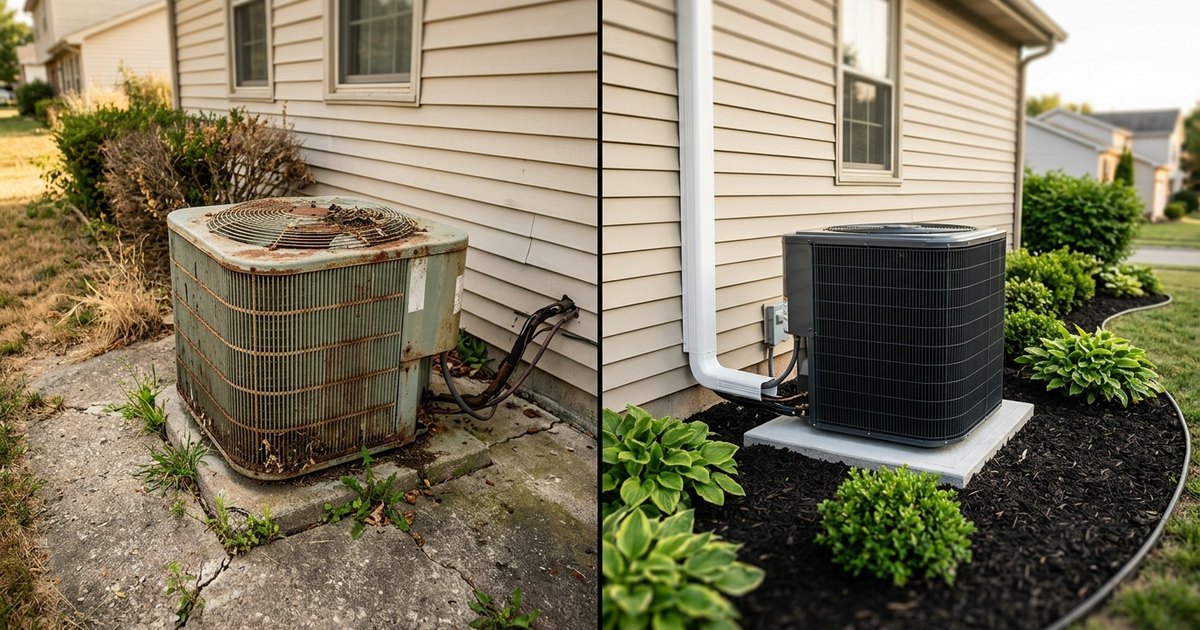
How long does HVAC last? It depends on the system type, climate, maintenance history, and whether the original install was sized correctly. Here are the honest 2026 lifespan numbers for every residential HVAC system, plus the 5 warning signs that tell you replacement is overdue.
HVAC lifespan by system type (2026)
| System | Average lifespan | Max with good maintenance |
|---|---|---|
| Central AC (split system) | 12-15 years | 18 years |
| Air-source heat pump | 14-18 years | 22 years |
| Gas furnace (80%-96% AFUE) | 18-22 years | 25 years |
| Oil boiler / furnace | 20-25 years | 30 years (cast-iron boilers) |
| Geothermal heat pump (indoor) | 22-30 years | 35 years |
| Geothermal ground loop | 50 years | 50+ years (HDPE warranty) |
| Mini-split ductless | 15-20 years | 22 years |
| Window AC | 8-10 years | 12 years |
| Portable AC | 5-8 years | 10 years |
| Electric resistance baseboard | 20-30 years | 40 years (no moving parts) |
| Wood pellet boiler | 15-20 years | 25 years |
What shortens HVAC lifespan
- Oversized equipment. Short-cycling — turning on/off repeatedly — stresses the compressor and shaves 3-5 years off expected life. Roughly 30-40% of US HVAC installs are oversized.
- Skipped annual service. Coil-cleaning, refrigerant-charge verification, and filter changes are not optional. An unmaintained system runs 12-15% less efficient and dies 2-4 years earlier.
- Salt air (coastal install within ~5 miles of saltwater). Corrodes the outdoor condenser coils. Cuts AC and heat-pump lifespan by 3-5 years. Coil-coating treatments help but don't eliminate.
- Hard water on geothermal open loops. Mineral deposits coat heat exchanger and reduce capacity 1-2% per year. Closed-loop avoids this entirely.
- Operating in extreme oversize-range conditions. Heat pumps run at low-temp cutoffs (e.g., -25°F for cold-climate units) every winter wear faster than ones run at normal operating ranges.
The 5 warning signs replacement is overdue
- Major repair quote exceeds 50% of replacement cost. The "50% rule" — if the repair quote is more than half the cost of a new system, replace. A $1,800 compressor on a $5,500 replacement is borderline; a $3,200 compressor is a clear replace.
- R-22 refrigerant. R-22 (Freon) phased out in 2020. Remaining stockpiles cost $80-$150/lb (vs $40-$60/lb for R-410A). Any R-22 system over 12 years old, plan for replacement at next failure.
- Heating/cooling costs trending up year over year. Compare your last 3 winters or summers vs the prior 3. A 25%+ increase that doesn't track utility-rate inflation means the system is losing efficiency.
- Inconsistent room-to-room temperature. Some rooms hot, others cold. Indicates failing zoning controls, undersized ductwork, or a system at the end of its capacity range.
- Loud or unusual noises. Grinding, banging, or hissing usually mean compressor or fan-motor failure imminent. Don't wait — at this point the failure is days-to-weeks away.
HVAC lifespan FAQs
How long does a furnace last on average? 18-22 years for a gas furnace with annual service. Oil boilers and cast-iron radiator systems can run 25-30 years. Electric furnaces typically 20-30 years.
How long do heat pumps last vs central AC? Heat pumps last 14-18 years vs 12-15 for central AC. The longer lifespan is partly because heat pumps spread wear across more months (year-round operation) and partly because the inverter-driven compressor wears less per operating hour.
Is it worth replacing a 15-year-old AC before it fails? Usually yes if it's R-22 or showing efficiency loss. Planned replacements avoid emergency-install premiums (typically 20-35% higher), let you compare quotes, and qualify for full 25C + HEEHRA incentives at point-of-sale.
Does AC last longer in cold climates? Yes — about 2-3 years longer because runtime hours per year are lower. A cold-climate AC running 800 hours/year wears slower than a hot-climate AC running 2,400 hours/year.
What HVAC brand lasts the longest? No statistically meaningful difference between top-tier brands (Trane, Carrier, Lennox, American Standard, Bosch, Mitsubishi, Daikin) when installed and maintained properly. Installation quality matters 4-5× more than brand choice for lifespan.
Run the numbers. Use our HVAC cost calculator for state-adjusted replacement pricing, or read the heat pump vs furnace cost comparison if you're replacing both heating and cooling.