Bathroom
Cost to Add a Walk-In Tub 2026 — Installed Prices, Aging-in-Place ROI & Hidden Fees
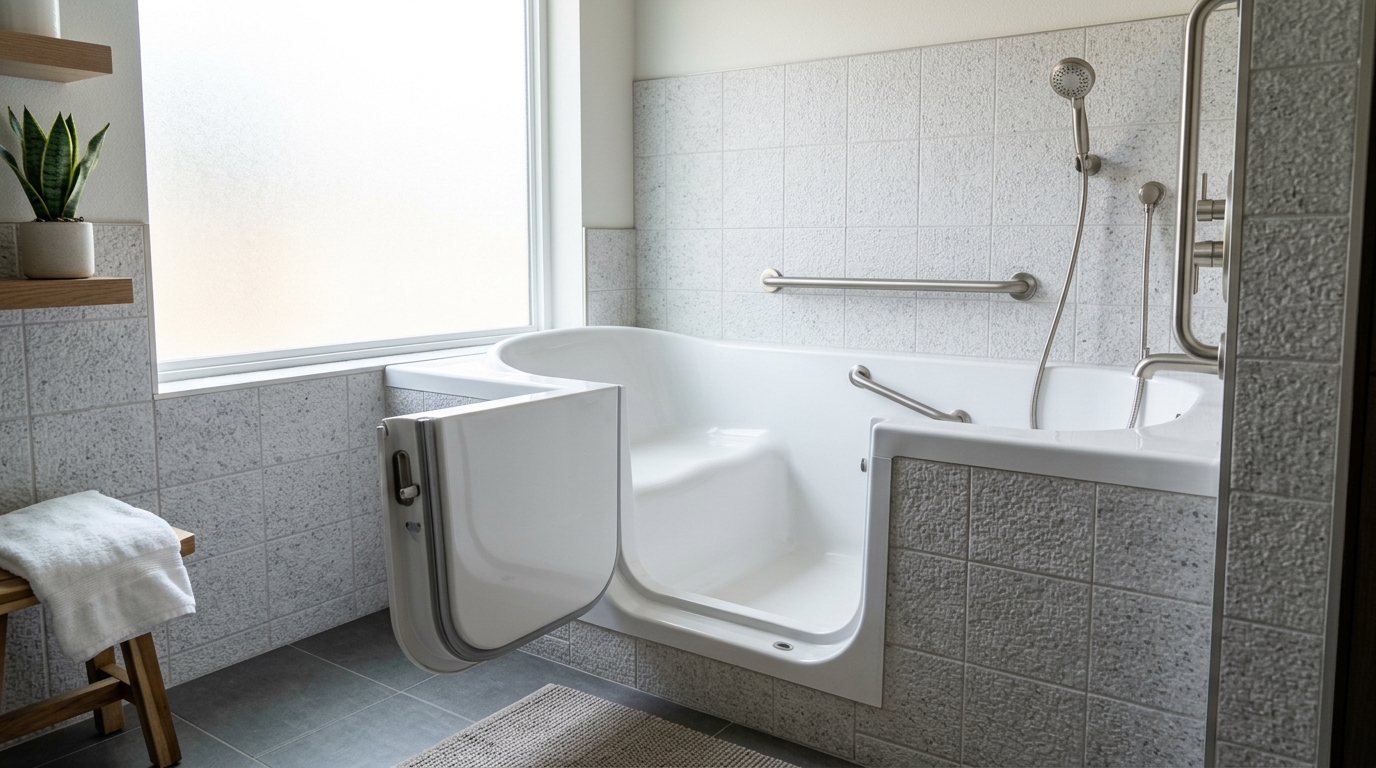
Walk-in tubs have moved from "specialty medical equipment" to mainstream aging-in-place upgrade in the last three years — and prices, install scopes, and insurance reimbursement rules all changed with that shift. This is the honest 2026 pricing guide: what each tier actually costs installed, what's a marketing upcharge, and the Medicare/HSA fine print that turns a $9,000 project into a $4,400 net cost for the right buyer.
2026 walk-in tub price tiers (installed)
- Soaker-only (no jets): $4,200 – $7,800 installed. Inward-swing door, 24" step-in height, quick 80-second drain. Adequate for most aging-in-place use cases. Brands: Ariel, KOHLER Belay entry, Empava.
- Air + water jets: $7,500 – $12,200 installed. Adds 10–18 air jets and 6–10 hydrotherapy water jets — the middle tier most homeowners actually choose. Brands: American Standard Liberation, Safe Step Premier.
- Full hydrotherapy + chromotherapy: $12,000 – $19,500+ installed. Heated seat, in-line water heater, microbubble therapy, aromatherapy infusion, 24+ jets. Premium territory — Boca, Jacuzzi Finestra, KOHLER Walk-In Premium. Diminishing returns above $14K.
The cost the salesperson won't lead with: rough-in work
Walk-in tubs are typically 50–80% deeper than a standard alcove tub, draw 8–14 amps for the heater + blower package, and need a much faster drain (80-second pump-out vs 4-minute gravity drain). That means rough-in work almost always — and it's NOT included in the manufacturer-quoted "installed price" on the showroom card:
- Dedicated 20-amp circuit: $250 – $650 depending on panel proximity and finished-wall scope.
- 2" drain upgrade from 1.5": $400 – $1,100 (more if floor framing is sistered).
- Reinforced subfloor: A loaded walk-in tub weighs 700–1,100 lbs vs 400 lbs for a standard alcove. Most installs need joist sistering or a new doubled plywood underlayment — $300–$900.
- Tankless hot water heater upgrade: A 50-jet hydrotherapy unit cycles 80 gallons every 12 minutes. A standard 40-gallon tank can't keep up. Tankless retrofit: $2,200–$4,500.
Total realistic out-the-door 2026 budget for a mid-tier hydrotherapy walk-in tub with all the rough-in: $11,500 – $16,200. The $7,995 "All-Inclusive Installed!" advertisement is the tub. The plumbing and electrical to actually use it is extra in 90%+ of homes.
The Medicare myth — and what actually covers it
Original Medicare (Parts A and B) does NOT cover walk-in tubs. They're classified as bathroom modifications, not durable medical equipment. The salesperson saying "Medicare may reimburse you" is technically not lying, but the path to reimbursement is exceptionally narrow:
- Medicare Advantage plans: Some now offer up to $1,500/year toward bathroom safety equipment including walk-in tubs. Check your specific plan's "Over-the-Counter" or "Flex Card" benefit.
- Medicaid (state-specific): A handful of states' Home and Community-Based Services waivers cover walk-in tubs as a fall-prevention modification. CA, NY, OR, MN, WA have the strongest programs.
- VA Home Improvement Structural Alterations (HISA) grant: Up to $6,800 for service-connected disability, $2,000 for non-service-connected — the most reliable reimbursement path nationwide.
- HSA/FSA dollars: Walk-in tubs purchased on doctor's letter of medical necessity are an eligible qualified medical expense. This is the workhorse strategy — saves 22–37% via pre-tax dollars.
- §213(d) federal medical expense deduction: If your unreimbursed medical expenses exceed 7.5% of AGI, the walk-in tub cost above the home's "added market value" is deductible.
Resale impact — positive or negative?
Honest answer: it depends on the market.
- Florida, Arizona, Nevada retirement markets: Walk-in tubs are now considered a feature in 55+ communities and active-adult subdivisions. 2024 NAR data shows a 2–4% premium over equivalent homes without — roughly $7,000–$14,000 in median 55+ pricing.
- Family-oriented suburbs (most markets): Mildly negative. A young family with kids prefers a standard tub for bathing children. Plan to budget $800–$1,400 to swap back to a standard alcove tub when listing if you have to.
- The hybrid play: Install a walk-in tub in a secondary primary-suite bath while keeping the guest bath with a standard tub. Keeps the buyer pool intact for resale.
The full project budget worksheet
Plan for the full out-the-door cost — not the salesperson's tub-only number:
- Walk-in tub unit (mid-tier hydrotherapy): $5,500–$8,400
- Standard installation labor: $1,200–$2,400
- Dedicated electrical circuit: $350–$650
- 2" drain upgrade + vent: $500–$900
- Tankless water heater (if needed): $2,400–$3,800
- Subfloor reinforcement: $400–$700
- Surround/wall tile rework: $1,200–$2,600
- Permit + inspection: $180–$420
Realistic 2026 budget: $11,500 – $19,500 for a quality mid-tier install. Below $9,000, you're either getting a soaker-only unit (no jets) or the contractor is cutting corners on the rough-in.
Bottom line
A walk-in tub is one of the highest-ROI aging-in-place upgrades when you factor HSA/FSA pre-tax savings, VA HISA reimbursement, or Medicaid waiver eligibility — net costs of $4,000–$7,000 for the right buyer profile. Pay full retail without those programs, and the math is harder; budget for the full $11K–$19K and treat resale impact as market-dependent. Want a state-adjusted bathroom remodel estimate that includes walk-in tub scope?
Related: Bathroom Accessibility Remodel Cost Guide · How Much Does It Cost to Add a Bathroom?
Sources & methodology
Pricing sourced from 2026 manufacturer MSRPs (KOHLER, American Standard, Safe Step, Jacuzzi), HomeAdvisor & Houzz 2026 installer surveys, VA HISA program guidance, IRS §213(d) medical expense rules, and CMS Medicare Advantage 2026 plan benefits review.