Bathroom
Bathroom Accessibility Remodel Cost Guide 2026 — Aging-in-Place Pricing by Scope
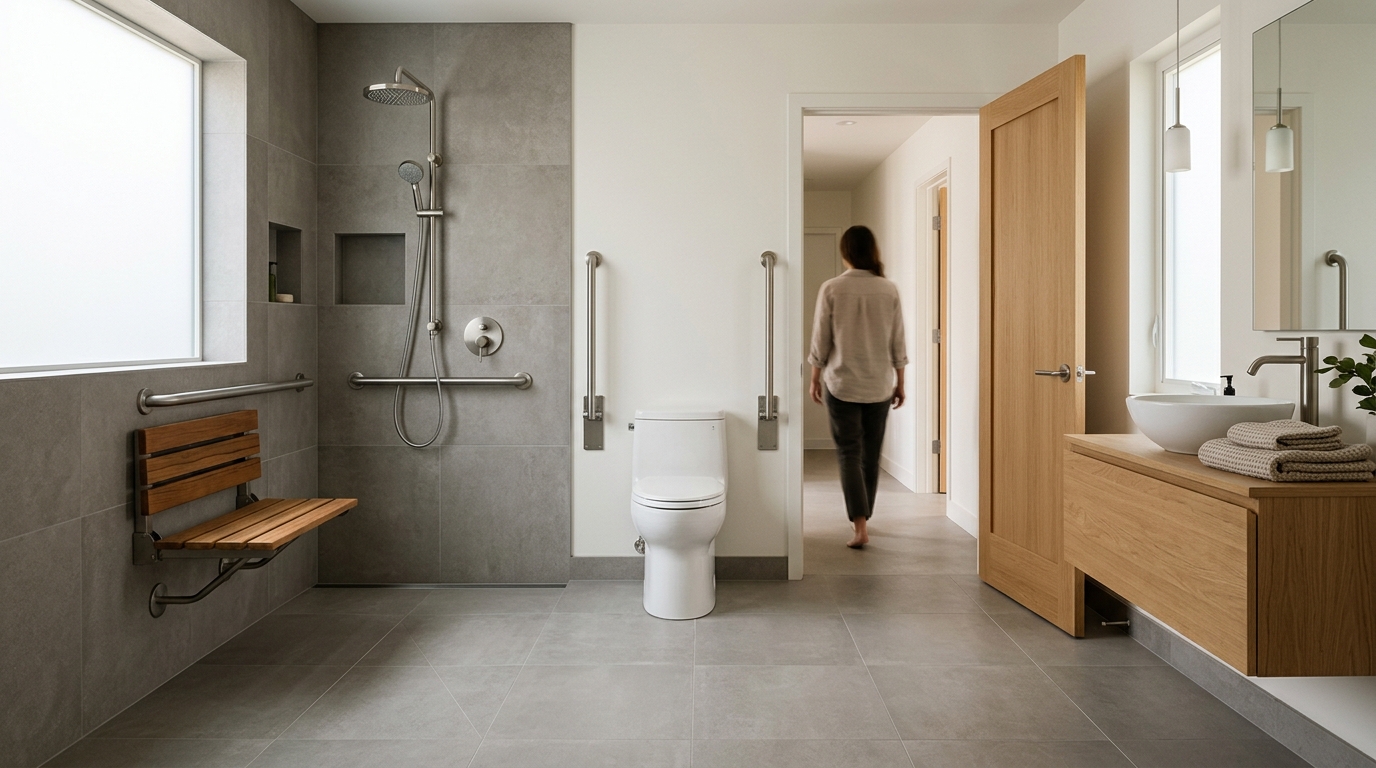
Accessibility remodels are the fastest-growing bathroom renovation category in 2026 — 11,000 Americans turn 65 every day and 73% intend to age in their current home. Costs span an enormous range depending on scope, and a confusing patchwork of grants, tax credits, and insurance programs can cut net cost 30–50% for buyers who know to ask. Here's what each tier actually costs in 2026 and how to maximize the reimbursement programs.
The four accessibility tiers (and what each costs)
Tier 1: Safety package — $2,800 – $5,200 installed
The minimum-viable aging-in-place upgrade. Doesn't require demo or pulling fixtures:
- 3–4 grab bars (toilet, shower, tub): $400–$700 installed (must hit studs or use approved toggle anchors)
- Non-slip flooring overlay or anti-slip coating: $600–$1,400
- Comfort-height toilet swap (17–19" vs standard 14–15"): $450–$850 installed
- Lever-handle faucet swap: $280–$520
- Improved lighting (4000K LED at 80+ CRI, 2x brightness of standard): $300–$650
Permits typically not required since no structural change. Whole job: 1–2 days. Best ROI per dollar in the category — and the package most accessibility specialists will recommend first.
Tier 2: Tub-to-shower conversion — $5,800 – $12,400 installed
Replaces an alcove tub with a curbless or low-curb roll-in shower. The single highest-impact change for fall prevention — 80% of bathroom falls occur stepping into or out of a tub. Cost drivers:
- Demo + tub disposal: $400–$700
- Subfloor rework for curbless slope (linear drain): $1,200–$2,400
- Waterproof membrane + cement board: $600–$1,100
- Tile + grout (24-36 sqft): $1,200–$2,800 mid-grade
- Folding shower seat: $180–$420 (built-in tiled bench: $800–$1,400)
- Hand-held + fixed showerhead combo with thermostatic mixer: $380–$720
- Glass shower door (if not full curbless): $700–$1,800
Note: A true curbless shower requires removing 4-6" of subfloor to create the slope toward a linear drain. If you're on a second floor over finished space, this is a significant scope addition (joist work + ceiling repair below) — budget +$1,500–$3,000.
Tier 3: Full accessible bathroom remodel — $14,000 – $24,000
Gutted-to-studs renovation designed around mobility from day one. Includes everything in Tier 2 plus:
- Wider doorway (32"–36" clear opening for wheelchair pass-through): $400–$1,200 with new framing
- Pocket-door conversion (saves swing space): $1,400–$2,400
- Comfort-height ADA toilet with grab bars at 33–36" and 42" turn radius clear: $600–$1,100
- Roll-under vanity with shallow-bowl sink at 34" max height: $1,400–$2,800
- Anti-scald thermostatic mixing valve: $280–$520 installed
- Reinforced backing in walls for future grab bars: $250–$450 (do this even if not installing now)
- Improved exhaust ventilation (110 CFM minimum, on humidity sensor): $400–$700
Tier 4: ADA-compliant primary suite + adjacent — $22,000 – $42,000
New-construction-equivalent scope: a primary bath designed from scratch for full mobility. Often involves annexing 20–60 sqft from an adjacent closet, hallway, or bedroom to achieve the 60"-diameter wheelchair turning circle required by ANSI A117.1 § 603. Adds:
- Structural framing for room expansion: $3,500–$8,000
- Multi-spray curbless wet room design: $4,200–$7,800
- Heated floor (recovery from a fall sitting on tile is painful — heated floors meaningfully impact post-fall comfort): $1,200–$2,400
- Ceiling lift framing prep (even if lift not installed): $400–$900
- Custom accessibility cabinetry (touch-latch + pull-down hardware): $2,800–$5,400
Reimbursement & assistance programs (in priority order)
- VA HISA Grant: Up to $6,800 for service-connected disability, $2,000 for non-service-connected. Most reliable. Apply through your VA primary care provider.
- Medicaid HCBS Waiver (state-specific): Covers up to $6,000–$15,000 in some states (CA, NY, OR, MN, WA, MA). Check your state's HCBS program eligibility — most require Medicaid + a documented disability.
- Federal §213(d) medical expense deduction: Bathroom modifications above the home's added market value are 100% deductible if total medical expenses exceed 7.5% of AGI.
- HSA/FSA dollars: Doctor's letter of medical necessity makes the entire scope eligible for pre-tax payment — 22–37% effective discount depending on tax bracket.
- Area Agency on Aging (AAA) home modification grants: Local non-profit grants typically capped at $2,500–$8,000. Apply through your county AAA office.
- Homeowners insurance fall-prevention discount: Some carriers (USAA, Liberty Mutual) offer 3–7% premium discounts for documented aging-in-place modifications.
The 3 biggest mistakes we see
- Installing grab bars into drywall only. Without solid backing or proper toggle bolts rated for 250lbs+ pullout, grab bars become a liability. Always specify in-wall plywood backing during any wall work — $80 of plywood saves a future hospital trip.
- Choosing a teak shower seat over a folding wall-mount. Free-standing seats slide. Wall-mount folding seats stay put. Spend the extra $120.
- Skipping the anti-scald mixing valve. Older adults have less sensitive heat detection; $300 in plumbing prevents a $30,000 burn-care ICU stay.
Resale considerations
For homes sold to active-adult or 55+ buyers (FL, AZ, NV, SC retirement markets), Tier 2–3 accessibility upgrades recover 65–82% of cost at sale per 2026 NAR data. For homes in family-suburban markets, recovery drops to 40–55% — but the buyer pool of caregivers and multi-generational households is the fastest-growing segment in 2026, so the discount keeps shrinking.
Related reading: Cost to Add a Walk-In Tub 2026 · Spa Bathroom Remodel Cost 2026 · How Much to Add a Bathroom?
Sources & methodology
Pricing aggregated from NAHB CAPS-certified remodeler surveys (2026), VA HISA program guidance, ANSI A117.1-2024 accessibility standards, AARP Home Fit Guide 2026, ADA 2010 Standards § 603, IRS §213(d) medical expense deduction rules.