ROI
Window Replacement vs Siding Replacement — The 2026 Curb-Appeal Showdown
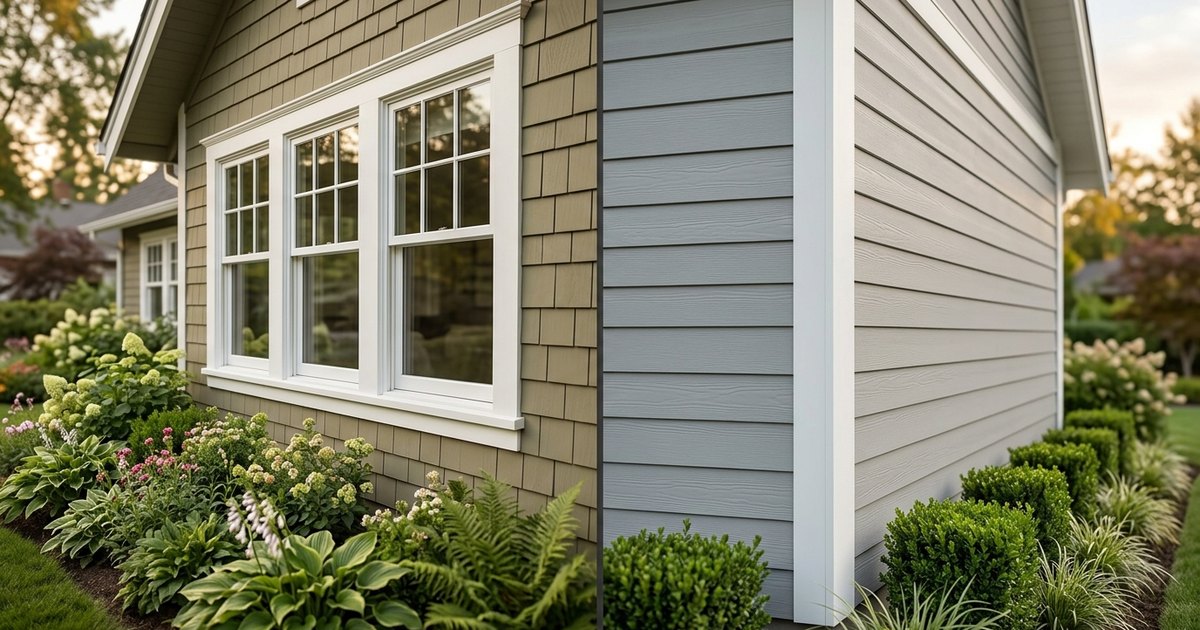
Of all the renovations a homeowner can make, two consistently top the curb-appeal ROI list: vinyl siding replacement and vinyl window replacement. Both have been in the top 8 of the Remodeling Magazine Cost vs. Value Report for 12 straight years. Both cost roughly the same on a mid-range home. And both promise to dramatically improve how the house looks from the curb. So which one wins in 2026 — for ROI, for energy savings, for resale, and for the homeowner who can only afford one?
The 2026 numbers — head to head
| 2026 metric (2,000 sqft home, mid-range) | Window replacement (18 openings) | Siding replacement (1,800 sqft) |
|---|---|---|
| Installed cost | $16,000–$30,000 | $18,000–$38,000 |
| Cost per unit | $700–$1,800/window | $9–$22/sqft |
| Appraisal-uplift at resale | $11,000–$22,000 | $14,000–$28,000 |
| ROI percentage | 68–74% | 75–82% |
| Energy savings (annual) | $180–$540 (if replacing single-pane) | $120–$420 (with insulated backer) |
| Typical timeline | 3–5 days | 5–10 days |
| Disruption (live-in impact) | Medium — in-house dust/trim removal per window | Low — exterior-only work |
| Federal tax credit (25C) | Up to $600 (Energy Star) | $0 (siding doesn't qualify alone) |
| Curb-appeal impact rank (Realtor.com 2025) | #4 | #2 |
Sources: 2026 Remodeling Magazine Cost vs. Value, NAHB exterior survey, Realtor.com 2025 buyer survey. Run our window replacement calculator or vinyl siding cost guide for state-by-state siding pricing.
Why siding wins on curb-appeal ROI
Siding is 60-80% of the visual field when a buyer pulls up to a house. Windows are 10-18%. New siding completely changes the home's visual identity — color, texture, age signal — in a way windows alone can't. Three structural reasons siding edges out windows on ROI percentage:
- Color reset. New siding lets you change the home's exterior color. New windows are usually white or the original color. The color reset is where most of the buyer “wow” lives.
- Age signal. A 25-year-old vinyl-sided home with new windows still looks 25 years old. A 25-year-old home with new siding looks 3 years old. Buyer perception of “age” drives 7-12% of offer pricing in many markets.
- Insulation backer. Modern siding installs add R-3 to R-6 insulated foam backing behind the panel, which improves the home's entire wall-system R-value — something window replacement alone can't do.
Why windows win on energy-bill ROI
If you have single-pane or aluminum-frame double-pane windows (anything pre-1990), windows are actually the bigger energy-savings play in dollar terms:
- Heat loss math. A single-pane window has an R-value of about 1.0. Modern double-pane low-E argon windows hit R-3.5 to R-5. Triple-pane gas-filled hit R-7+. The R-value jump is 3-7×.
- Air infiltration. Old windows leak around the frame regardless of R-value. Modern factory-sealed vinyl frames cut air infiltration by 60-85%, which on a leaky home is worth more than the R-value upgrade alone.
- Federal 25C credit. Up to $600 for Energy Star windows. Siding doesn't qualify unless paired with continuous exterior insulation under the IECC envelope rules (rare in single-family renovations).
The decision matrix — which to do first
| Your situation | Do first | Why |
|---|---|---|
| Single-pane / aluminum-frame windows + acceptable siding | Windows | Energy ROI dominates — payback 6-12 yr from energy bills alone. |
| Faded / cracked / decades-old siding + acceptable windows | Siding | Curb-appeal driver — visual identity change is too big to defer. |
| Both dated, selling in 18-36 months | Both together | 8-15% labor savings + window flashing detailed properly behind siding. |
| Both dated, staying 10+ years | Windows now, siding in 3-5 yr | Energy bills compound; siding can wait, energy waste can't. |
| Budget under $20K | Siding (do half-house gable face) | $18K of siding on the street-facing portion delivers 90% of curb-appeal lift. |
| Budget $25-50K | Both together | Sweet-spot range — full exterior reset for combined ROI of 72-78%. |
| Home pre-1978 (lead paint risk) | Siding (with abatement) first | RRP-certified siding contractor handles existing lead paint correctly — window install will disturb it otherwise. |
The materials grid — what you're actually buying
Window options (2026)
- Vinyl (most common, 65% of installs): $700–$1,200 installed per window. 20-30 year lifespan. Best balance of cost / energy / longevity. Pick frames in “extruded” (commercial-grade) not “rolled” if you can.
- Fiberglass: $1,200–$1,900 per window. 30-50 year lifespan. Better dimensional stability than vinyl, can be painted, doesn't soften in heat. Worth the premium in extreme climates (FL/AZ heat, ND/MN cold).
- Wood-clad: $1,800–$3,200 per window. Required by HOA/historic district in some markets. Otherwise rarely worth the cost.
- Aluminum-clad wood: $1,400–$2,400 per window. Premium look for premium homes. Don't spec on starter homes — doesn't recover the cost.
Siding options (2026)
- Vinyl (most common, 56% of installs): $4–$8/sqft material + labor = $9–$16/sqft installed. 25-40 year lifespan. Don't go below “premium grade” (.044'' thickness or higher) — cheap vinyl warps in 8-12 years.
- Fiber cement (James Hardie, etc.): $7–$13/sqft material + labor = $13–$22/sqft installed. 30-50 year lifespan. Best 30-year ROI of any siding option; insurance discount in fire-prone regions (CA, parts of OR/CO/AZ/TX).
- LP SmartSide engineered wood: $6–$10/sqft material + labor = $11–$18/sqft installed. 20-30 year lifespan. Looks like wood, costs like vinyl. Great mid-tier choice.
- Real wood (cedar, redwood): $9–$16/sqft material + labor = $16–$28/sqft installed. 15-30 years if maintained. Required for some HOAs and historic districts; not for everyone else.
Hidden costs each project hides
Window replacement — budget surprises
- Rotted sills / studs around old windows. Pre-1990 wood-framed homes have a 35% chance of meaningful rot at the rough opening. Add $300–$1,200 per affected window for sill repair.
- Lead paint disturbance. Pre-1978 homes: RRP certification required, abatement costs $250–$650 per window in lead-positive houses.
- Interior trim mismatch. New windows often come in slightly different reveal depths than originals. Trim repair / repaint: $80–$200 per opening.
- Specialty windows. Bay, bow, arched, picture windows are not in standard pricing. Each adds $500–$2,500.
Siding replacement — budget surprises
- Sheathing rot under old siding. Houses sided over rot fail in 3-7 years. Always require “sheathing inspection” line item in the bid — $4–$8/sqft for sheathing replacement if needed.
- Asbestos siding abatement. Pre-1980 siding may be asbestos. Test cost $200–$400; abatement $4–$12/sqft if positive.
- Lead paint under old siding. If old siding was painted lead, abatement adds $3–$8/sqft.
- Trim, soffits, fascia. Most “siding” bids don't include these. Adding aluminum-wrap soffits/fascia: $2,400–$6,800 on a typical home.
- Window/door capping. New siding around old windows looks awkward unless the trim is wrapped or replaced. $80–$220 per opening.
The combo play — both together
If both your siding and your windows are dated and you're selling within 36 months, doing both in a single contract is the strongest curb-appeal ROI play. 2026 numbers:
- Cost: $32,000–$60,000 (vs. $35,000–$68,000 done in two phases) — 8-15% labor savings.
- Appraisal-uplift: $24,000–$48,000.
- Combined ROI: 72–80% — one of the strongest exterior ROI plays in any 2026 data.
- Why it works: Window flashing details correctly behind the new siding (impossible to retrofit later); contractors don't have to work around old elements; single staging + cleanup; single permit; the home looks completely new from the curb.
State variance — where you live changes the math
- Hot-humid states (FL, GA, AL, LA, MS, TX coast): Fiber cement siding is the stronger play (rot resistance, hurricane code). Vinyl windows hold up fine. Combo ROI 78-84%.
- Cold states (MN, ND, ME, VT, MI, WI): Window replacement is the higher-impact single project — energy savings stack. Vinyl siding fine on shaded walls; fiber cement on sun-facing for color retention.
- Fire-prone states (CA, OR, parts of CO/AZ/TX/NM): Fiber cement siding qualifies for insurance discounts ($240–$680/year savings). Pays back the fiber-cement premium in 6-9 years on its own.
- High-cost states (CA, NY, MA, NJ, WA, HI): Both projects run 22-38% over national medians. Permitting alone can hit $1,200–$2,400 for windows + siding combined.
Run the numbers
- Window replacement cost calculator — state-adjusted estimate by frame type, window count, and energy tier.
- Window replacement ROI guide (2026) — deeper dive on tier and state recovery numbers.
- Vinyl siding replacement ROI guide (2026) — siding-specific recovery numbers and tier guidance.
- Curb appeal power trio (2026) — the three exterior projects that combine for the strongest pre-sale lift.