Resale & ROI
What to Fix Before Selling vs What to Skip (2026 Pre-Listing Playbook)
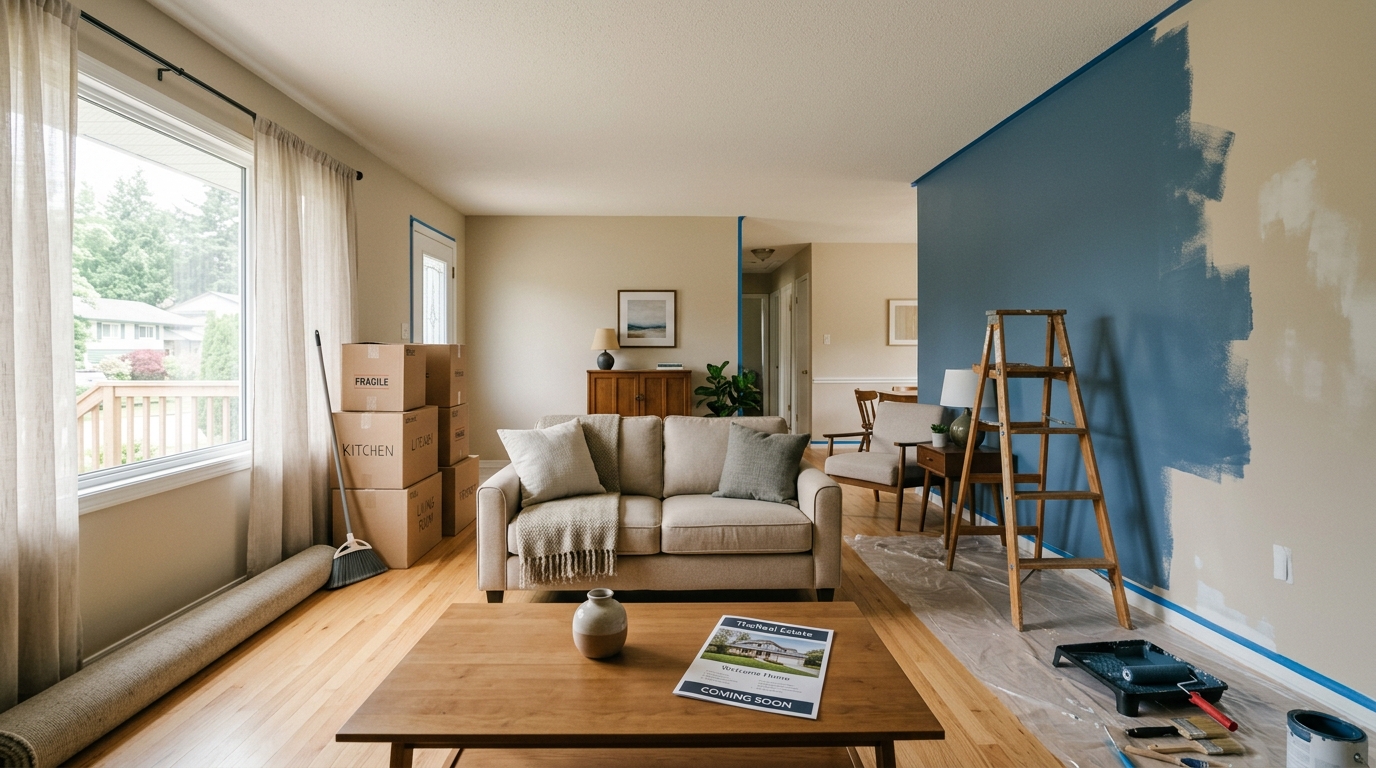
You're listing in 90 days. Your real estate agent walks through and says "let's repaint everything, replace the kitchen counters, refinish the floors, and update the master bath. Bump your asking price by $40K." That's $25K of work for $40K of upside — except in roughly 60% of these cases, the actual upside is $8-12K. You spent $25K to net $0 and added 6 weeks of pre-listing stress.
The right pre-sale strategy is brutally tight: fix anything that will tank an inspection or a buyer's first walkthrough; skip anything cosmetic that doesn't change the listing photos. Here's the triage that maximizes net proceeds.
The 4 categories of pre-sale work
- Inspection-killers (always fix). Items a home inspector WILL flag and a buyer's agent WILL use to negotiate $5-15K off the price. Fixing them yourself costs < 30% of what the buyer's "credit" demand will be.
- Curb appeal + first-30-seconds (always fix). Items a buyer notices in the first half of the first walkthrough — controls whether they make an offer at all.
- Maybe fix — depends on your market. Items that lift comp value if you're in a competitive market, but waste money if buyers are already lined up.
- Skip — leave it for the buyer. Items where DIY-buyer demographics actively WANT to customize themselves. Fixing them removes a buyer's "I can make this mine" feeling and rarely lifts price.
Category 1 — Always fix (inspection killers)
- Roof leaks or end-of-life roof. An inspector flagging "active leak" or "< 3 years remaining life" triggers a $7-15K buyer credit demand. Replacing before listing recoups 50-70% in sale price + removes negotiation leverage. Roof cost calculator.
- HVAC > 18 years old. Same pattern — buyer's agent demands a credit. New unit costs $6-12K; buyer credit demand is typically $8-15K.
- Water heater leaking or rusted. $1,500 fix; $3-4K buyer credit demand.
- Electrical panel issues (double-tapped breakers, Federal Pacific / Zinsco panels). $2-4K panel replacement; can kill a deal entirely with insurance- conscious buyers.
- GFCI / AFCI missing in required locations. Bathrooms, kitchens, garage, exterior. $400-800 fix; $1,500 buyer credit demand.
- Visible mold, water stains, or active moisture. Even cosmetic stains read as "active leak somewhere" to inspectors. Fix the cause AND the cosmetic.
- Foundation cracks > ¼ inch wide. Get an engineer's letter confirming "non-structural" if applicable — costs $400, saves $20K of buyer uncertainty discount.
- Pre-1978 home: lead paint disclosure issues, peeling paint on exterior. EPA-required. Scrape and repaint exterior; have a lead-safe contractor handle interior touch-ups if needed.
Category 2 — Always fix (curb appeal + first 30 seconds)
- Front door. Paint or replace if dated. A new steel entry door has one of the highest ROIs in residential renovation (95%+ recoup).
- Landscaping — minimum viable. Fresh mulch, edged beds, trimmed shrubs, mowed lawn. $400-800 DIY or a $1,500 weekend with a landscaper.
- Power-wash exterior + driveway. $200-400 rental or service.
- Interior paint — neutral. If walls are colorful or scuffed, repaint common areas in a warm off-white. $1,500-3,000 for the whole interior; lifts comp value $5-12K.
- Carpet — clean or replace. Professional cleaning $300-500. Replacing with neutral builder-grade carpet $2-4K. If the carpet is > 10 years old and showing wear, replace it.
- Light fixtures. Replace anything 1990s brass with modern matte black or brushed nickel. $30-80 per fixture; $400-700 total for a typical home.
- Cabinet hardware. If your kitchen cabinets are otherwise fine, new pulls + knobs are a 2-hour DIY that visually modernizes the room for $80-150.
Category 3 — Maybe fix (depends on market)
- Kitchen counters. Quartz or granite over old laminate adds $8-15K to sale price. Counter swap is $3-6K. Worth it in competitive markets, skip in seller's markets where buyers will overbid anyway.
- Bathroom tile re-grouting + caulk refresh. $300-500 fix that de-ages a bathroom by 5 years visually. Almost always worth it.
- Refinishing hardwood. $2-4K cost; lifts price $4-8K in markets that value hardwood. Skip if you have carpet over good hardwood and aren't pulling carpet.
- Solar. See What nobody tells you before solar — pre-sale solar installs typically recoup poorly because the value depends on the new owner's interest in the lease terms. Skip pre-sale.
Category 4 — Skip (let the buyer customize)
- Full kitchen remodel. $45-80K cost; recoups 50-65% even on a fresh install. Pre-sale buyers value "potential to customize" more than "fully finished". Worst pre-sale ROI in the data.
- Master bath full remodel. Same logic. Updated fixtures + tile re-grout cover 80% of the visual impact at 10% the cost.
- Basement finishing. $35-60K cost; pre-sale recoup is typically 60-70% but the buyer pool sees finished-vs-unfinished basement as a "preference" decision (kids vs gym vs storage). Skip unless your market specifically rewards finished square footage in comps.
- Adding a bathroom. Pre-sale adds need a 60-90 day construction window, permit, and inspections; if your listing date is fixed, the math almost always breaks.
- Smart home gadgets. Thermostats, doorbells, locks. Buyers may want their preferred brand (Apple Home vs Google vs Alexa); installing yours adds negative value.
- Custom paint colors / wallpaper. Strong personal taste = strong buyer aversion.
The "12-month payback" rule
For any pre-sale fix you're considering, ask: "Will this return its cost within 12 months of closing through higher sale price?" If yes, do it. If the payback period is 2-5 years (typical of full remodels), the new owner is paying you 2-5 years late — which means present-value to you is 30-50% of the headline ROI number.
Inspection killers and curb-appeal items consistently return 200%+ in < 12 months. Full remodels return 50-65% over 5+ years, which translates to a net loss in present-value terms.
Run your numbers
- Renovation ROI calculator — recoup % for any specific project, state-adjusted.
- Remodel vs refresh — right scope for the project you've decided to do.
- Renovation order — for any 2+ project pre-sale plan.
- Best ROI renovations by state — state-ranked recoup % for the top 10 pre-sale projects.