Renovation Strategy
What Order Should I Do Home Renovations In? (2026 Sequencing Guide)
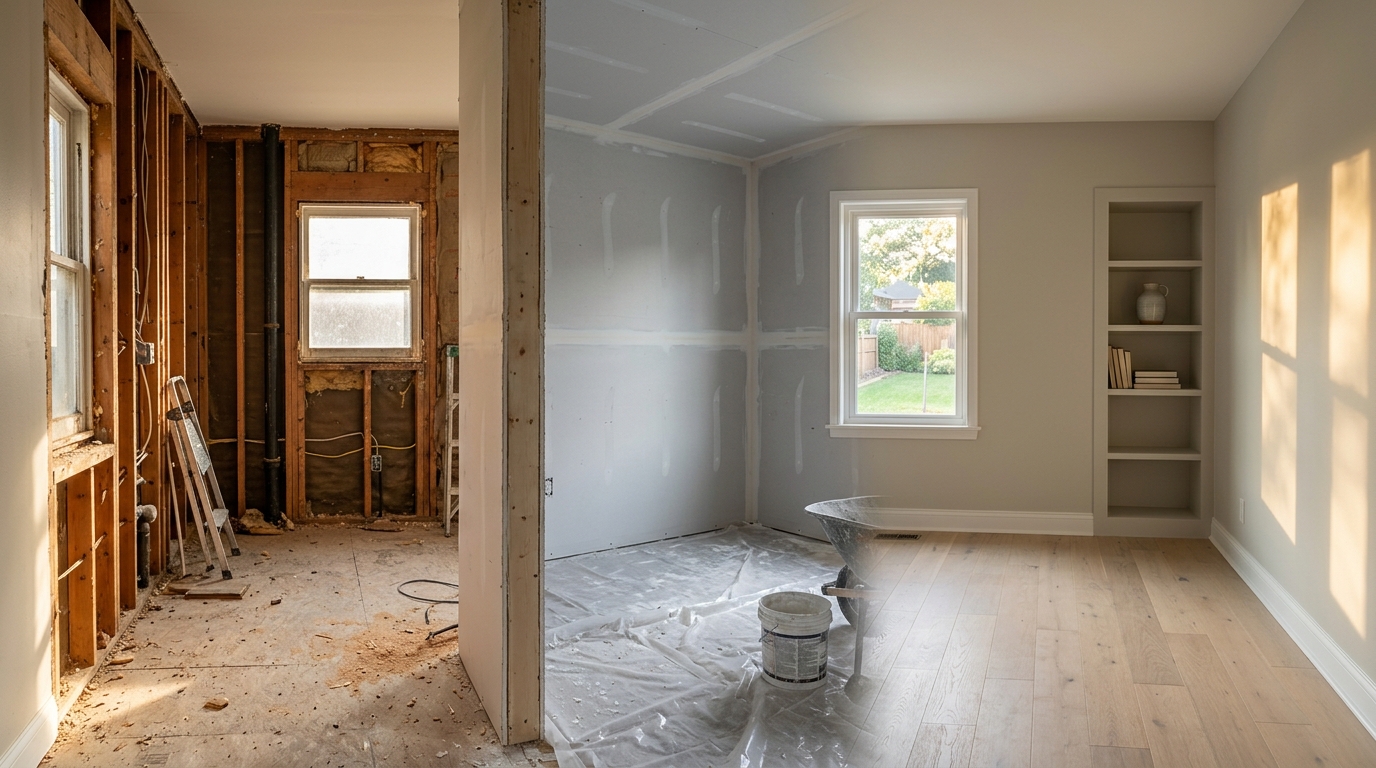
The most expensive remodel mistake isn't a bad contractor — it's a bad sequence. Refinish hardwood floors first, then have the kitchen installer slide a 600-pound refrigerator across them. Replace the windows last, after the new kitchen paint is up on perfect drywall. Drop $40K on a finished basement, then discover the new HVAC plan requires running ductwork through the freshly-finished ceiling.
We've analyzed 300+ project post-mortems on Houzz, Reddit, and Angi to identify the sequencing mistakes that cost real money. The good news: there's a stable 8-stage order that prevents 90% of them, with clear rules for what can run in parallel.
The big rule: structure → systems → surfaces → fixtures
Every renovation falls into one of four phases. Always finish each phase before moving to the next (except for the parallel exceptions called out below).
Phase 1 — Structure + envelope (months 1-2)
This is the "if it can leak or fall down, fix it first" phase. Skip it and every downstream project is gambling against weather and foundation movement.
- Roof. Active leaks ruin everything below. Replace BEFORE any interior finish work. Roof cost calculatorfor state-adjusted budget.
- Foundation + waterproofing. If you have basement seepage, finish-grade changes, or settlement cracks, address now. The basement-finish decision calculator includes a waterproofing-first gate.
- Major siding + windows + doors. The home's envelope. Combine these if you're tearing into siding — touching the same trim twice doubles labor.
Phase 2 — Systems (months 2-4)
Mechanical, electrical, plumbing — the "behind the walls" stuff. Always finished before drywall closes up. Skipping a panel upgrade now means tearing into freshly-painted walls in 3 years when you finally add the heat pump.
- Electrical panel + service upgrade. If you're planning EV charging, a heat pump, induction range, or basement finish, verify panel capacity FIRST. Most 200-amp houses can absorb one of those; 100-amp houses usually can't absorb any without an upgrade.
- HVAC. If the system is > 15 years old or you're adding finished square footage, replace now. The basement / addition / new bathroom all need ductwork planned BEFORE drywall.
- Plumbing rough-in. Any new bathroom, kitchen layout change, or basement bathroom needs supply + drain rough-in BEFORE drywall.
- Insulation. Open walls during electrical/HVAC work? Add insulation before drywall. Renovation ROI calculatorranks attic insulation as the consistent top-3 ROI improvement.
Phase 3 — Hidden finishes (months 4-6)
Drywall, primer, subfloor, tile substrate. The base layer everything else attaches to.
- Drywall + ceiling repair
- Primer coat (1 coat on every surface; saves 30% on final paint)
- Subfloor leveling + waterproof membrane in wet areas
- Tile substrate (cement board, Ditra, etc.)
Phase 4 — Visible finishes + fixtures (months 6-9)
Now the "Instagram phase". The order here matters less but still has gotchas.
- Cabinetry installed BEFORE flooring (controversial but right): saves flooring material under the cabinets (you'd have hidden $400-$800 of flooring otherwise), and you avoid dragging cabinets across new flooring.
- Flooring — wall-to-wall after cabinet install. If you're refinishing existing hardwood, do it AFTER all dust-producing work (drywall, tile) is done.
- Tile + grout
- Final paint (2 coats; primer was already on)
- Plumbing fixtures + appliance install
- Trim, baseboards, doors, hardware
- Light fixtures + switch plates
What can safely run in parallel?
- Roof + siding (same exterior crew can sometimes do both).
- Bathroom + kitchen remodels (different crews; just make sure neither uses the only working bathroom).
- Outdoor (deck, landscaping) + interior — different crews, zero overlap.
- Solar + roofing — replace roof FIRST so the solar installer mounts on a 25-year warranty surface (not a 5-year one). What nobody tells you before solar covers the roof-age gate that kills many installs.
What MUST sequence strictly?
- Roof before any interior finishes.
- Electrical panel before any major load-adding install (EV, heat pump, basement finish).
- Plumbing rough-in before drywall.
- Cabinet install before flooring.
- Final paint after floor install (drop cloths only protect so much).
The "do I have to redo it?" test
For any project you're planning, ask: "If I do X first and Y second, will doing Y cause me to touch X again?" If yes, the sequence is wrong. If no, you're fine.
Example: refinishing hardwood THEN installing kitchen cabinets — yes, the floor will get scratched up by cabinet install, you'll touch it again. Wrong order.
How long does the whole thing take?
For a full first-floor remodel (roof + windows + kitchen + 2 bathrooms + flooring + paint), realistic timelines:
- Phase 1 (structure): 4-8 weeks.
- Phase 2 (systems): 4-8 weeks.
- Phase 3 (hidden finishes): 4-6 weeks.
- Phase 4 (visible): 8-12 weeks.
- Total: 5-8 months.
Compress to < 4 months only if you have a single GC managing all 4 phases. DIY sequential typically runs 9-14 months because of bandwidth, not skill.
How to fund it
Full first-floor remodels typically run $80K-$180K (state-dependent). Three financing options model side-by-side in the renovation financing comparator:
- Home equity loan — fixed rate, lump sum, predictable monthly payment. Right when scope is locked.
- HELOC — variable rate, revolving draw. Better when scope will evolve mid-project.
- Cash-out refinance — only wins if your existing mortgage rate is materially above today's market.
Related reading
- Remodel vs refresh — for the "do I need this big a project at all?" decision.
- What to fix before selling vs skip — if your timeline is < 18 months.
- Renovation ROI calculator — sequence ranking by recoup %.
- Renovate or move? — for the upstream decision: should you sequence renovations at all, or sell + buy a comparable already-renovated home? Often answered by mortgage rate-lock value alone.