Financing
FHA 203(k) Renovation Loan Explained Simply (2026 Guide)
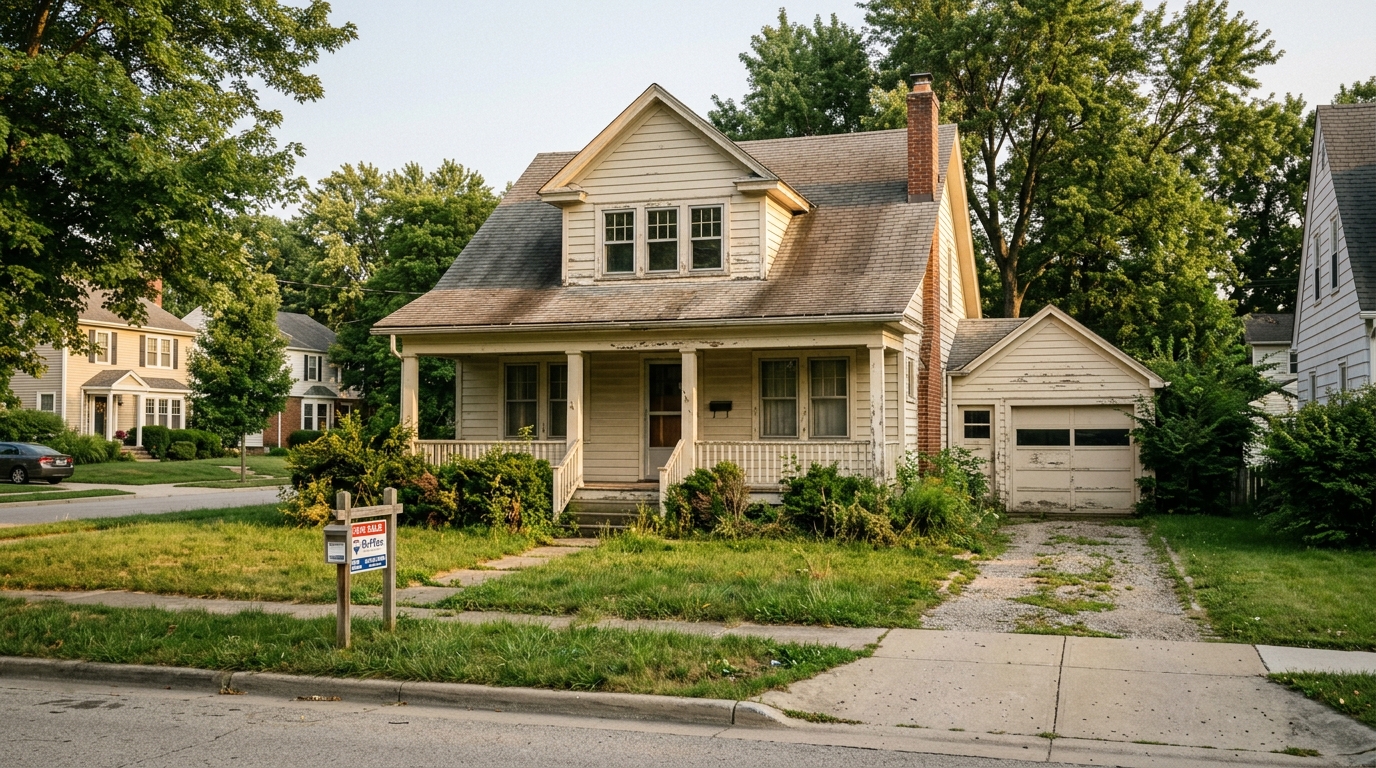
The FHA 203(k) is the federal government's renovation-mortgage program — it lets you buy a fixer-upper (or refinance one you already own) AND finance the renovation, all in a single mortgage at FHA rates with just 3.5% down. For first-time buyers, recent buyers with limited equity, and rehab-flippers, it's often the only viable path. Here's the 2026 version of the program in plain English.
What changed for 2026
- Limited 203(k) renovation cap raised from $35K → $75K (HUD ML 2024-13, effective Nov 2024 and still current for 2026).
- 2026 FHA loan limits set at $524,225 (low-cost floor) to $1,209,750 (high-cost ceiling), per HUD ML 2025-29.
- HUD consultant fee schedule updated — larger projects can now command $800–$1,600.
- Annual MIP for 30-year, LTV ≥95% loans is 0.55% (reduced from 0.85% by HUD ML 2023-05; in force since Mar 2023).
What it actually is
An FHA-insured mortgage where the loan amount includes both the home's as-is purchase price AND a renovation budget. The lender disburses the renovation portion to your contractor in draws (typically 5 draws over a 6-month build) while the buyer takes possession from day 1 and starts paying the full mortgage immediately, including on the un-disbursed renovation funds.
Two variants — pick the right one
Limited 203(k) (formerly "Streamline")
- Renovation budget: $0 – $75,000 (raised from $35K by HUD ML 2024-13, effective Nov 2024; no structural changes; cosmetic + system upgrades only).
- No HUD consultant required.
- No engineering / architect plans required.
- Common uses: kitchen + bath cosmetic refresh, paint, flooring, HVAC replacement, roof, windows.
- Closing typically 30–45 days. Construction must complete in 6 months.
Standard 203(k)
- Renovation budget: $5,000 minimum, no fixed max (capped only by FHA loan limit for your county).
- HUD consultant required ($600–$1,400 fee).
- Architect / engineer plans required for structural work.
- Allows structural work, additions, ADUs, foundation repair, mold remediation, lead paint abatement.
- Closing 45–75 days. Construction must complete in 6 months (extensions available).
The 2026 numbers you actually care about
| Parameter | Limited 203(k) | Standard 203(k) |
|---|---|---|
| Down payment | 3.5% | 3.5% |
| Minimum FICO | 620 (most lenders), 580 with 10% down | 620 (most lenders), 580 with 10% down |
| Max DTI | 43% (50% with comp factors) | 43% (50% with comp factors) |
| FHA loan limit (county-dependent) | $524,225 – $1,209,750 (2026, per HUD ML 2025-29) | $524,225 – $1,209,750 (2026, per HUD ML 2025-29) |
| Mortgage insurance | 1.75% upfront + 0.55% annual (per HUD ML 2023-05) | 1.75% upfront + 0.55% annual (per HUD ML 2023-05) |
| Rate vs conventional renovation loan | +0.25 – 0.75% (H1 2026) | +0.25 – 0.75% (H1 2026) |
| Renovation budget range | $0 – $75,000 (raised from $35K by ML 2024-13) | $5,000 minimum, no fixed max (county FHA limit applies) |
| Eligible properties | 1–4 unit, primary residence only; condos eligible with FHA-approved HOA | Same |
| Eligible work | Cosmetic + system replacement, no structural | Cosmetic, system, structural, additions |
| Luxury exclusions | Pools, hot tubs, outdoor kitchens, fire pits — NOT eligible | Same |
When 203(k) beats every other option
- First-time buyer + fixer-upper. The conventional path requires you to buy with cash or a tear-down loan, then refinance once the renovation is done. 203(k) is one mortgage at FHA rates with 3.5% down.
- Lower-credit / lower-income buyers. 620+ FICO and 43–50% DTI tolerance beats every other renovation loan product on accessibility.
- Distressed-property purchases below FHA loan limit. The loan funds both the buy and the rehab in one closing.
- House hackers buying 2–4 unit properties. 203(k) on multi-units lets you rehab + house-hack with 3.5% down and FHA rates.
The 4 gotchas that disqualify most buyers
Gotcha 1: The 6-month construction deadline
FHA requires renovation completion within 6 months of closing. Permit delays, material backorders, or contractor scheduling pushes can blow this — and the consequences range from extension fees ($500–$2,500) to loan default in extreme cases. Hire an experienced 203(k) contractor with a track record; the program is paperwork-heavy and inexperienced contractors routinely cause project delays.
Gotcha 2: HUD consultant requirement (Standard only)
For Standard 203(k), a HUD-approved consultant must inspect the property, develop a "Work Write-Up," approve each draw, and sign off on completion. The consultant's $800–$1,600 fee (raised under ML 2024-13 for larger projects) is FHA-approved but adds time and friction. Find an experienced one — there are only ~3,000 nationwide.
Gotcha 3: Self-help / DIY restrictions
FHA strictly limits sweat equity. On Limited 203(k), borrower self-work is not allowed at all in most lender overlays. On Standard 203(k), borrower labor is allowed only if you can prove competence (typically a construction-trade license or 2+ years documented experience). Most buyers can't qualify for self-help.
Gotcha 4: Luxury items explicitly excluded
Pools, hot tubs, outdoor kitchens, fire pits, BBQ pits, gazebos, and "luxury landscaping" are FHA-excluded. If you're planning a backyard upgrade, 203(k) won't fund it — you'd need a separate personal loan or HELOC for those scopes.
How disbursement actually works
- Closing: Lender funds the home purchase + sets aside renovation funds in an escrow account.
- First draw (Draw 1): Up to 50% of materials cost released to contractor after permit pull.
- Progress draws (Draws 2–4): Released after HUD consultant or lender inspector verifies completed work at each stage.
- Final draw (Draw 5): Released after final inspection + permit close-out. Typically 10% of total.
- Throughout: You're paying the full PITI mortgage including on un-disbursed renovation funds.
203(k) vs HomeStyle vs CHOICERenovation
Three federally-backed renovation-loan products exist. Brief comparison:
- FHA 203(k): 3.5% down, 620 FICO, 0.55% annual MIP (per HUD ML 2023-05). Best for low-credit / low-down-payment buyers.
- Fannie Mae HomeStyle: 3–5% down, 620 FICO, conventional mortgage insurance (drops at 80% LTV). Best for higher-credit buyers who can ditch MIP later.
- Freddie Mac CHOICERenovation: 3–5% down, 620 FICO, can finance luxury items 203(k) excludes (e.g., pools). Newest of the three; fewer lenders offer it.
Rule of thumb: 203(k) for FICO 620–680. HomeStyle for FICO 680+ (lose MIP at 80% LTV = real money). CHOICERenovation for borrowers wanting pool/outdoor luxury work funded.
Finding a 203(k) lender
Not every FHA lender does 203(k) — the paperwork volume scares many off. Active national lenders in 2026: Carrington Mortgage Services, Guild Mortgage, Movement Mortgage, AmeriSave, Mr. Cooper, Cardinal Financial. Local credit unions occasionally offer it. Always ask "How many 203(k) loans did your branch close last year?" — >10 is good, <3 means you're going to be their guinea pig.
Bottom line
FHA 203(k) is the single best renovation-mortgage product for first-time buyers, lower-credit borrowers, and anyone buying a fixer-upper they couldn't otherwise rehab. The 6-month deadline, HUD consultant, and luxury exclusions are real friction — but for the right buyer, the program enables purchases that no other product can. Use the Limited version for $5K–$75K cosmetic projects; use Standard for structural or larger scopes.
Related: How to Finance a Home Renovation · How Much Equity You Need · How Financing Affects Mortgage Approval
Sources & methodology
HUD Handbook 4000.1 (FHA Single Family Housing Policy), HUD ML 2021-13 (203(k) program rules), HUD ML 2024-13 (Limited 203(k) cap raised to $75K, consultant fee updates), FHA loan limits 2026 (HUD ML 2025-29: $524,225 floor / $1,209,750 ceiling). Lender data from HUD Lender Search + Bankrate H1 2026 rate cards. Comparison with HomeStyle / CHOICERenovation per Fannie Mae Selling Guide B5-3.2 and Freddie Mac Single-Family Seller/Servicer Guide chapter 4602.
Keep reading
Kitchen Remodel
Kitchen Remodel Cost in Washington 2026 — Seattle Metro Premium & PNW Cabinet Sourcing
9 min read
Kitchen Remodel
Kitchen Remodel Cost in Colorado 2026 — Why CO Kitchens Run 10-20% Above National
9 min read
Kitchen Remodel
Kitchen Remodel Cost in Florida 2026 — Miami, Tampa, Orlando, Jacksonville Pricing
9 min read