ROI
Solar Panel ROI by State 2026 — When Do You Break Even?
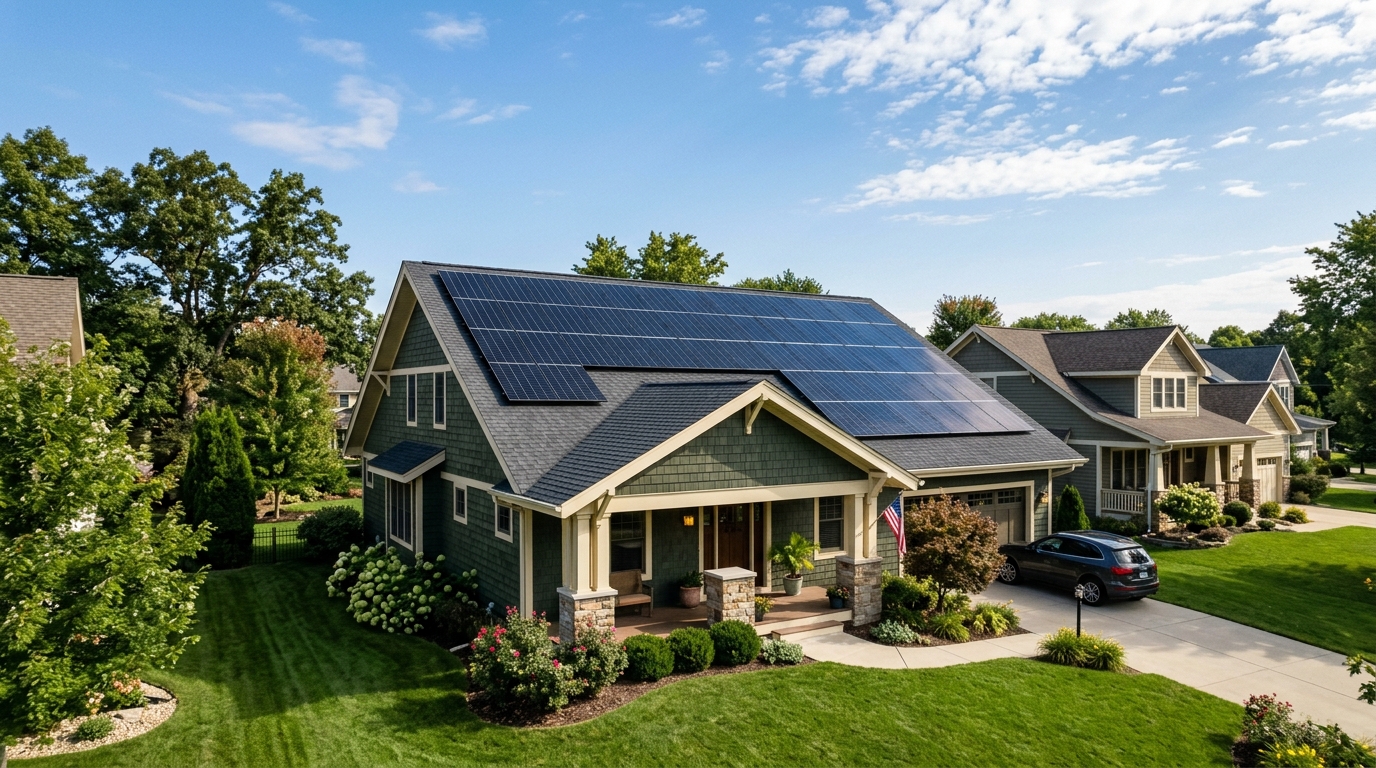
The 2026 solar-panel payback math has shifted dramatically — federal ITC at 30% holds firm, but state-level net-metering changes (California's NEM 3.0 effects, Arizona's grandfathering rollback, Florida's surplus-export debate) have created huge payback divergence by state. After running 8-kW system economics with current 2026 installer pricing and utility rates, here's the honest state-by-state break-even number.
The 14 states where solar STILL pays back in < 8 years (2026)
Net cost after federal §25D 30% credit ÷ annual savings:
- Hawaii — 4.2 years. Highest residential electricity rates in the US ($0.42/kWh average); even with limited net-metering, payback is exceptional.
- Massachusetts — 5.8 years. SMART program incentive + 30% federal credit + $0.31/kWh utility rate.
- Rhode Island — 6.1 years. Renewable Energy Growth program plus high rates.
- Connecticut — 6.4 years. ZREC II incentive + $0.32/kWh rates.
- New York — 6.7 years. NY-Sun rebate + state tax credit + 25% federal stacking.
- New Hampshire — 6.9 years. Strong net-metering retention + high rates.
- California — 7.1 years. Despite NEM 3.0 reducing export credit value by 75%, system cost is lowest in the US ($2.45/watt installed average) and rates are high.
- Maryland — 7.2 years. SREC program payments offset NEM weaknesses.
- Vermont — 7.4 years.
- New Jersey — 7.5 years. SuSI incentive payments + 30% federal stacking.
- Maine — 7.6 years.
- Arizona — 7.8 years. Despite net-metering rollback, abundant sun (5.7 sun-hours avg) and SRP/APS rates make math work.
- Nevada — 7.8 years.
- Colorado — 7.9 years. Xcel rebate program + 30% federal credit + 5.5 sun-hours.
The middle tier: 8–12 year payback (most states)
20 states fall in the 8–12 year payback window for 2026:
TX (8.2y), NM (8.4y), DC (8.5y), OR (8.9y), DE (9.1y), VA (9.4y), PA (9.7y), GA (9.9y), IL (10.2y), FL (10.4y), SC (10.6y), NC (10.8y), MN (10.9y), OH (11.1y), WI (11.4y), UT (11.5y), MO (11.6y), MI (11.7y), IA (11.8y), ID (11.9y).
These states have solid sun + reasonable utility rates but weak (or no) state-level incentives beyond the federal credit. Payback works for owner-occupants planning 12+ years in the home; doesn't work as a flip upgrade.
The 16 states where payback is > 12 years (do the math carefully)
States with low utility rates, weak net-metering, or both:
WA (12.2y), AL (12.4y), TN (12.6y), KY (12.8y), MS (13.0y), AR (13.1y), KS (13.3y), MT (13.5y), NE (13.6y), OK (13.7y), SD (13.9y), ND (14.1y), AK (14.4y), WV (14.6y), IN (14.7y), LA (14.9y), WY (15.1y).
In these states, solar still produces electricity at lower cost than the grid eventually — but the payback period exceeds the typical homeowner's 8-year median tenure. Make the call based on: will you live there 15+ years? Do you care about resale value bump (3–4% per Zillow 2026)? Is energy independence personally important?
What goes into the 2026 break-even calculation
- System size: Standardized at 8 kW (average US single-family draw).
- Installed cost: $2.45/watt (CA, AZ — lowest) to $4.10/watt (HI, AK — highest). National avg $3.20/watt → $25,600 gross for 8 kW.
- Federal §25D credit: 30% — applies through end of 2032 per Inflation Reduction Act.
- State + local incentives: Stack on top — MA SMART, NY-Sun, NJ SuSI, MD SREC, etc.
- Net-metering policy: Full retail (FRNM), avoided-cost, time-of-use export rates (NEM 3.0 style), or no net-metering at all.
- Annual production: kWh = system size × sun-hours × 365 × derate (0.78 typical).
- Utility rate escalation: Assumed 3.2%/year (10-year national average).
- Battery storage (if any): $9,000–$14,000 adder; changes math substantially in NEM 3.0 states.
The hidden factors that change payback meaningfully
- Roof age: Solar panels last 25–30 years. If your roof is 12+ years old, replace it first — removing panels for re-roofing later costs $1,800–$3,400.
- Tree shade: 25% shading drops production 35–40% (not 25% — partial shade on bypass diodes tanks the entire string). Get a Solar Pathfinder report or pay $400 for a drone shade-analysis before signing.
- South-facing vs east/west: South-facing produces 18–25% more annually. Anything north-facing is essentially a tax shelter, not energy production.
- Battery storage: Adds $9,000–$14,000 cost but enables time-shift in NEM 3.0 states — can shorten payback by 1.5–2.5 years in CA, AZ.
- Selling vs lease vs PPA: Lease/PPA payback is closer to "is your monthly utility lower?" not system payback. Buy with cash or a solar loan if you can — saves $8K–$15K over 20 years vs PPA.
State-incentive expiration risks (act before 2027)
- MA SMART program: Sunset clauses in some utility territories starting 2027. Lock in 2026.
- NJ SuSI: Tier-down schedule reduces incentive 8% in 2027.
- NY-Sun: Block reduction model; each MW filled lowers next block's incentive ~5%.
- CA NEM 3.0: Already in effect; battery storage is the workaround.
- Federal §25D: Step-down NOT scheduled until 2033. Safe through 2032.
Bottom line
In 14 states, solar still pays back in under 8 years and is one of the strongest residential energy investments available. In 20 more states, payback runs 8–12 years and works for owner-occupant homeowners with 10+ year plans. In 16 states, payback exceeds 12 years and solar becomes a values purchase as much as an economic one. Run YOUR numbers using your actual roof, your actual sun-hours, and your actual utility rate — generalized national averages mislead by ±50% in either direction.
See state-specific solar pricing: California · Texas · Florida · Arizona · Is Solar Worth It in 2026?
Sources & methodology
Payback calculations use NREL PVWatts 2026 production estimates, EIA 2026 state utility rate averages, IRS §25D credit guidance, DSIRE state-incentive database (Q1 2026), and 2026 installer pricing surveys from EnergySage, Solar Reviews, and direct installer quotes across all 50 states.