Bathroom Remodel
Bathroom Remodel Cost in Colorado 2026 — Front Range, Mountain Towns, and Permit Realities
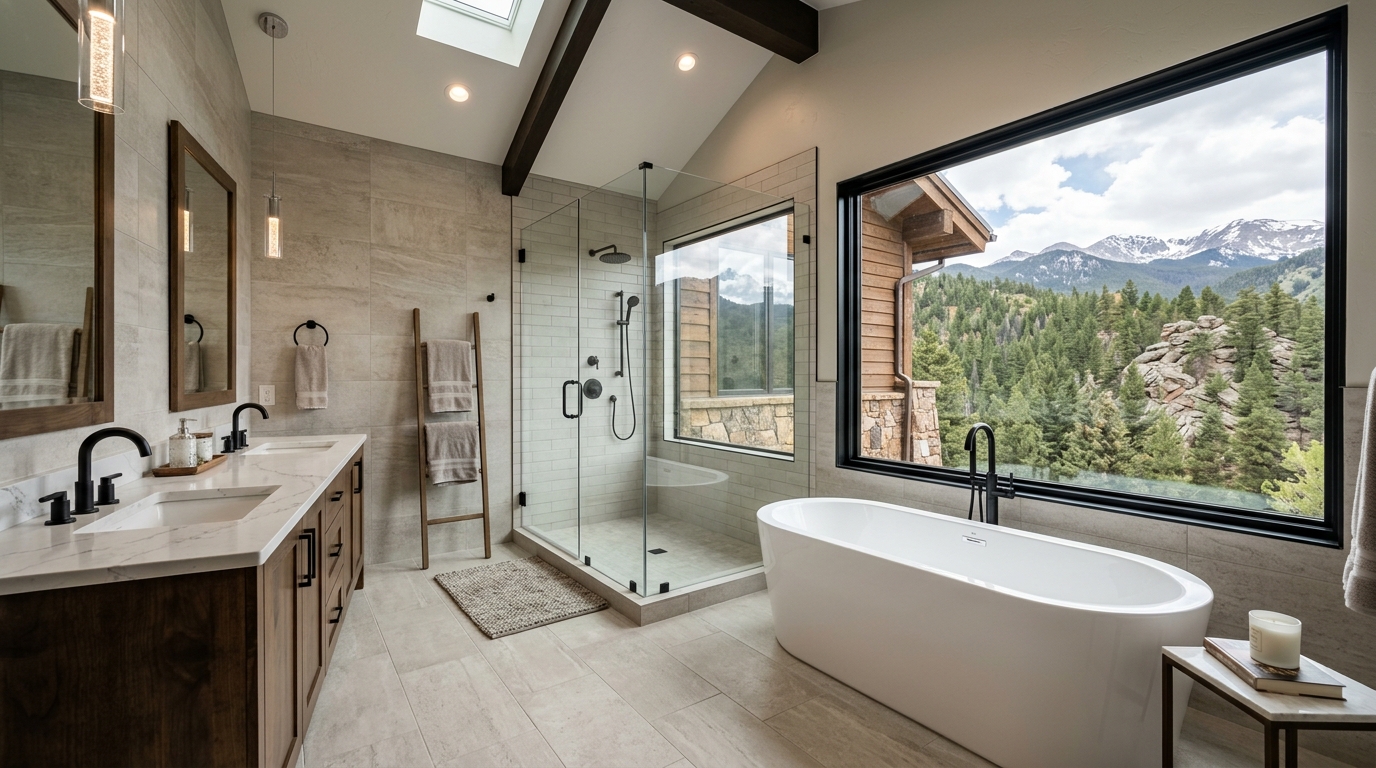
Colorado bathroom remodels run 15-22% above the national average in 2026 — and if you're in a mountain town (Vail, Aspen, Steamboat, Breckenridge), tack on another 30-55% on top of that. Front Range homeowners (Denver, Boulder, Fort Collins, Colorado Springs) hit the lower end of that band. Here's exactly what a Colorado bathroom remodel costs in 2026, why it's more expensive than the U.S. average, and the 4 line items that surprise homeowners most.
The 2026 Colorado bathroom remodel baseline
- Small bath (≤40 sqft, fixture refresh + tile): $11,500-$18,000 Front Range; $16,500-$26,000 mountain towns.
- Full bath (60-100 sqft, mid-tier finishes): $18,500-$32,000 Front Range; $25,500-$47,000 mountain towns.
- Primary en suite (100-160 sqft, double vanity, separate tub + shower): $32,000-$58,000 Front Range; $48,000-$92,000 mountain towns.
Run our state-adjusted numbers for your exact scope: Colorado bathroom remodel cost calculator.
Why Colorado bathroom remodels cost more than the national average
- Skilled-trades labor shortage. Front Range plumbers, tile setters, and electricians are booked 8-14 weeks out almost year-round. Their hourly rates run $115-$160 in Denver/Boulder vs. ~$85-$105 national median.
- Altitude affects fixture certification. Some pressure-balancing shower valves are tested at sea-level conditions; certain spec'd fixtures need high-altitude-rated versions (especially gas water heaters, exhaust fans, and tankless units) — adds 8-15% to fixture costs.
- Code: tempered glass + GFCI + low-flow fixtures. Colorado adopted the 2021 IPC and IRC with state-specific water-efficiency amendments. Showerheads must be ≤2.0 gpm (national is 2.5), toilets ≤1.28 gpf, lavatory faucets ≤1.5 gpm. Limits which fixtures you can spec.
- Snow-load engineering on remodels with skylights or roof tie-ins. If you're adding a skylight over the new shower, snow-load calcs require engineer review in most counties — $400-$1,200 stamped letter.
Front Range vs. mountain town pricing
- Denver metro: Baseline Colorado pricing. Most plumbers and tile setters based here.
- Boulder: +8-15% over Denver. Limited contractor pool + premium clientele.
- Colorado Springs: -5 to +5% vs Denver. Largest contractor pool outside Denver metro.
- Fort Collins / Loveland / Greeley: -5 to +3% vs Denver.
- Mountain resort towns (Vail, Aspen, Telluride, Breckenridge, Steamboat): +30-55% vs Denver. Drive time to materials, limited subcontractor pool, premium clientele, and short-term-rental conversion demand.
- Western Slope (Grand Junction, Montrose, Durango): -8 to +8% vs Denver depending on town size.
Where the money actually goes (typical $25K Front Range mid-tier full bath)
- Plumbing rough-in + finish: $5,000-$7,500
- Tile installation (shower + floor): $4,500-$8,000
- Fixtures (toilet, vanity, faucet, shower valve, exhaust fan): $3,500-$6,500
- Electrical (new circuits, GFCI, fan, lighting): $1,800-$3,200
- Framing + drywall + insulation: $2,500-$4,500
- Permit + inspections: $400-$1,200
- Contractor overhead + profit (15-22%): $4,000-$7,000
Permits and inspections (Colorado specifics)
Almost every Colorado jurisdiction requires permits for any bathroom remodel involving plumbing, electrical, or structural changes. Cosmetic-only (tile, paint, fixtures swapped like-for-like) usually doesn't need a permit.
- Permit cost range: $250-$900 in most Front Range jurisdictions; $600-$2,400 in mountain towns (Pitkin County, Eagle County, Summit County run higher).
- Typical inspections (3-5): rough-in plumbing, rough-in electrical, framing, insulation/drywall (energy-code states), final.
- HOA approval: required in many master-planned Front Range communities; can add 2-6 weeks if you're moving plumbing or adding a window.
- Lead-paint protocols: Pre-1978 homes in older Denver neighborhoods (Capitol Hill, Park Hill, Wash Park, Highland) require RRP-certified contractors — adds $400-$900 to typical projects.
The 4 line items that surprise Colorado homeowners
- Mountain-town material delivery surcharges. A truckload of tile delivered to Aspen or Telluride from Denver runs $400-$900 in delivery fees. Many Front Range tile shops just don't deliver past Glenwood Springs.
- Permit timing in mountain counties. Pitkin, Eagle, and Summit counties can take 4-8 weeks for plan review during peak construction season (May-October). Plan your project for shoulder seasons.
- Radon mitigation. Colorado has the third-highest radon levels in the U.S. If your remodel includes a slab-on-grade bathroom (basement) and you don't already have mitigation, code-required venting can add $1,200-$2,800.
- Snow-load skylight engineering. If you're adding a skylight over the new bathroom, expect a $400-$1,200 stamped engineer letter on top of the skylight cost itself.
Best time of year to remodel in Colorado
- October-March (off-season): 8-15% cheaper labor in Front Range. Mountain towns: similar but with weather delays.
- April-May: Best balance — contractors are coming off winter slack, permits move faster than peak summer.
- June-September (peak): Most expensive everywhere. 10-25% premium and 12-16 week lead times.
Trusted Colorado-specific guidance
- Colorado bathroom remodel cost calculator
- Why Colorado renovation is expensive — full breakdown
- Hiring a Colorado bathroom contractor — what to verify
- Change-order markup norms — Colorado averages 18-30%
Bottom line
A mid-tier full bathroom remodel in Colorado runs $18,500-$32,000 in the Front Range and $25,500-$47,000 in mountain towns. The biggest cost driver isn't fixtures — it's the trades labor shortage and Colorado's water-efficiency code. Get 3 written, line-item bids in the off-season (October-March), pre-select every fixture before bidding, and apply a 15-20% contingency. Run our Colorado bathroom calculator for your exact scope.
More cost guides for Colorado
Planning multiple projects? Every other 2026 Colorado cost guide carries the same state-specific labor and pricing detail.
- Cost GuideBasement Finishing Cost in Colorado 2026
- Cost GuideDeck Construction Cost in Colorado 2026
- Fence InstallationFence Installation Cost in Colorado 2026 — Material, Labor & Code Guide by Metro
- Cost GuideFlooring Installation Cost in Colorado 2026
- Cost GuideHardscape Installation Cost in Colorado 2026
- Cost GuideIn-Ground Pool Installation Cost in Colorado 2026
- InsulationInsulation Cost in Colorado 2026 — Xcel Energy Heat Pump-Ready Rebate Stack, Black Hills Energy Programs, and the High-Altitude R-Value Math
- Kitchen RemodelKitchen Remodel Cost in Colorado 2026 — Why CO Kitchens Run 10-20% Above National
- Cost GuideLandscaping Cost in Colorado 2026
- Cost GuidePainting Cost in Colorado 2026
- RoofingRoof Replacement Cost in Colorado 2026 — Hail, Snow Load, and Class-4 Insurance Discounts
- Solar PanelsSolar Panel Cost in Colorado 2026 — Xcel vs. Black Hills, Net Metering & Altitude Premium
- Window ReplacementWindow Replacement Cost in Colorado 2026 — Why CO Runs 5-12% Above National Average
Cost by state for this project
State-adjusted ranges with local labor and material multipliers.
Keep reading
Kitchen Remodel
Kitchen Remodel Cost in Washington 2026 — Seattle Metro Premium & PNW Cabinet Sourcing
9 min read
Kitchen Remodel
Kitchen Remodel Cost in Colorado 2026 — Why CO Kitchens Run 10-20% Above National
9 min read
Kitchen Remodel
Kitchen Remodel Cost in Florida 2026 — Miami, Tampa, Orlando, Jacksonville Pricing
9 min read